

Poonam Sharma
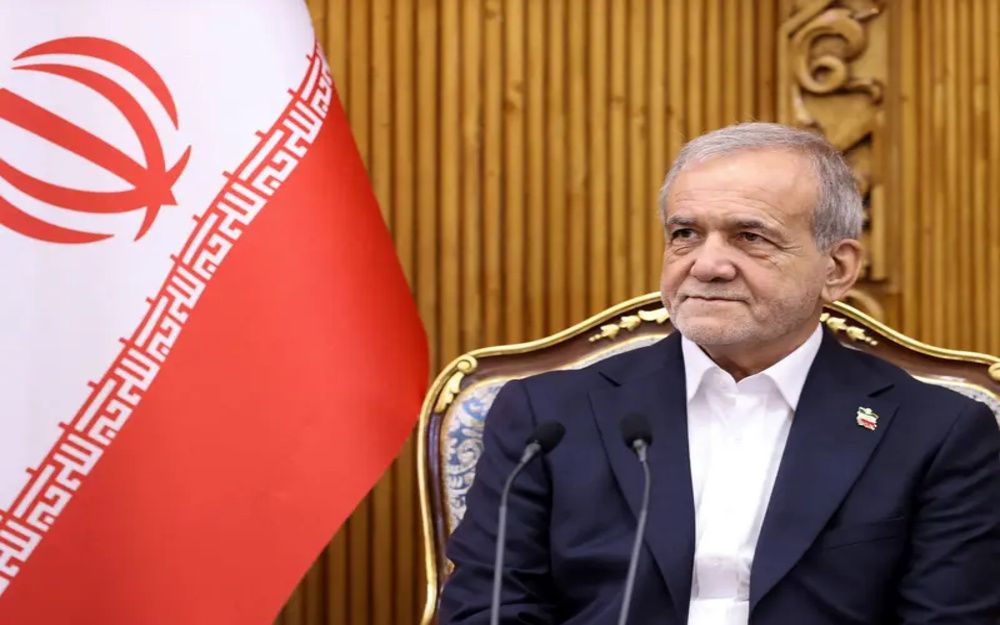
The recent statement by Iranian President Masoud Pezeshkian, offering apologies to neighboring countries for missile attacks and vowing a cessation of hostilities “unless attacked from there,” marks a pivotal moment in the escalating regional tensions. This unexpected olive branch, following a week of retaliatory strikes that ravaged Gulf regions, prompts crucial questions about Iran’s strategic calculus. Is this a genuine shift towards de-escalation, born from weariness and mounting regional pressure, or a carefully calculated maneuver in a complex geopolitical chess game where Iran remains unyielding in its broader ambitions?
The Weight of Conflict: Exhaustion and Regional Pressure
The context of Pezeshkian’s apology is critical. Iran has spent the past week launching a barrage of missiles, ostensibly to avenge the killing of its Supreme Leader, Ayatollah Khamenei, in a joint US-Israel “Operation Epic Fury.” These strikes, targeting Iranian cities and tragically claiming Khamenei, his daughter, son-in-law, and granddaughter, represent a profound blow to the Islamic Republic’s leadership and prestige. The subsequent Iranian retaliatory attacks on Dubai, Abu Dhabi, Qatar, Kuwait, and Bahrain, while intended to project strength, simultaneously demonstrate a dangerous disregard for regional stability and the sovereignty of its neighbors.
Pezeshkian’s apology, coupled with the assertion that “no more attacks will be made on neighboring countries and no missiles will be fired unless an attack on Iran originates from those countries,” suggests a potential recalibration of Iranian tactics. One interpretation is that Iran is indeed becoming exhausted by the sustained conflict. A week of intense missile launches, coupled with the profound loss of its Supreme Leader, would undoubtedly exact a heavy toll on any nation, both militarily and economically. The desire to de-escalate, to avoid further draining resources and inviting more severe international condemnation, could be a driving factor. The impact of these strikes on crucial Gulf economies, many of which are vital trade partners for Iran, cannot be underestimated. Continued aggression risks alienating these nations further, potentially leading to increased isolation and economic hardship for Iran.
Another compelling perspective is that the neighboring countries, deeply affected by the missile strikes, are indeed “turning against” Iran, or at least exerting significant diplomatic pressure. The videos depicting “massive destruction” in major Gulf cities would naturally provoke outrage and a strong desire for self-preservation. It is plausible that these nations, perhaps through back channels or coordinated regional efforts, have conveyed their unequivocal disapproval and threatened further repercussions should the attacks persist. Iran, acutely aware of its strategic vulnerability and the potential for a united regional front against it, might be responding to this pressure. Maintaining some semblance of regional goodwill, even amidst profound ideological differences, is often a pragmatic necessity for any nation, even one as ideologically driven as Iran.
Unwavering Defiance: A Strategic Pause, Not Surrender
However, interpreting this apology solely as a sign of exhaustion or coerced retreat might be an oversimplification. Pezeshkian’s defiant declaration that Tehran would “not surrender” and that “the enemies must take their wish for the surrender of the Iranian people to their graves” serves as a crucial counterpoint. This suggests that while the immediate tactics may be shifting, Iran’s fundamental resistance to its perceived adversaries – the US and Israel – remains unwavering. The apology, therefore, could be a strategic pause, a tactical adjustment designed to achieve several objectives without compromising its long-term goals.
Firstly, it could be an attempt to isolate the conflict to a direct confrontation with the US and Israel, preventing the emergence of a broader anti-Iranian coalition in the Gulf. By assuring its neighbors of a cessation of hostilities (barring attacks originating from their soil), Iran effectively attempts to neutralize a potential source of opposition and shift the blame for any future conflicts directly onto the US and Israel. This allows Iran to portray itself as a nation defending itself against external aggression rather than an indiscriminate aggressor.
Geopolitical Chess: Undermining US Influence
Secondly, the apology could be a shrewd move to disrupt any attempts by the US and Israel to establish or expand military bases in the region, using the increased instability as justification. Pezeshkian’s implicit threat that if the US establishes military bases, “it will not be able to attack Iran,” is a clear signal. By reducing its direct aggression towards neighboring countries, Iran weakens the argument for increased US military presence and greater security cooperation between Washington and its Gulf allies. The narrative shifts from “Iran is a threat to the entire region, requiring immediate intervention” to “Iran is only reacting to attacks originating from specific sources.” This subtle but significant shift in narrative could undermine US efforts to bolster its regional alliances.
Ultimately, the true implications of Pezeshkian’s apology will be observed and watched. The coming weeks will reveal to what extent Iran carries out its stated commitment to de-escalation, especially in the absence of provocations from its neighbors. While the strategic utility of this apology is undeniable, it also offers a glimmer of hope for a recalibration of regional dynamics. The current situation remains a precarious balancing act between conciliation and continued defiance. Iran’s actions, and the reactions of its neighbors and adversaries, will determine whether this apology signals a genuine pivot towards stability or merely a strategic pause before the next tremor in the volatile geopolitical landscape of the Middle East.
