
Record Voting in Assam, Puducherry Hints at Mood Change?
Assam, Puducherry surge signals voter assertiveness; tech-driven elections reshape democratic engagement

By Harshita Rai
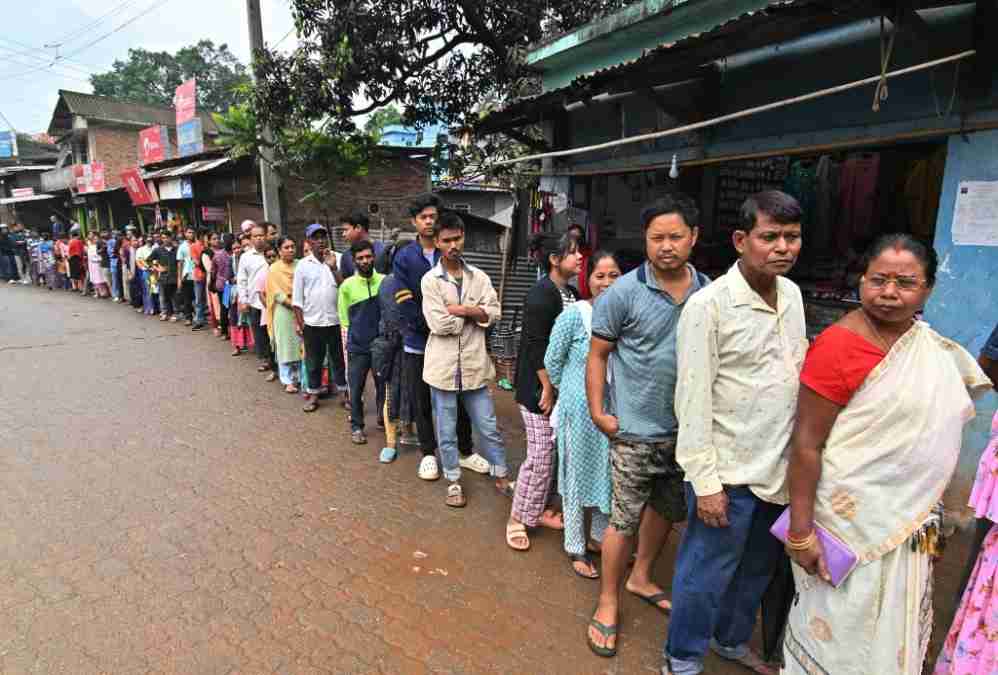
The record-breaking voter turnout in Assam and Puducherry is not just a statistical milestone—it is a powerful political signal that could reshape electoral outcomes and campaign narratives across states.
Data released by the Election Commission of India shows Assam recording 85.38% turnout and Puducherry touching 89.83%, both surpassing previous highs. While Kerala’s 78.03% turnout remains robust, the sharper spikes in Assam and Puducherry indicate a deeper churn in voter behaviour.
High Turnout: Anti-Incumbency or Consolidation?
Historically, unusually high turnout often reflects either strong anti-incumbency or intensified voter consolidation. In Assam, where political contestation has sharpened over identity, development, and governance issues, the surge may indicate heightened stakes among voters.
In Puducherry, the near-90% turnout suggests an extraordinary mobilisation across communities, pointing toward a tightly contested electoral battle where every vote could prove decisive.
Youth Factor and Silent Voters
One of the undercurrents of this election appears to be the rising participation of young and first-time voters. Their presence, combined with strong female turnout—especially in states like Kerala—signals a shift toward more issue-based and aspirational voting patterns.
Equally critical is the role of the “silent voter”—segments that traditionally remain under the radar but turn out in large numbers during high-stakes elections. Their choices often disrupt conventional predictions.
Technology as a Game-Changer
For the first time, 100% live-webcasting across polling stations in these regions marks a transformative shift in election management. With Chief Election Commissioner Gyanesh Kumar and his team monitoring the process in real time, the emphasis on transparency has reached a new benchmark.
Innovations such as colour-coded candidate images on EVMs, mobile deposit facilities, and redesigned voter slips have not only improved accessibility but also reduced friction in the voting process—likely contributing to higher turnout.
Inclusivity Driving Participation
The focus on accessibility—wheelchairs, volunteer assistance, and transport for Persons with Disabilities—points to a broader institutional push toward inclusive democracy. This may have played a role in expanding participation among previously underrepresented groups.
What It Means Politically
The implications of such high turnout are complex:
- It reduces the predictability of traditional vote banks
- It amplifies the impact of last-mile campaigning
- It increases the weight of undecided and swing voters
With over 5.31 crore voters participating across 296 constituencies, the scale of engagement suggests that electoral outcomes may hinge less on established loyalties and more on shifting voter sentiment.
The Bigger Picture
Beyond immediate political outcomes, this election reinforces a larger narrative—India’s democracy is not just intact but evolving. High participation, technological integration, and inclusive practices together point toward a more engaged and assertive electorate.
As counting approaches, the key question remains: will this record turnout translate into continuity, change, or a fractured mandate?
