

Poonam Sharma
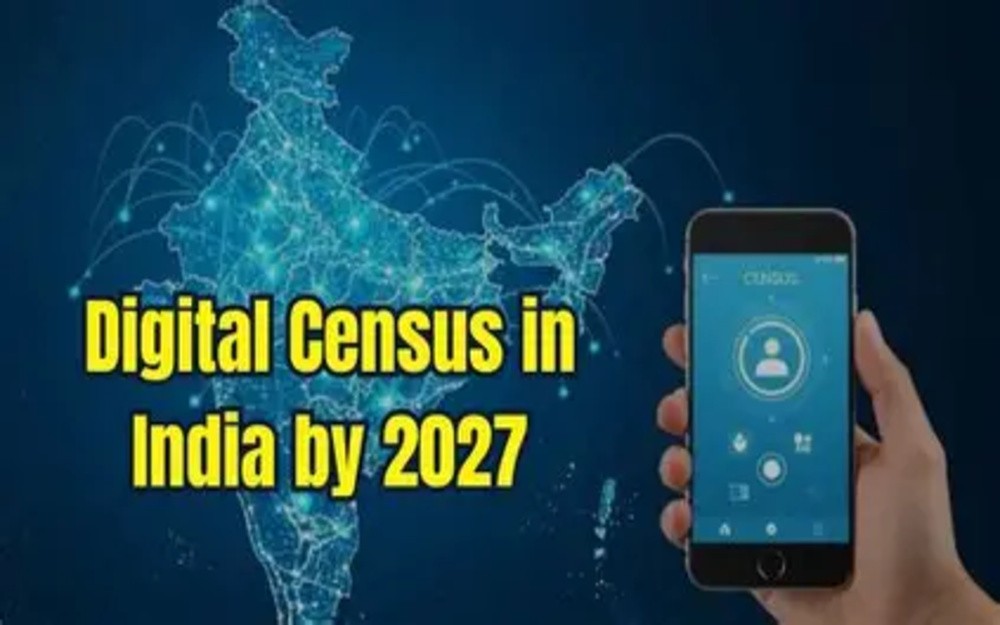
With the start of the world’s largest digital census, India has entered a historic time. This is the first major population count in the country since 2011. This is not just a count of citizens; it is a groundbreaking project in digital mapping and data collection that sets new standards for openness, accuracy, and public involvement.
A Beginning in History
The 2024 census started with a symbolic registration of Droupadi Murmu, the President of India. On the first day, census workers went to the Rashtrapati Bhavan to officially write down the President’s information. After that, they wrote down the Vice President’s, C. Biradar Krishnan’s, and Prime Minister Narendra Modi’s information. Amit Shah, the Home Minister, made sure that he was part of the process on the first day.
For the first time ever, people can now register their information online. This is a big step toward self-service and digital governance.
Population Data in Real Time
As the census goes on, India’s live population data is being shown on digital platforms, showing how quickly the numbers are growing in real time. The country’s population is now over 1.43 billion, which is a little less than the combined population of all 54 African nations and almost twice the population of the 44 European countries. The data shows how important India’s population is and how big this digital project is.
This census took place in two parts:
Phase One (April–September 2024): The first phase making a complete list of all the households. Enumerators will go to every home in the country and get detailed information about the house and the people who live there. This phase until September 30, 2024.
Phase Two (February 2025): In the second phase, people interviewed directly to get personal information like names, gender, and caste details.
This time, a big change is that there is now full digital data entry. In the past, information was written down by hand and then digitized. Now, the whole process is digital and happens in real time, which makes it more accurate and efficient.
What Will Be Asked?
In the first phase, about 33 questions will be asked of households. These questions will cover:
Information about the house, such as its number, type of construction, number of rooms, materials used for the roof and walls, and condition.
Information about the family, such as the head of the family, how many people live there, their marital status, and whether the head is a member of a Scheduled Caste or Tribe.
Facilities that are available, such as electricity, water, a kitchen, toilets, cooking fuel, mobile phones, a TV, the type of vehicle, the amount of grain consumed, and so on.
The second phase will look more closely at personal and caste-related issues, including the first time since independence that new caste data will be collected.
Keeping things private and safe
It’s important to remember that census workers can’t ask for private information like credit card numbers, bank account numbers, or monthly income. People are told not to give out this kind of information during the census if someone asks for it.
The Strength of Data
This digital census isn’t just about counting people; it’s also about learning about their lives, their homes, and their ways of life. The information gathered will be very helpful in making decisions about government policies, welfare programs, infrastructure planning, and how to use resources.
For example, the government can make smart, data-driven choices if they know where there are more young people, where more schools or jobs are needed, or where there aren’t enough good roads or healthcare facilities.
A Legacy of Counting
During British rule, India held its first census in 1872. However, it did not happen at the same time all over the country. After 1881, the census happened every ten years. The COVID-19 pandemic caused an unprecedented break in the process in 2021, making this census the first in more than ten years.
A Step into the Future
The switch to a digital census is a big step forward. It shows that India is ready to embrace the digital age and is committed to governing based on data. People are encouraged to get involved by either registering online or working with enumerators.
This digital census will be the most important source of data for making decisions in the coming decades as Prime Minister Modi’s government works to reach important national goals. People say that “data is the new oil,” and India’s digital census is going to help the country grow digital census t to fuel the nation’s growth story.
