
Spain’s World Cup Heroes Receive Hero’s Welcome in Madrid: Massive Celebrations Mark Historic Triumph

By Alok Lahad
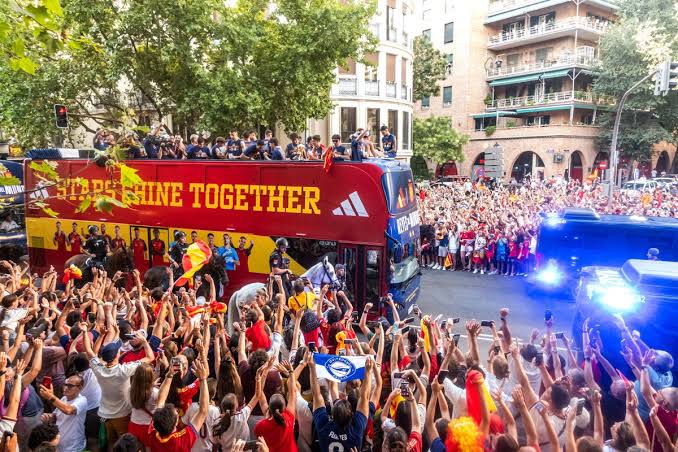
Madrid— Spain’s national football team, fresh off their thrilling 1-0 extra-time victory over Argentina in the 2026 FIFA World Cup final, received a thunderous hero’s welcome in the Spanish capital on Monday. An estimated 1.8 to 2 million fans lined the streets of Madrid for an unforgettable open-top bus parade, turning the city into a sea of red and gold as La Roja celebrated their second World Cup title.
The celebrations began with an official reception at the Zarzuela Palace with King Felipe VI and Queen Letizia, followed by a visit to Moncloa Palace where Prime Minister Pedro Sánchez honoured the squad. The players then boarded the iconic open-top bus for a victory lap through central Madrid, waving the trophy and sharing the joy with thousands of passionate supporters waving flags, singing, and setting off flares. The atmosphere was electric, with the parade culminating in a grand fiesta at the iconic Plaza de Cibeles, where over 120,000 fans gathered for musical performances by stars like Aitana, Arde Bogotá, and others. Captain Rodri, named the tournament’s best player, lifted the trophy amid roaring chants of “¡Campeones!” as fireworks lit up the sky.
The triumph came after a dominant display in the final at New Jersey’s MetLife Stadium. Substitute Ferran Torres scored the decisive goal in the 106th minute of extra time, capping Spain’s control. La Roja registered 20 shots (with several on target) compared to Argentina’s meagre 2 shots, none of which were on target throughout the 120 minutes. Spain’s relentless pressure and superior possession (around 65%) left the defending champions toothless.
Argentina’s Shameful Display and Referee Controversies
The final was marred by Argentina’s reckless and physical approach, which many observers described as a “disgrace to football.” The Albiceleste committed a staggering number of fouls (reports indicate around 25 or more), often resorting to spoiling tactics, cynical challenges, and dark arts to disrupt Spain’s rhythm. Referee Slavko Vinčić overlooked numerous rash infringements, allowing Argentina to escape serious punishment for much of the match despite Spain’s barrage of attacks.
A major flashpoint came in extra time when Nico Williams appeared to score what would have been the opening goal, only for it to be controversially disallowed by the referee for an alleged foul by Mikel Merino on Nicolás Otamendi in the build-up — a decision many viewed as soft and one-sided, denying Spain an earlier breakthrough. Argentina finished the game with 10 men after Enzo Fernández received a second yellow card for a reckless challenge. Post-match, ugly scenes erupted with Argentine players involved in a brawl, including Leandro Paredes allegedly grabbing opponents by the throat and other unsportsmanlike acts, prompting FIFA to launch an investigation.
International media hailed Spain as the “new kings” of world football, praising their youthful, dynamic squad led by stars like Lamine Yamal, Pedri, and Rodri. Ferran Torres, the match-winner, reflected on his journey, crediting his family’s support after emotional early days in the academy.
This victory parade not only celebrated a historic sporting achievement but also showcased the unbreakable spirit of Spanish football. From the streets of Madrid to fans across the globe — including the passionate Indian diaspora cheering La Roja — the 2026 World Cup will be remembered as Spain’s triumphant return to the pinnacle. ¡Viva España!
