
Jitendra Singh Inaugurates Air Pollution Analysis Lab
New Delhi-NCR facility aims to identify pollution sources, analyse toxic particles and support targeted action through real-time data and forecasts.

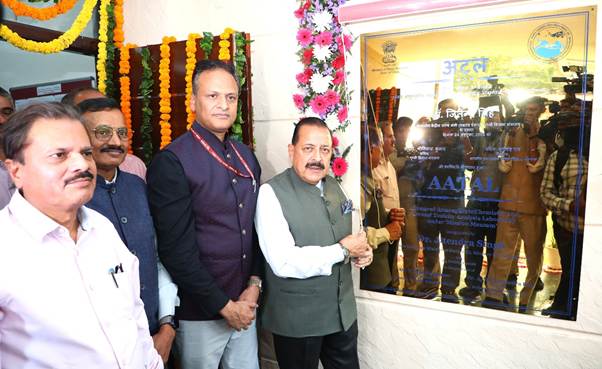
- Jitendra Singh inaugurates AATAL in Delhi-NCR
- Lab identifies pollution sources and toxic components
- AIRWISE offers 400-metre resolution forecasts
- Facility to support targeted pollution-control measures
GG News Bureau
New Delhi, 24th Oct: Union Minister of State for Science and Technology Jitendra Singh inaugurated the Integrated Atmospheric Chemistry and Aerosol Toxicity Analysis Laboratory (AATAL), a facility designed to identify the sources and composition of air pollution across Delhi-NCR.
Established under Mission Mausam at the India Institute of Tropical Meteorology’s Delhi branch, the laboratory brings together advanced atmospheric measurements, chemical analysis, pollution-source identification and forecasting tools to support evidence-based decisions.
Singh said the facility would help authorities move beyond Air Quality Index (AQI) readings to understand what is polluting the air, where the pollution originates and its potential health implications.
Focus on Real-Time Pollution Sources
AATAL will help scientists assess contributions from vehicular emissions, industrial activities, biomass and crop-residue burning, construction, road dust and pollution transported from neighbouring regions.
The laboratory is equipped to analyse fine particulate matter (PM2.5), atmospheric gases, metals, toxic elements and other aerosol components. This will help researchers study the chemical composition of pollutants and assess their potential toxicity.
During the inauguration, Singh highlighted how source-level information could help authorities identify the main contributors to poor air quality at a particular time and direct interventions accordingly. He cited an example displayed during the event in which transport accounted for approximately 25 per cent of Delhi’s air pollution, with the overall pollution level at around 180.
AIRWISE to Support Forecasting and Planning
The facility is integrated with IITM’s AIRWISE system, which combines air-quality observations, forecasts and source-apportionment data to support pollution management.
According to the project team, AIRWISE provides forecasts at a spatial resolution of 400 metres for the next 72 hours. The system can help identify pollution hotspots and assess the sources likely to contribute to deteriorating air quality in specific parts of Delhi.
Project Director Sachin Ghude said the integrated system would strengthen early warnings and help authorities identify major pollution sources, plan targeted interventions and assess their effectiveness.
The information is expected to support the Commission for Air Quality Management (CAQM) and other agencies in planning preventive measures and responses under the Graded Response Action Plan (GRAP).
Push for Coordinated Action
Singh stressed that air pollution requires coordinated efforts across government departments rather than isolated action by individual agencies. He highlighted the need for cooperation among scientific institutions, environmental authorities, pollution-control bodies and disaster-management agencies.
The initiative aims to connect scientific research with practical policy decisions, helping authorities make more informed choices about pollution-control measures across Delhi-NCR.
By combining real-time measurements, chemical analysis, source identification and forecasting, AATAL is intended to strengthen the scientific foundation for managing the region’s air pollution challenge.
