
BJP Manifesto: Sonar Bangla, more than just a list of promises

Poonam Sharma
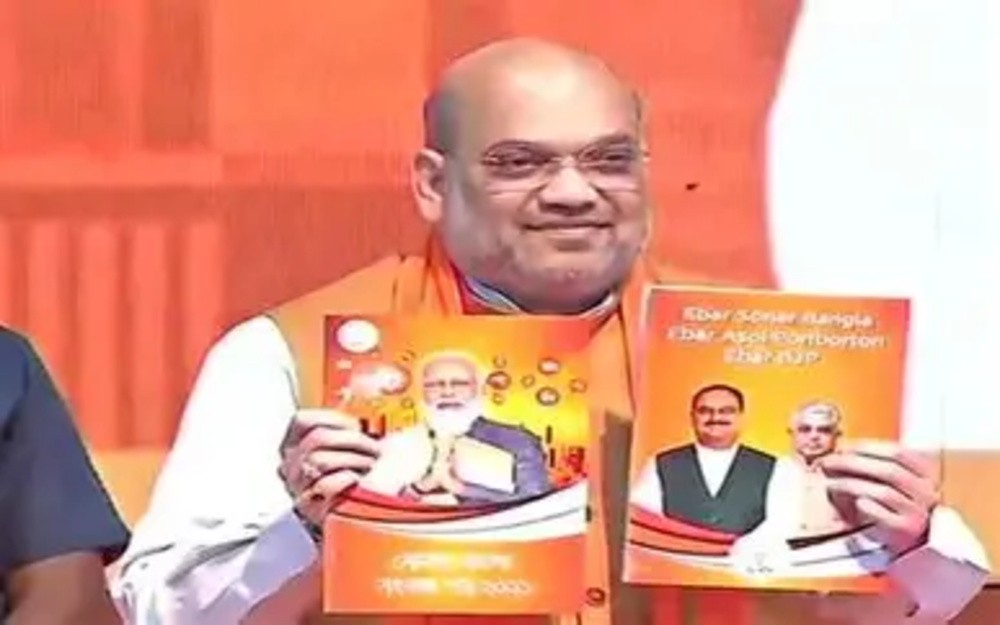
The Bharatiya Janata Party (BJP) has released a strong manifesto for the 2026 West Bengal Assembly elections. The party’s goal is to move the state from years of perceived stagnation to a new era of growth, safety, and cultural revival as India moves closer to its vision of a developed nation, “Viksit Bharat.” Union Home Minister Amit Shah’s release of the “Sankalp Patra” is more than just a sign that the BJP wants to win the election. It is a strong challenge to the Trinamool Congress’s (TMC) 15 years in power, putting the BJP at the forefront of change based on national priorities.
Setting the Stage for the Fight: From Despair to Growth
The manifesto is built around the powerful idea of “Sonar Bangla,” which means “golden Bengal” brought back to life through strong government, economic growth, and cultural pride. Shah’s criticism of the TMC government was clear: it was to blame for crime and disappointment. Shah said, “People gave Mamata Didi a mandate with great hope, but today they are seeking change from the heart.” He linked the party’s goals to Prime Minister Narendra Modi’s national development agenda.
The BJP wants to take not only political power but also the story of West Bengal’s economy and society by calling itself the main opposition and promising to break with the status quo.
First, security: stopping corruption and infiltration
One of the main points of the manifesto is a strong stance against illegal infiltration, which is a topic that is important in both Bengal and India’s national security debate. The BJP’s “detect, delete, and deport” policy is framed as a patriotic duty to protect borders, assert sovereignty, and deal with demographic concerns. Along with tough talk about infiltration, there is a promise to publish a white paper on TMC-era corruption. This directly questions the current government’s record and promises a new era of open government.
The BJP’s promise to get rid of “syndicate raj” and the “cut money” culture also shows that they want to restore trust in government and honesty in business. These are important issues for the whole country because Bengal is so important for the economy and strategy.
Bringing the economy back to life: jobs, pay, and help for young people
The BJP’s campaign is all about creating jobs because they know that this is what the young people of Bengal want. The party’s economic vision is both ambitious and smart for politics, with a goal of creating one crore jobs and self-employment opportunities over the next five years. The promise of ₹10,000 in financial help for unemployed young people adds a welfare aspect, connecting short-term help with long-term chance.
For government workers, the promise to pay off overdue Dearness Allowance debts and put the 7th Pay Commission into effect by a certain date is a sign of a return to fiscal discipline and fairness. The BJP is a party of both reform and responsibility because it suggests ways to deal with both mass unemployment and employee complaints.
Women’s Empowerment: From Safety to Being a Leader
The manifesto’s focus on women is both symbolic and real, in response to growing calls for gender justice. The formation of all-female police battalions, the introduction of the “Durga Suraksha Sahaya” scheme, and the 33% reservation for women in government jobs show that people understand both safety issues and the need for more representation.
A monthly payment of ₹3,000 to women beneficiaries is likely to provide real social and economic support, which will make the party more appealing to women voters in Bengal. These promises are a planned way to reach out to women in a state where they have historically had a big impact on elections. They are based on both compassion and strategy.
Cultural and Sectoral Reforms: Accepting Identity and Encouraging Growth
The BJP has suggested adding the Kurmali and Rajbanshi languages to the Eighth Schedule of the Constitution as a nod to Bengal’s rich cultural diversity. This is a politically important and culturally sensitive move. The manifesto also promises targeted support for important crops like rice, potatoes, and mangoes, which will make agricultural policy more in line with the needs of Bengal’s farmers.
The vision also includes the fishing industry, with plans to register all fishermen under the PM Matsya Sampada Yojana and make Bengal a hub for fishing exports. This is a move that combines economic sense with regional pride.
A Holistic Approach to Health, Education, and Industry
The BJP manifesto promises a Bengal that is healthy, educated, and strong in business, which is in line with its nationalist credentials. It talks about plans to bring tea gardens back to life, make the jute industry more modern, and make the Darjeeling tea brand stronger. These are all industries that are known around the world and are important for people’s jobs.
Ayushman Bharat is one of the new things that have been done to improve healthcare. Other things include the growth of top schools like AIIMS, IIT, and IIM in North Bengal, as well as free HPV vaccinations and breast cancer screenings. These ideas meet the immediate needs of people and the long-term goal of making Bengal a leader in social development.
Keeping the country together: the Uniform Civil Code and freedom of religion
The BJP says it will pass laws to protect religious freedoms and put the Uniform Civil Code into effect. This shows that the party is still committed to national integration. These kinds of promises fit with the party’s larger message of unity in diversity, equality before the law, and a society where no one is discriminated against or forced to do something.
In conclusion, a manifesto of national desire
The BJP’s 2026 Bengal manifesto is more than just a list of promises; it shows how determined the party is to make Bengal’s future more nationalistic. The party wants to change Bengal’s future by combining security, economic growth, cultural pride, and social justice. They see Bengal as an important part of a “Viksit Bharat.” In the coming days, we’ll find out if voters agree with this vision. But the lines have been drawn for Bengal’s future, and the stakes are clearly national.
