
‘Health Security as Vital as Border Security’: Rajnath Singh
Raksha Mantri lays foundation stones of Ophthalmology, Oncology & Joint Replacement Centres at Army Hospital (R&R) & new infrastructure at Base Hospital, Delhi Cantt

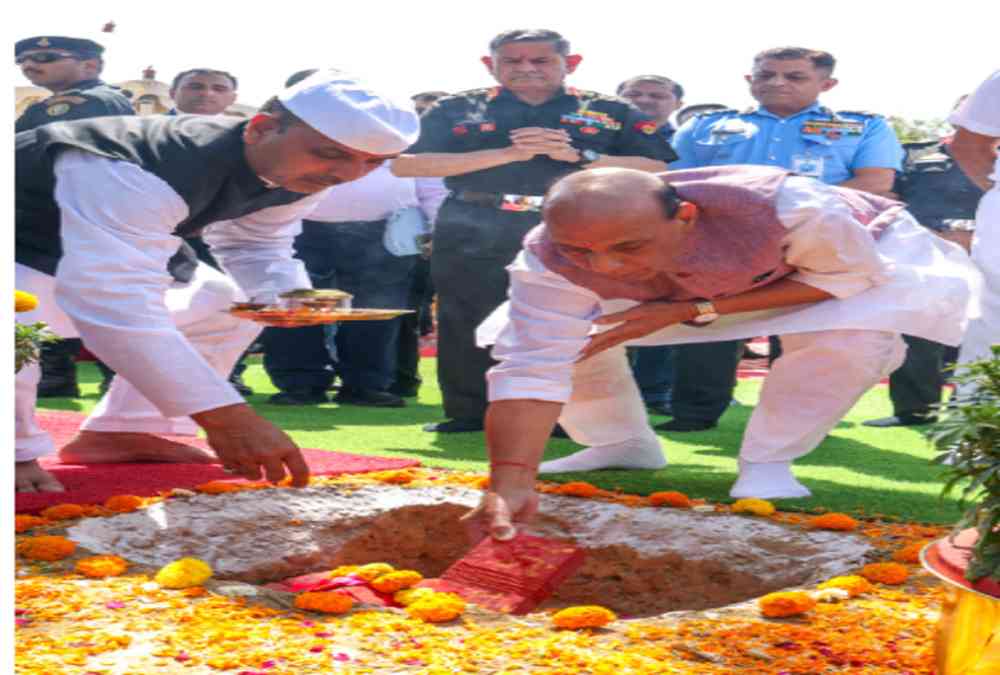
- Defence Minister lays foundation for new medical centres in Delhi
- Focus on ophthalmology, oncology and joint replacement care
- Calls for research, pharma self-reliance and clinical trial reforms
- Highlights military healthcare as India’s soft power
GG News Bureau
New Delhi, 6h April: Defence Minister Rajnath Singh on Monday laid the foundation stones for advanced medical facilities, including Ophthalmology, Oncology and Joint Replacement Centres, at the Army Hospital (Research & Referral) and inaugurated new infrastructure at Base Hospital in Delhi Cantonment.
The new facilities are aimed at strengthening tertiary healthcare services for armed forces personnel, veterans and their dependents, with a focus on specialised treatment in eye care, cancer and complex surgeries. The Base Hospital is being upgraded with a capacity of 998 beds along with 100 additional emergency expansion beds.
Addressing the gathering, Singh stressed the need for continuous innovation, capacity building and integration of advanced technologies to tackle emerging challenges in military medicine. He expressed confidence that the upgraded infrastructure would significantly enhance healthcare delivery within the Armed Forces Medical Services (AFMS).
Highlighting the broader role of military healthcare, the Defence Minister said that medical outreach by AFMS, including services in neighbouring countries like Nepal, has strengthened India’s global standing and reflected its soft power.
Singh also called for greater emphasis on research and self-reliance in the pharmaceutical sector, urging a shift from generic drug production to innovation-driven development. He underlined the importance of strengthening clinical trial frameworks and building advanced capabilities in areas such as cancer research, cardiovascular prediction models and mental health studies.
He further advocated the creation of standardised medical protocols and a national-level data pool to improve evidence-based treatment and policy formulation, stating that such steps would transform India’s healthcare system from reactive to proactive.
Emphasising the concept of “health security” as integral to national security, Singh said that access to quality medical care boosts the confidence of soldiers during operations. He also suggested upgrading existing military hospitals across the country to match the standards of premier institutions like Army Hospital (R&R).
During the event, Singh also presented awards to top-performing military hospitals and released a book on neurodevelopmental intervention, highlighting the growing focus on research-driven medical practices within AFMS.
