
President Murmu Meets CPES, IES Officers
Calls for innovation, dedication and people-centric policymaking in nation-building

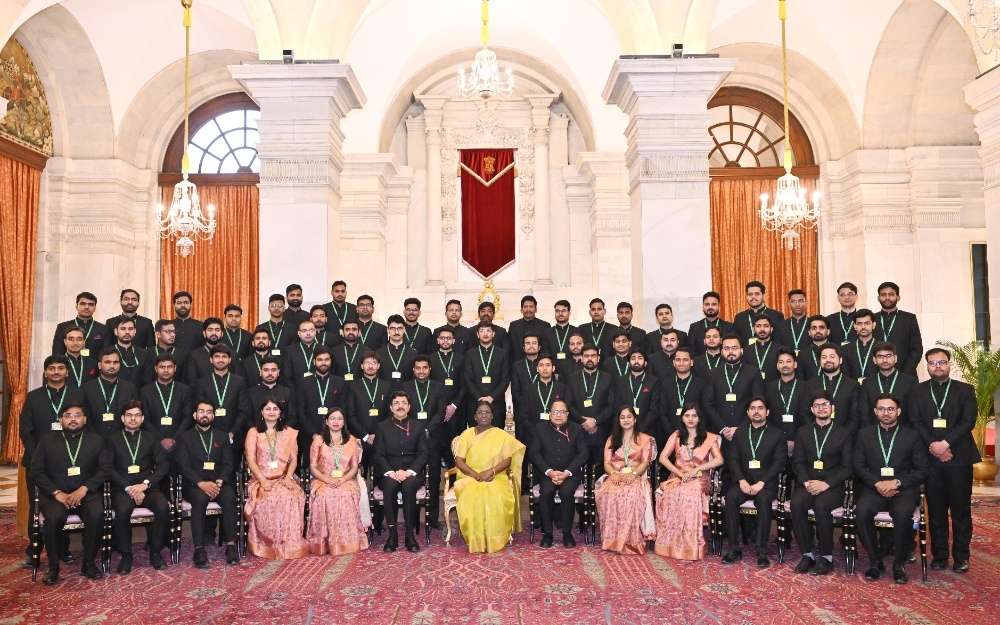
- Droupadi Murmu meets CPES and IES officers at Rashtrapati Bhavan
- Emphasises role in building a self-reliant and developed India
- Highlights importance of power sector in economic growth
- Urges economists to focus on inclusive and human-centric policies
GG News Bureau
New Delhi, 28th March: President Droupadi Murmu on Friday interacted with officers of the Central Power Engineering Service (CPES) and the Indian Economic Service (IES) at Rashtrapati Bhavan, underscoring their critical role in shaping India’s development trajectory.
Addressing the officers, the President said they stand at the forefront of India’s growth and will play a key role in policy formulation and implementation aimed at achieving inclusive and sustainable development.
She urged them to approach their responsibilities with dedication and passion, noting that challenges in public service present opportunities to contribute meaningfully to nation-building. She also encouraged a mindset driven by curiosity, innovation and continuous learning.
Focusing on the power sector, Murmu highlighted that electricity remains a cornerstone of industrial progress, innovation and improved living standards. She noted that CPES officers have been instrumental in planning and development across generation, transmission and distribution, ensuring reliability and safety of power systems. Their role, she said, will be crucial in strengthening India’s power infrastructure through advanced engineering practices.
Addressing IES officers, the President stressed that economic policymaking has become increasingly complex in a rapidly evolving global and domestic landscape. She said their role will be vital in ensuring sustainable growth, managing inflation, boosting employment and reducing inequalities.
“Behind every statistic lies a human story,” she remarked, urging officers to focus on outcomes that improve lives, particularly of the most vulnerable sections of society.
The interaction reflects the government’s continued emphasis on strengthening institutional capacity and aligning public service with the broader vision of a self-reliant and inclusive India.
