

By Harshita Rai
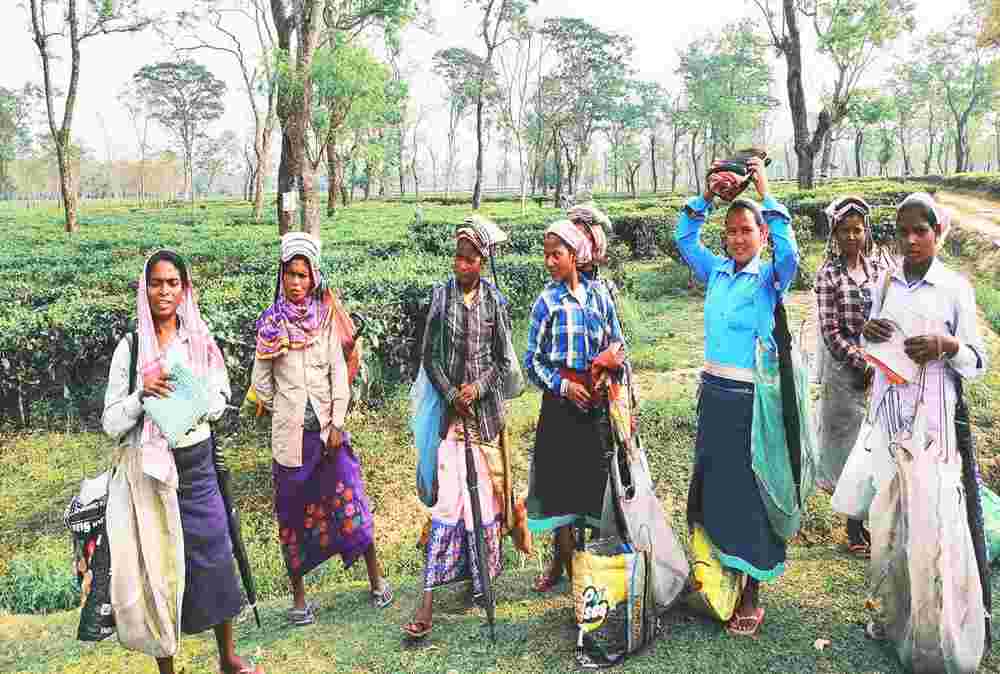
As Assam heads into the 2026 Assembly elections, Upper Assam—particularly Tinsukia and Dibrugarh—has emerged not just as another electoral zone, but as a decisive theatre where demographics, identity, and political strategy intersect. At the core of this contest lies the tea tribe electorate, a community that has steadily transitioned from being a passive vote bank to an assertive political force.
This election marks a clear shift in how parties are approaching tea garden communities. Earlier, outreach was often limited to promises and symbolic representation. Now, both the BJP and the Congress are fielding leaders who belong to or have deep engagement with these communities. This signals an acknowledgment that electoral success in Upper Assam is no longer possible without genuine grassroots connection.
The BJP’s strategy reflects consolidation. By fielding leaders like Rameshwar Teli and Rupesh Gowala, the party is attempting to blend governance narrative with community identity. Its emphasis is on welfare delivery, continuity, and organisational strength. The messaging is clear: stability and development under existing leadership.
However, this approach is not without challenges. Anti-incumbency, even if limited, tends to surface in regions where expectations have risen rapidly. Tea tribe communities, despite benefiting from targeted schemes, continue to grapple with issues like wages, healthcare access, and living conditions. If these concerns dominate voter sentiment, the BJP’s advantage could narrow.
The Congress, on the other hand, is banking on legacy and local familiarity. Leaders like Durga Bhumij and Dhrubojyoti Gogoi bring with them established voter networks and constituency-level recall. The party’s attempt is to convert dissatisfaction—if any—into a consolidated electoral shift.
Yet, Congress faces its own structural challenge: translating individual strongholds into a broader narrative of resurgence. While it has credible candidates, the absence of a uniformly strong organisational machinery compared to the BJP could limit its impact unless voter turnout swings decisively in its favour.
One of the most critical variables in this election is fragmentation within the tea tribe vote. With multiple candidates from similar social backgrounds, the possibility of vote division increases. This could benefit the party with stronger booth-level management and last-mile mobilisation—areas where the BJP traditionally holds an edge.
Another layer to this contest is the evolving political consciousness among tea tribe voters. There is a visible shift from identity-based voting to performance-based evaluation. Issues like employment opportunities, education, and dignity of labour are increasingly shaping electoral choices. This evolution makes the electorate less predictable and more demanding.
Upper Assam, therefore, is not just witnessing a contest of candidates, but a transition in voter behaviour. The region encapsulates a broader political shift where communities once seen as fixed vote banks are now negotiating their electoral value more actively.
The outcome in Tinsukia and Dibrugarh will likely ripple beyond these districts. A decisive swing here could influence the overall narrative of the Assam elections—whether it reinforces continuity or signals the beginning of a political recalibration.
In this high-stakes contest, tea gardens are no longer on the margins of Assam’s politics. They are at its very centre.
