
₹5,659 Cr Cotton Mission Approved to Boost Output by 2031
Centre targets higher productivity, exports and farmer income under 5F vision

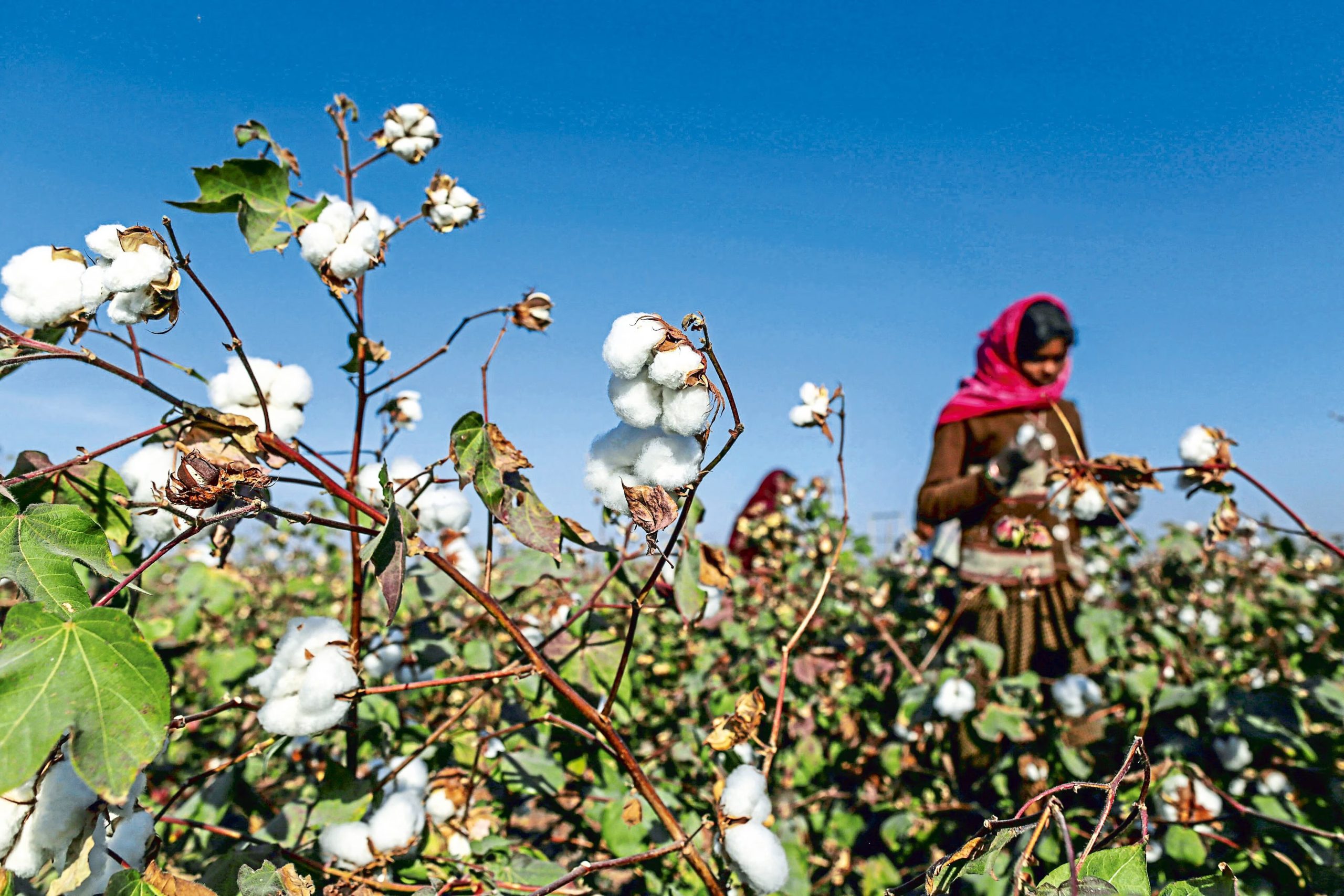
- Union Cabinet of India clears ₹5,659.22 crore cotton mission
- Target: 498 lakh bales production, productivity up to 755 kg/ha
- Focus on high-yield seeds, tech adoption and quality upgrade
- 32 lakh farmers to benefit across 140 districts
GG News Bureau
New Delhi, 5th May: The Union Cabinet of India, chaired by Prime Minister Narendra Modi, has approved a ₹5,659.22 crore “Mission for Cotton Productivity” to drive self-sufficiency and enhance India’s competitiveness in global textile markets by 2030-31.
The mission, to be implemented from 2026–27 to 2030–31, aims to address key challenges in the cotton sector, including stagnating productivity, pest-related losses and quality issues. It aligns with the government’s 5F vision — Farm to Fibre to Factory to Fashion to Foreign.
The programme targets an increase in cotton production to 498 lakh bales and a rise in lint productivity from 440 kg per hectare to 755 kg per hectare.
A major focus will be on developing high-yielding, climate-resilient and pest-resistant seed varieties, along with scaling up modern farming practices such as High Density Planting System (HDPS), closer spacing and integrated crop management.
To improve cotton quality, the mission will support modernisation of ginning and processing units, strengthen testing infrastructure and promote best practices to ensure contamination-free cotton.
The government will also expand branding and traceability under the Kasturi Cotton Bharat initiative to position Indian cotton as a premium global product.
Digital integration of mandis is planned to empower farmers with better price discovery and direct market access through e-platforms.
The initiative further promotes sustainability through recycling of cotton waste and diversification into natural fibres such as flax, ramie, bamboo and banana.
The mission will be jointly implemented by the Ministry of Agriculture and Farmers Welfare and the Ministry of Textiles, with support from research institutions including ICAR, CSIR and State Agricultural Universities.
It will initially cover 140 districts in 14 states and around 2,000 ginning and processing units, benefitting nearly 32 lakh farmers.
