
SC Says Peaceful Protest Is a Constitutional Right
Supreme Court seeks response on police action during students' protest, says lathicharge cannot be justified for peaceful demonstrations

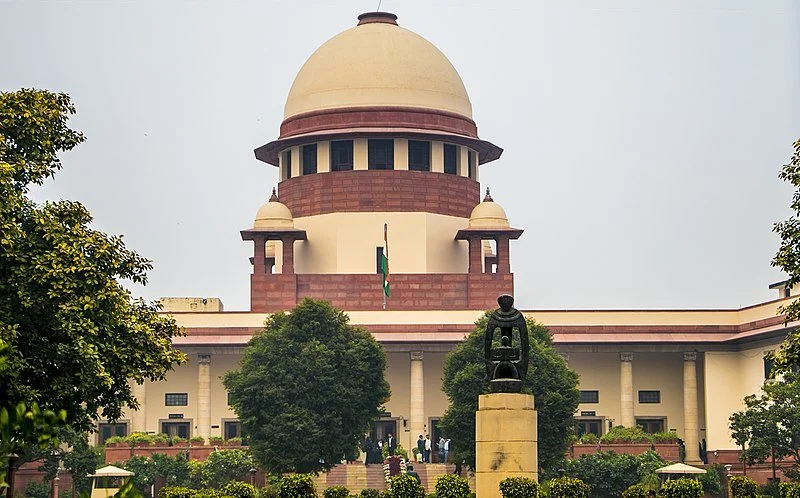
- Supreme Court says peaceful protest is a constitutionally guaranteed right.
- Bench questions use of force against students during July 20 demonstrations.
- Agrees to examine pleas seeking probe into police action and injuries.
- Court to consider uniform nationwide guidelines on handling protests.
GG News Bureau
New Delhi, 27th July: The Supreme Court on Monday reaffirmed that the right to peaceful protest is absolutely guaranteed under the Constitution, observing that police cannot resort to a lathicharge merely because people are staging an agitation.
Hearing a batch of petitions seeking an independent probe into the July 20 Sansad Chalo march, the bench said peaceful and lawful demonstrations are protected under the Constitution and the use of force against protesters requires justification.
“So long as it is a peaceful agitation, merely because there is agitation, there can’t be lathicharge,” the court observed during the hearing.
The petitions seek an independent investigation into the alleged use of tear gas and batons against students marching towards Parliament over irregularities in major examinations. The petitioners have also sought preservation of CCTV footage, body-camera recordings and other electronic evidence, besides compensation for protesters who sustained injuries.
The Supreme Court also agreed to hear a separate petition alleging that police personnel were assaulted during the protests over the alleged NEET paper leak.
The bench observed that allegations of police excesses must be examined and asked the government to explain why adequate protective equipment was not provided to police personnel who were injured during the demonstrations. It also indicated that it would consider framing uniform pan-India guidelines for handling public protests.
The protests intensified after police stopped demonstrators near Jantar Mantar in New Delhi, where riot police allegedly used batons to disperse the crowd attempting to march towards Parliament. Demonstrations later spread to several parts of the country.
Opposition parties backed the protesters and disrupted proceedings in the Lok Sabha, demanding the resignation of the then Education Minister Dharmendra Pradhan.
Leader of Opposition in the Lok Sabha Rahul Gandhi alleged that pellet guns were used against some protesters after visiting an injured student in hospital. Delhi Police has denied using pellet guns during the July 20 protest, while the CRPF has not publicly responded to allegations involving the Rapid Action Force.
In a separate statement on Monday, Gandhi alleged that excessive force, including the use of AK-47 rifles and pellet guns, had been deployed against protesting students in different states. These allegations have not been independently verified.
The protests, led by the Cockroach Janta Party, concluded after 36 days following the government’s acceptance of key demands and the resignation of Dharmendra Pradhan as Education Minister.
