
Naxalism Eradicated After Six Decades: Govt
Government says no district remains Left Wing Extremism-affected after six decades of insurgency

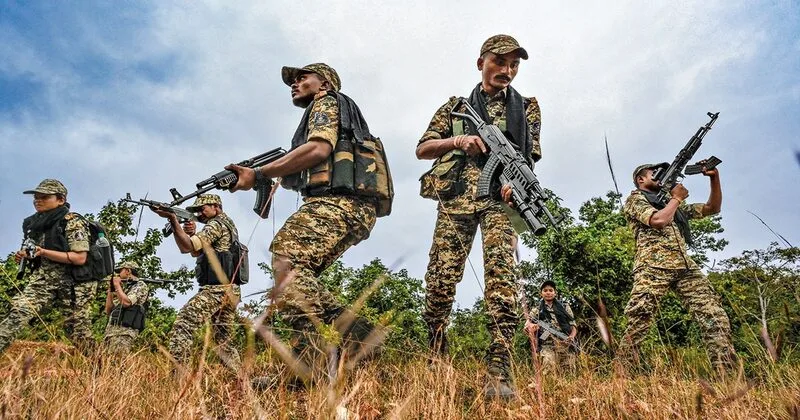
- Centre says India has become free from Left Wing Extremism in 2026.
- No district is currently classified as LWE-affected; 37 remain under ‘Legacy & Thrust’ category.
- Over ₹4,430 crore released during the last five years for security and development.
- Focus shifts to welfare, tribal rights, rehabilitation and governance in former LWE areas.
GG News Bureau
New Delhi, 29th July: The Centre on Wednesday informed the Rajya Sabha that India has become free from Left Wing Extremism (LWE), with no district now classified as Naxal-affected following sustained security operations and development initiatives implemented over the past decade.
Minister of State for Home Affairs Nityanand Rai, in a written reply, said the achievement follows the implementation of the National Policy and Action Plan to Address Left Wing Extremism, 2015, which adopted a whole-of-government approach combining security measures, infrastructure development and welfare initiatives.
The government said the number of Naxal-affected districts declined from 126 to 90 in 2018, 70 in 2021, 38 in 2024, eight in December 2025 and finally zero in March-April 2026. However, 37 districts have been categorised as ‘Legacy & Thrust’ districts, while one district remains under the ‘District of Concern’ category to ensure continued security and developmental support.
On the security front, the Centre said it has strengthened police and security infrastructure by deploying Central Armed Police Forces, constructing 663 fortified police stations, providing helicopters, intelligence support, modern weapons and training, and assisting states through various schemes. Since 2014-15, ₹3,805.04 crore has been released under the Security Related Expenditure (SRE) scheme, while ₹1,303.68 crore has been provided to central agencies under the Assistance to Central Agencies for Left Wing Extremism Management scheme.
The government said surrendered Maoist cadres are being rehabilitated through financial assistance, vocational training and monthly stipends under the surrender-cum-rehabilitation policy. Higher-ranked cadres receive an immediate grant of ₹5 lakh, while other cadres receive ₹2.5 lakh, along with incentives for surrendering weapons.
Highlighting development initiatives, the Ministry said 15,189 kilometres of roads have been constructed in former LWE-affected regions, 9,497 telecom towers commissioned, 47 Industrial Training Institutes, 49 Skill Development Centres and 179 Eklavya Model Residential Schools established. Banking access has also expanded with 6,025 post offices offering banking services, 1,804 bank branches and 1,321 ATMs opened in these areas.
The Centre said one-third of security camps in LWE-free areas are being converted into Jan Suvidha Kendras to provide livelihood support, digital services, healthcare, skill development and access to government welfare schemes. The first such centre has been established at Netanar in Jagdalpur, Chhattisgarh, as the Shaheed Veer Gundadhur Seva Dera Kendra.
According to the Ministry, ₹4,289.20 crore has been released under the Special Central Assistance (SCA) scheme since 2017 to bridge infrastructure gaps, while over 21.26 lakh forest rights title deeds have been distributed to beneficiaries. Since 2014, 37,655 tribal youths have participated in the Tribal Youth Exchange Programme, and ₹221.88 crore has been released under the Civic Action Programme to strengthen ties between security forces and local communities.
The Ministry said that in the post-LWE phase, the government’s priority is to saturate welfare schemes, strengthen local self-governance, rehabilitate surrendered cadres, preserve tribal identity and culture, and expand governance and public services in remote regions, while ensuring that Left Wing Extremism does not re-emerge.
