

By Anjali Sharma
WASHINGTON –Pakistan Deputy Prime Minister and Foreign Minister Ishaq Dar on Saturday has taken the dispute to an international audience and warned of “profound consequences” for regional peace and security.
India’s refusal to resume normal operations under the Indus Waters Treaty has prompted a fresh push from Islamabad.
Ishaq Dar said the Indus Basin supports more than 250 million Pakistanis and linked the dispute to agriculture, energy, food security and the country’s growing water stress.
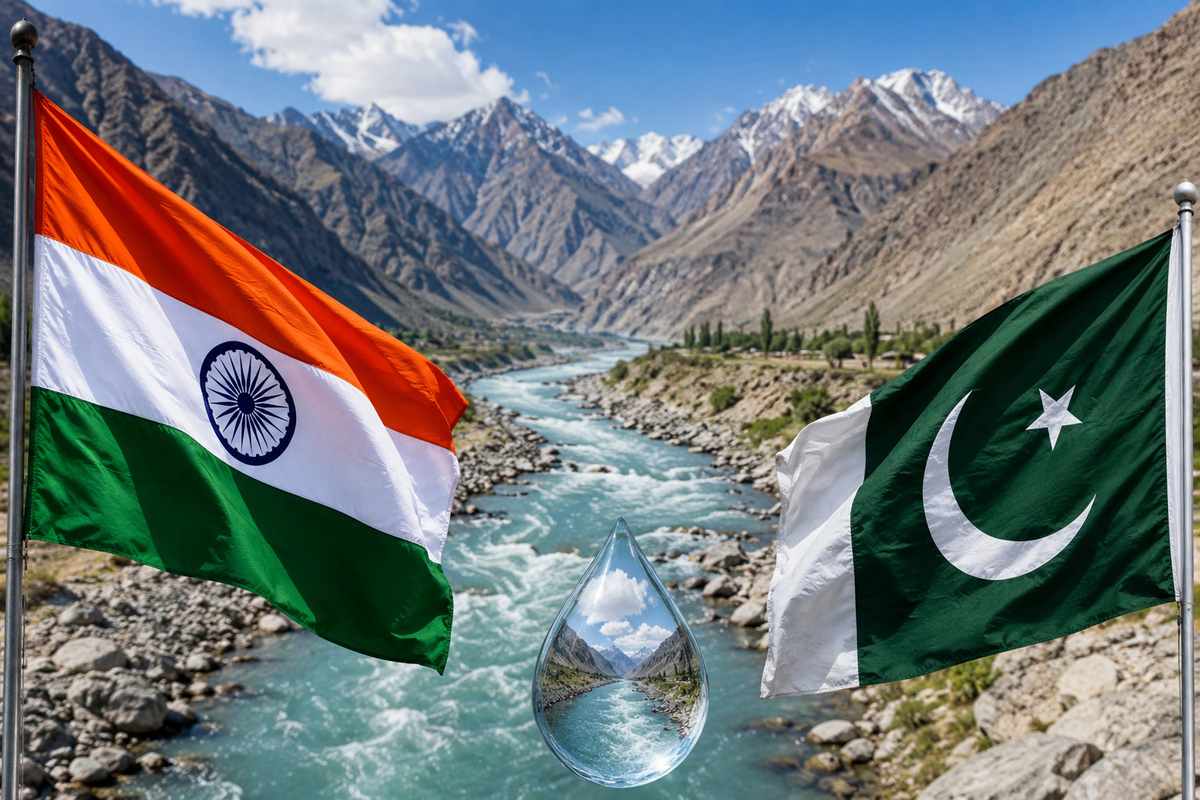
India placed the 1960 Indus Waters Treaty in abeyance in April 2025 after the Pahalgam terror attack, in which 26 people were killed.
New Delhi has said the treaty will remain in abeyance until Pakistan “credibly and irrevocably” ends its support for cross-border terrorism.
Dar addressed a virtual seminar organised by the Embassy of Pakistan in Washington, he disputed India’s decision to put the treaty on hold.
“India’s unilateral decision in April 2025 to place the Indus Waters Treaty in abeyance has no basis in the treaty,” he said.
Dar said Pakistan’s dependence on the Indus River system made the dispute critical to several areas of its economy and national security.
“The Indus Basin is the lifeline of more than 250 million Pakistanis. Our agriculture, food security, energy production, livelihoods and economic development are deeply dependent upon the waters of the Indus River system,” he said.
“Water security for Pakistan is therefore inseparable from economic security, food security and ultimately national security.”
Dar argued that the repercussions were not confined to the two countries.
“What is at stake, therefore, extends well beyond India and Pakistan,” he said.
He said actions affecting the treaty could set “a dangerous precedent for treaty relations everywhere in the world”, arguing that international agreements depended on certainty and predictability.
Dar also linked Pakistan’s concerns to its existing pressure on water resources.
“The challenge becomes even more acute when viewed against the realities of climate change. Pakistan is already among the world’s worst water-stressed countries,” he said.
He cited declining per capita water availability as well as changing rainfall patterns, glacial retreat, floods, droughts, and greater variation in water flows.
“These realities should compel greater and stronger cooperation,” Dar said.
The Pakistan Deputy Prime Minister then issued his strongest warning over the dispute.
“Any attempt to deprive Pakistan of the water rightfully allocated to it under the Indus Water Treaty would have profound consequences for regional peace and security,” he said.
Dar called for shared waters to remain outside confrontation between the two neighbours.
“Let us therefore preserve the Indus as what it has always been for the peoples of our region, a source of life, livelihood and civilisation, not a fault line for confrontation. Shared waters must never be weaponized.”
India’s decision followed the April 22, 2025, terror attack in Pahalgam that killed 26 people.
The Cabinet Committee on Security subsequently ordered that the Indus Waters Treaty be kept in abeyance with immediate effect until Pakistan “credibly and irrevocably abjures its support for cross-border terrorism”.
The treaty dispute has consequently become part of the wider security confrontation between New Delhi and Islamabad.
India tying a return to the water-sharing framework to Pakistan’s actions on cross-border terrorism while Islamabad continues to challenge the suspension.
