
Neha’s Red T-Shirt and the One Piece Symbol
A Sign of an International Political Campaign?

Poonam Sharma
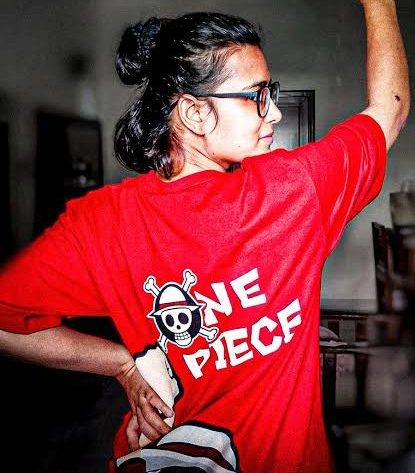
Is an ordinary red T-shirt a sign of an international political campaign? Has the symbol of a popular Japanese cartoon become an identity connecting anti-government movements across different countries of the world? And the most important question is whether the international presence of this symbol represents a connection between the American intelligence agency CIA or the alleged “Deep State” and anti-government movements across different countries.
The questions being raised about the One Piece Pirates symbol on Neha’s red T-shirt are not limited to clothing or fashion. Through them, a broader challenge concerning foreign interference, youth movements, political instability and India’s national sovereignty is emerging on social media. Neha’s T-shirt bears the One Piece Pirates logo, and many people claim that this red T-shirt is a coded message to the CIA! The same symbol has been seen in movements taking place in different parts of the world. Is this merely a coincidence, or is there some hidden connection behind it?.
How Did a Japanese Symbol Become the Face of International Protest?
One Piece is a famous manga and anime series by Japanese writer Eichiro Oda. The symbol of the pirate crew led by its main character, Monkey D. Luffy, known as the Straw Hat Pirates’ Jolly Roger, depicts a skull and crossed bones wearing a distinctive hat.
In the original story, this symbol is associated with freedom, courage, friendship and the struggle against unjust authority.
This is why some young protesters in different countries have adopted it as a cultural identity for their protests.
The symbol attracted particular attention in Indonesia. Subsequently, reports also emerged of its presence in youth movements in various countries, including Nepal.
Claims have also been made about the use of this symbol in countries such as the Philippines, Madagascar, Peru, Morocco, Bulgaria, Timor, Bangladesh and France. However, the nature, timing and political context of its use differ from country to country. Independent evidence is required to consider all these incidents part of a single international campaign.
An important question arises here: when the demands of protesters are different in different countries, their governments are different, and their political circumstances are different, why does the same symbol appear?
One possible answer lies in modern digital culture.
Today, the political language of the younger generation is not shaped only by the flags and slogans of political parties. Popular culture, video games, anime, internet memes and social media are also creating a new symbolic language of protest.
The spontaneous popularity of a symbol and its planned dissemination by a foreign intelligence agency are interconnected.
Is a Foreign Intelligence Network Behind the Same Symbol?
This is the most sensitive aspect.
The history of the CIA has been associated with allegations of covert interference in the politics of several countries, as well as some documented operations. Therefore, raising questions about the possibility of foreign interference is not inherently inappropriate.
However, such operations in the past lead to the conclusion that, whether or not it is happening at present, every movement using the One Piece symbol is operated by the CIA.
In August 2025, the news agency Reuters linked the use of this symbol by Indonesian protesters to dissatisfaction with corruption, unemployment and government policies. Other international reports also documented its use in movements in Nepal and the Philippines.
This fact confirms the international spread of the symbol. If there is indeed suspicion of an organised regime-change campaign, financial transactions, communication records, organisational connections and verified activities must also form the basis of the investigation.
The Real Challenge for India: Digital Influence and National Security
In a vast democracy like India, the rapid spread of political messages through social media can influence national discourse. Investigating the financial transparency of foreign organisations, the sources of digital propaganda and online incitement to violent activities is justified from the perspective of national security.
In the case of Neha’s red T-shirt, it must first be established that the photograph is genuine and has been presented in its correct context.
Conclusion: More Important Than the Symbol Is the Evidence Behind It
The presence of the same symbol in movements across different parts of the world is undoubtedly a subject worthy of study. It reflects the shared digital culture of modern youth, political dissatisfaction and a symbolic language spreading across national boundaries.
Beginning with the “Gen Z” movements in 2025, the presence of this symbol has been observed in anti-government movements in different countries. What does the presence of this symbol in India’s “Cockroach” movement indicate? Is this not a “regime change project”? The term “Deep State” does not necessarily mean America. But “Deep State” could mean the CIA. It is possible that this may not be true. Because a large part of the “Deep State” receives funding from the CIA. So how can it be conclusively established that Neha was not sending a message to the CIA by wearing a red T-shirt? Sometimes even a red T-shirt can emerge as a major question before the nation.
India must remain alert to the real threats of foreign interference. At the same time, it must ensure that discussions about national security do not become a means of making baseless allegations.
Ultimately, the question is not merely about Neha’s red T-shirt. The question is when we will understand by looking at a symbol and investigate the facts behind it.
