

By Anjali Sharma
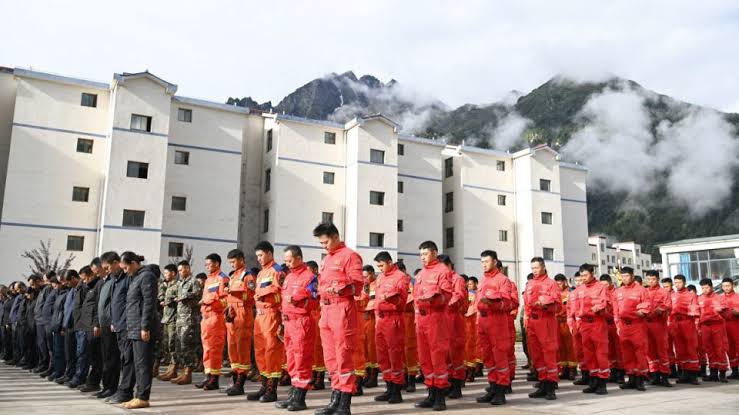
WASHINGTON – Nepal’s Ministry of Foreign Affairs said on Tuesday that specialized tunnel rescue teams from India and China, South Korea have joined the Nepal Army at critical hydropower tunnel sites to search and rescue operation to find missing workers.
Media reported that several workers are feared trapped inside the hydropower tunnels after the catastrophic Bhotekoshi river flash floods
Nepali foreign ministry spokesperson Lok Bahadur Chhetri said that technical experts from India and China have been deployed to handle high-risk subterranean operations, adding that saving lives remains the immediate national priority.
“As we have stated, our immediate national priority remains clear: to save lives, locate those who are missing, rescue survivors, provide urgent relief, and ensure that all affected people, both Nepali and foreign nationals, receive appropriate assistance and support,” Chhetri stated.
He said that a 24-member Indian tunnel rescue team operating in two units is working closely with the Nepal Army at the Chilime and Langtang hydropower project sites, while a 9-member Chinese team is deployed at the Upper Trishuli 3A project site.
A specialized team from the Republic of Korea has also been mobilized.
Nepal has deployed a unified force of over 21,000 security personnel from the Nepal Army, Nepal Police, and Armed Police Force across the disaster-stricken corridors to support nationwide emergency efforts.
MoFA reported that over 11,800 people have been rescued so far, including 324 foreign nationals, five of whom remain in direct contact with authorities.
The death toll has risen to 1,010, while approx 4,000 people, including 590 foreign nationals from 39 countries still remain missing.
The specialized international forensic units have joined local authorities to manage the high volume of recovered remains.
Nepal foreign ministry said that a 19-member forensic DNA team from India has been operating in Nepal since August 29; a 4-member Chinese forensic team arrived today, and coordination is underway to deploy a Disaster Victim Identification team from Singapore.
Nepal has officially requested specialized equipment from international partners, including LiDAR technology, belly bridges, freezers, DNA testing kits, load carriers, human remains bags, high-capacity drones, and gene sequencers.
Chhetri noted, “Where remains cannot be immediately identified or safely preserved, temporary burial has been carried out after the necessary forensic procedures, including the collection of DNA samples. The process is designed to facilitate identification at a later stage and enable families to receive the mortal remains of their loved ones for final rites once identification is established,” as he addressed strict identification protocols for difficult recoveries,
Families of missing persons in Nepal are advised to contact the Nepal Police Hospital in Maharajgunj, Kathmandu, or their nearest District Police Office.
The relatives living abroad can generate DNA profiles in their home countries and submit them directly to the official email of the Nepal Police.
The Ministry expressed profound gratitude to India, China, Japan, the United States, the UAE, South Korea, and other international partners for providing timely relief supplies and financial solidarity.
