
PM Modi Inaugurates SEMICON India 2026
Prime Minister highlights India's expanding semiconductor ecosystem, R&D potential and growing role in global manufacturing

GG News Bureau
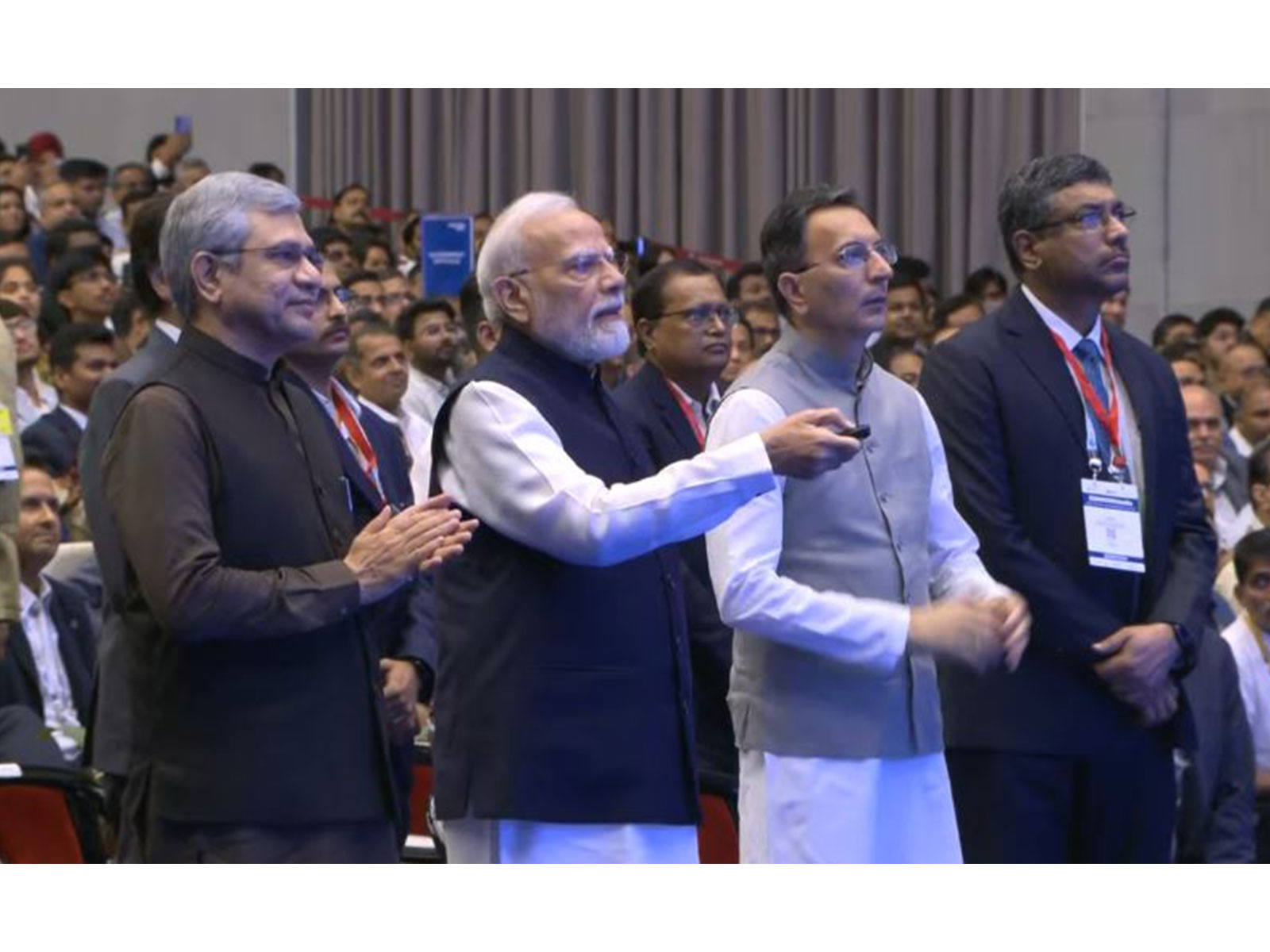
New Delhi, 17th Sept: Prime Minister Narendra Modi on Thursday inaugurated the fifth edition of SEMICON India 2026 at Yashobhoomi in New Delhi, bringing together stakeholders from the global semiconductor and electronics industry.
The three-day event, being held from September 17 to 19 under the theme “Silicon to Systems: Building the Ecosystem,” features participation from industry leaders, policymakers, investors, researchers, startups and academia. The event has more than 500 exhibitors, over 240 international companies and delegations from more than 40 countries, according to the Ministry of Electronics and Information Technology.
From policy to commercial production
Addressing the gathering, Modi traced India’s semiconductor journey from the launch of the India Semiconductor Mission and project planning to pilot lines and commercial production.
He said semiconductor chips produced at Indian facilities have begun reaching customers in India and overseas, while commercial production has commenced at new facilities.
The Prime Minister said building a semiconductor ecosystem requires capabilities spanning chip design, fabrication, assembly, testing, equipment and materials. He credited industry partnerships and investments with helping accelerate the development of these capabilities.
India has so far approved 12 semiconductor manufacturing projects and 24 semiconductor design companies under the Semicon India Programme, according to MeitY data.
Focus on Semicon 2.0
Modi highlighted the next phase of the government’s semiconductor programme, referred to as Semicon 2.0, and said the government is taking regulatory and policy measures to facilitate greater participation by global companies, startups and design firms.
A PIB factsheet states that Semicon 2.0 was approved in July 2026 with an outlay of ₹1,27,500 crore, aimed at scaling India’s semiconductor ecosystem. The earlier Semicon India Programme had an outlay of ₹76,000 crore.
The Prime Minister stressed the need to develop a complete domestic supply chain, including fabless companies, semiconductor intellectual property, equipment, chemicals, gases and other materials.
He also highlighted the potential of silicon photonics and semiconductor technologies for infrastructure supporting artificial intelligence.
Push for research and talent
Modi called on Indian researchers and young technology professionals to contribute to the development of advanced technologies.
He urged young Indians conducting research abroad to consider contributing to technology development in India, while asking domestic researchers to pursue deeper innovation.
The Prime Minister also appealed to semiconductor industry leaders to increase their investments in research and development within the country.
He said stronger industry-led R&D could benefit companies while creating opportunities for India’s young engineering talent.
India’s engineering talent
Highlighting India’s demographic and technological strengths, Modi pointed to the country’s large pool of engineers and the government’s skilling initiatives in semiconductor design.
He said the government has set a target of training one lakh engineering students in semiconductor-related areas, with around 70,000 already trained.
The government has also provided access to semiconductor design tools to more than 332 academic institutions and 105 startups, while 24 startups have been approved under the Design Linked Incentive scheme, according to the Ministry of Electronics and IT.
AI is changing semiconductor demand
The Prime Minister said the rapid expansion of artificial intelligence is changing the requirements of the semiconductor industry.
He noted that the industry’s focus is increasingly extending beyond transistor size to broader system-level considerations, including memory architecture, system integration and thermal management.
With AI data centres and advanced computing requiring substantial and reliable electricity supplies, Modi also highlighted India’s investments in the power sector.
He pointed to the expansion of renewable energy capacity, greater attention to nuclear power and the government’s efforts to strengthen energy availability for industrial growth.
India as a manufacturing destination
Modi said global companies are looking for new and trusted manufacturing locations as semiconductor supply chains diversify.
He said India is working to create the infrastructure, policy environment, skilled workforce and energy capacity required to attract semiconductor manufacturing and related industries.
The Prime Minister also linked the semiconductor push with the broader Atmanirbhar Bharat and Viksit Bharat objectives, saying the development of domestic chip capabilities would strengthen India’s position in critical technology supply chains.
SEMICON India 2026 is jointly organised by the India Semiconductor Mission and SEMI, the global semiconductor industry association. The event covers manufacturing and technology, AI and digital transformation, supply chains, chemicals and materials, policy, sustainability, product design, startups, innovation and talent development.
