
Karnataka Minister’s Remarks on Officials’ Payments Spark Row
Minister says his comments were about respecting officials, while opposition parties accuse him of normalising bribery

GG News Bureau
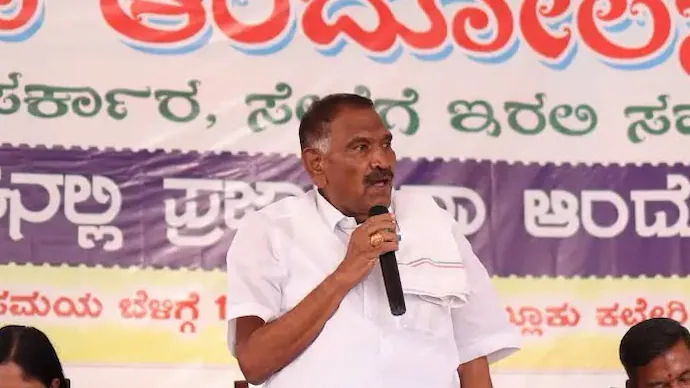
Hassan, 21st Sept: Karnataka Excise Minister and Hassan district in-charge minister K.M. Shivalinge Gowda has faced criticism after remarks made during a public grievance meeting in Sakleshpur were interpreted as suggesting that citizens could offer money to government officials for completing their work.
Speaking at the Praja Seva Andolana meeting on September 19, Gowda was responding to complaints about officials allegedly seeking money to get government work done. He said officials would perform their duties and remarked that whatever people wanted to offer could be given respectfully, while adding that officials should not forcibly demand money.
The comments prompted objections from people attending the meeting. When members of the audience questioned why citizens should give money to officials who are already paid by the government, the minister clarified that he was referring to showing respect to officials rather than giving bribes.
The controversy intensified after a video of the exchange circulated on social media. Opposition BJP leaders criticised Gowda’s remarks and accused the Congress government of encouraging or normalising bribery. BJP MLC C.T. Ravi also questioned the remarks, contrasting them with calls from the state government for citizens to report officials demanding bribes.
Gowda subsequently clarified his position, saying his statement had been misunderstood. He said he had intended to ask people to respect officials who perform their duties honestly and on time, and denied asking anyone to pay bribes.
Hassan Deputy Commissioner K.S. Latha Kumari, who was present at the meeting, also intervened after the exchange and said that strict action would be taken against any official demanding a bribe to perform their duty.
The episode has since triggered a political controversy in Karnataka, with the minister’s original remarks and his subsequent clarification forming the focus of the dispute.
