
PM Modi Calls for UPSC Recruitment Reforms
At UPSC’s centenary, PM Modi says civil service selection must assess public-service motivation alongside knowledge

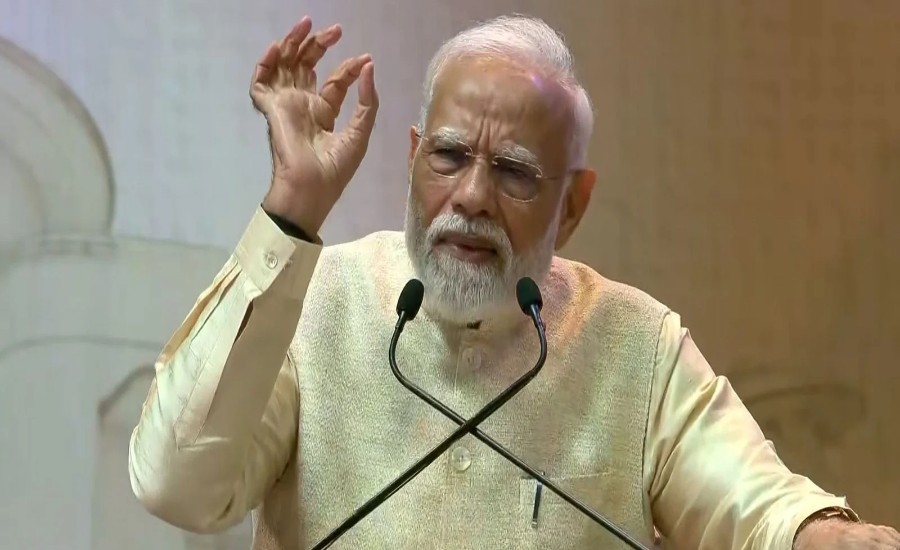
- PM Modi marks 100 years of UPSC at Bharat Mandapam.
- Calls for “Nation First” and “Citizen First” in recruitment.
- Wants exams to assess motivation, foresight and problem-solving.
- Stresses faster exam cycles and protection of UPSC’s credibility.
GG News Bureau
New Delhi, 1st Oct: Prime Minister Narendra Modi on Thursday participated in the centenary celebrations of the Union Public Service Commission (UPSC) at Bharat Mandapam in New Delhi, describing 100 years of the institution as a milestone in India’s administrative history. He called for reforms in civil service recruitment to align selection with the changing needs of 21st-century India.
Addressing the gathering, Modi said the centenary was not only a celebration of the UPSC’s institutional legacy but also of the aspirations of millions of young people who appear for its examinations and the public trust associated with the commission.
The Prime Minister said two principles should guide public service — “Nation First” and “Citizen First.” He argued that recruitment examinations should assess not only what candidates know but also why they aspire to join the civil services.
“We must bring youth into Public Services who are driven by Public Service, not Public Office,” Modi said, according to the Prime Minister’s Office.
Focus on citizen-centric governance
Modi said the administrative system must adapt to changing citizen expectations, technological developments and the socio-economic transformation expected by 2047.
Referring to the principle of “Nagrik Devo Bhava”, he said citizen service should remain central to governance. He described the emerging work culture as “Pro-People, Pro-Active, Good Governance.”
He also called for recruitment systems to give greater attention to complex problem-solving and foresight as civil servants increasingly confront challenges involving artificial intelligence, information warfare, deepfakes, algorithmic bias and climate justice.
PM seeks shorter examination cycles
The Prime Minister urged recruitment agencies to adopt “Time Certainty” to reduce examination cycles without compromising standards. He said prolonged recruitment processes impose financial costs on candidates and their families through coaching, accommodation and transportation expenses, describing faster examination cycles as an equity issue.
He also encouraged UPSC and State Public Service Commissions to strengthen institutional capacity, adopt best practices and use digital platforms such as i-GOT under Mission Karmayogi for continuous capacity building.
From 1926 institution to a century of public service
Recalling the evolution of the UPSC since its establishment in 1926, Modi highlighted its role in India’s administrative system and paid tribute to Sardar Vallabhbhai Patel for his contribution to building India’s administrative framework after Independence.
He also highlighted the widening participation in civil service examinations, including increased participation by women and candidates from rural areas. According to the PM’s address, the number of examination candidates has increased 45-fold since the UPSC’s 50th anniversary in 1976.
The Prime Minister stressed that the commission’s core principles — independence, impartiality, merit, confidentiality and fair processes — must remain protected as UPSC enters its second century.
The centenary programme also featured the release of a commemorative postage stamp, a special coin and a book compiling 100 significant judgments relating to UPSC and public service commissions.
