
Piyush Goyal Backs WTO Rules at G20 Trade Meet
India calls for evidence-based trade measures, policy space for developing nations and stronger multilateral trade rules

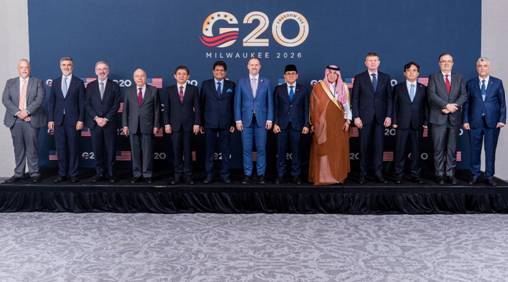
- Goyal called for WTO-consistent measures to address trade distortions.
- India opposed using trade measures based on unverified assumptions.
- He reaffirmed India’s commitment to eliminating forced labour.
- India sought greater policy space for developing economies.
GG News Bureau
New Delhi, 2nd Oct: Union Commerce and Industry Minister Piyush Goyal, addressing the concluding day of the G20 Trade Ministers’ Meeting in Milwaukee, Wisconsin, reiterated India’s support for a rules-based global trading system with the World Trade Organization (WTO) at its core.
Goyal spoke on structural excess capacity and production, the Most-Favoured-Nation (MFN) principle, forced labour in global supply chains and the way forward for the G20 trade agenda.
On structural excess capacity, Goyal said India’s large economy is driven by domestic demand and is developing manufacturing value chains from design to finished products. He said India does not have structural excess capacity in the sectors identified by the G20 Presidency.
He acknowledged concerns over trade-distorting support in some economies, saying such distortions can contribute to dumping and predatory pricing. According to Goyal, anti-dumping and countervailing duties should remain evidence-based, consistent with WTO rules and subject to judicial review.
He also said diversification of production and supply chains is a legitimate objective, but should not become a basis for measures outside WTO rules or shift adjustment costs onto developing countries.
On the MFN principle, Goyal stressed that transparent and non-discriminatory rules are central to the multilateral trading system. He said consensus-based decision-making at the WTO must remain central and that special and differential treatment for developing countries should be preserved. He also called for restoration of the WTO’s two-tier dispute settlement system.
India Reaffirms Stand Against Forced Labour
Addressing forced labour in global supply chains, Goyal said India’s commitment to eliminating the practice was “absolute and unconditional”. He referred to Article 23 of the Constitution, which prohibits forced labour, and said India has ratified International Labour Organization Conventions 29 and 105.
He also noted that India amended its Foreign Trade Policy in July 2026 to prohibit imports of goods produced using forced labour.
Goyal said trade measures at borders should be based on specific and verifiable evidence rather than assumptions about entire countries, regions or sectors. He stressed that such measures should follow due process and WTO rules.
India, he said, supports the International Labour Organization as the competent universal and tripartite body for labour standards. He also backed voluntary exchanges of good practices among G20 members, provided such cooperation does not create new obligations or lead to unilateral trade action.
The Minister said India participated in the Milwaukee meeting in a constructive spirit and reaffirmed its commitment to a fair, equitable, transparent, open and inclusive multilateral trading system. He also extended India’s support to the United Kingdom for its G20 Presidency in 2027.
On the sidelines of the meeting, Goyal held bilateral discussions with trade ministers from Australia, Saudi Arabia, France, South Korea and Canada. The Milwaukee meeting followed the opening-day discussions, where G20 Trade Ministers also reached consensus on a statement concerning the use of food as an instrument of coercive trade action.
