

By Anjali Sharma
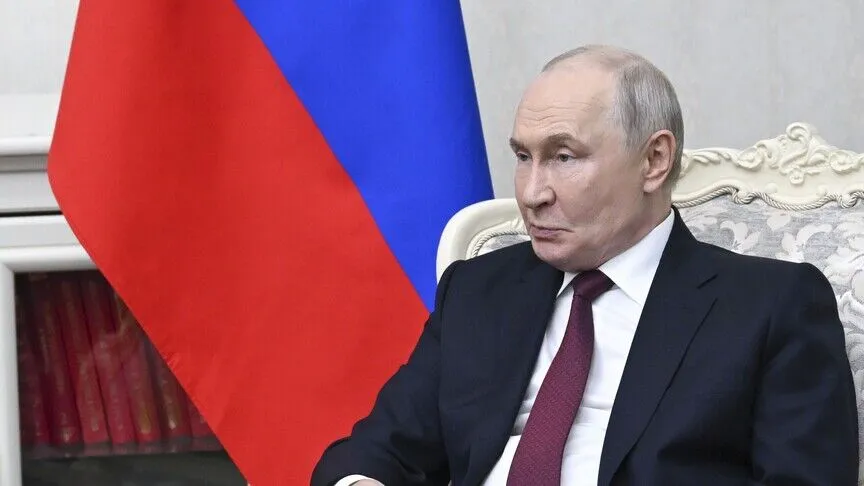
WASHINGTON – Russian President Vladimir Putin on Friday has warned European countries against restricting shipping in the Baltic Sea, raising the prospect of a crisis similar to the disruption in the Strait of Hormuz while insisted that Moscow does not want a military confrontation with Europe.
Finnish and Norwegian leaders initiated rare talks with Moscow on October 27, consulted Ukraine ahead of planned negotiations in Abu Dhabi.
Putin spoke to reporters said Russia was prepared for a potential conflict but remained open to restoring diplomatic relations with European nations.
The warning came after an unusual diplomatic exchange with Finland and Norway, whose leaders held direct talks with Putin earlier this week over the war in Ukraine and prospects for renewed negotiations.
Putin warning focused on the risks of disrupting maritime navigation in the Baltic, a strategically important waterway for Russia and several European countries.
He referred to the turmoil around the Strait of Hormuz during the US-Iran conflict.
Puttin questioned whether European governments wanted to risk a comparable confrontation in northern Europe.
“Does someone want the same situation in the Baltic as in the Gulf or the Strait of Hormuz?” he asked, before warning that Moscow would respond to challenges.
The comparison brought maritime security into his broader warning about deteriorating relations between Russia and Europe.
Putin also addressed the possibility of a direct confrontation with European countries, asserting that Russia was ready for such a scenario but did not seek it.
“We are ready, but we want no war with Europe,” he said.
He warned that an escalation beyond a certain point could leave every side facing severe consequences, with no country emerging victorious.
“There will be no winners at all.”
He expressed support for efforts to rebuild diplomatic engagement with European governments, either collectively or through direct bilateral contacts.
His remarks followed a Russia-Africa summit in Moscow.
The diplomatic opening came on October 27, when Finnish President Alexander Stubb and Norwegian Prime Minister Jonas Gahr Støre jointly spoke to Putin from Helsinki.
According to statements issued by the Finnish presidency and Norwegian government, the two leaders initiated the conversation in consultation with Ukraine.
Their aim was to discuss efforts to end the war and convey messages ahead of planned diplomatic meetings in Abu Dhabi.
The Nordic leaders made clear that they represented their respective countries rather than the European Union as a whole.
Both governments also reaffirmed their support for Ukraine and stressed the importance of regional stability, including security in the Baltic Sea and the High North.
Putin defended their decision to contact Moscow despite criticism in some European capitals, describing direct communication as a constructive step.
Putin’s remarks placed two competing possibilities at the centre of Russia’s relations with Europe: renewed diplomatic engagement and a potentially dangerous escalation over regional security.
The Baltic Sea warning extends the discussion beyond the battlefield in Ukraine to the risks associated with maritime access and confrontation involving neighbouring European states.
Media reported that October 27 call has opened a channel of communication, but neither Russia nor the Nordic governments have announced a breakthrough towards ending the war.
The attention will turn to whether further diplomatic contacts produce concrete proposals and whether tensions over Baltic navigation become a subject of direct negotiations.
