
CJP’s political neutrality claim raises questions on its alliances against the opposition

Poonam Sharma
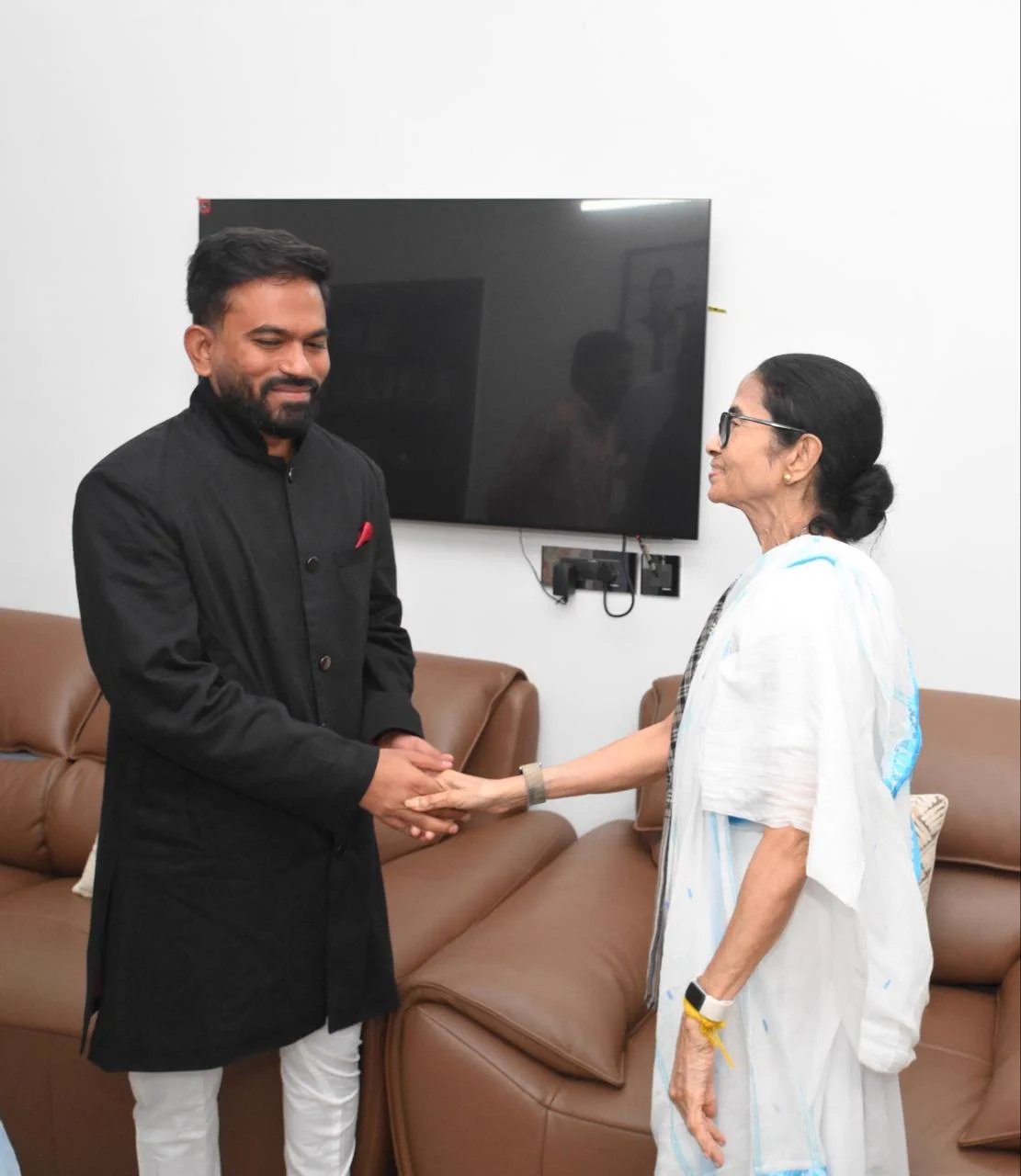
Abhijeet Dipke, after meeting Mamata Banerjee, said his organization will support the protest of the INDIA bloc but will not join the rally. The distinction brings into play issues of political independence, accountability and respect for democratic institutions. Can an organization claim political neutrality and at the same time openly support an opposition-led campaign demanding the resignation of a constitutional office holder? The question has come into focus after Cockroach Janta Party (CJP) founder Abhijeet Dipke met West Bengal Chief Minister and Trinamool Congress leader Mamata Banerjee.
CJP will not formally be part of the November 1 rally of the INDIA bloc at Delhi’s Ramlila Maidan, Dipke said in a statement. But he expressed solidarity with the demonstration and reiterated his organisation’s demand for resignation of Chief Election Commissioner Gyanesh Kumar.
Political Impartiality or Strategic Affiliation?
Dipke had called CJP an independent organization and a neutral platform after his meeting with Banerjee. The group would support any organization campaigning against alleged electoral irregularities, regardless of political affiliation, he said. In principle such a position is legitimate. Civil society organizations have the right to raise concerns about electoral integrity, to challenge public institutions and to support peaceful demonstrations.
But neutrality is more than a declaration. It has to be shown with consistent standards, transparent decision-making and a willingness to examine claims whatever political party makes them. The CJP’s public alignment with an opposition mobilization and its demand for the resignation of the Chief Election Commissioner make its professed neutrality a valid subject of public scrutiny.
Not going to a rally is not proof of political independence in itself.
Questions raised over Mamata Banerjee meeting.Dipke said he had met Banerjee to thank her for backing CJP’s earlier protests and for standing with its members when Saurav Das and Ashutosh Ranka were arrested. In turn, Banerjee praised the activists and invited them to hold programs in West Bengal.
There is nothing inherently wrong with political leaders meeting with activists. Democratic participation is often about working together between political parties and civic organizations. But when an organization claims to be politically neutral, but has visible relationships with opposition leaders, citizens have a right to ask whether such relationships influence its campaigns.
Does the CJP have same standards for all political parties? Would it publicly challenge opposition-led governments on similar charges? Are its activities, funding and organizational decisions transparent enough? These are proper accountability questions, not reasons for automatically branding the organization as unlawful or disloyal.
Claims of vote theft need to be proved.
The INDIA bloc’s demonstration is based on allegations of electoral irregularities, which its organizers are calling “vote chori”. Electoral integrity is essential to democratic legitimacy. Any credible evidence of misconduct must be seriously examined through appropriate legal and institutional mechanisms.
But allegations, however loud, should not be considered as facts until proven. CJP and other campaigners who are demanding the resignation of the Chief Election Commissioner should explain exactly what decisions they are taking issue with, what evidence supports their allegations and what constitutional remedies they seek.
The Election Commission of India is a Constitutional Authority. Its decisions can be challenged in accordance with the law. But the institution’s credibility must not be compromised by baseless allegations. Similarly, the defense of the independence of the Election Commission does not mean that what it does is beyond public scrutiny. Institutional accountability and moderation in political rhetoric are essential for a mature democracy.
Youth activism shouldn’t be a shield from scrutiny
CJP has its roots in protests of young people including protests related to the NEET paper leak. Such campaigns can be important in bringing to light public grievances. Still, youthful activism does not make all claims true or all political stances fair. Organizations that activate young people have a particular responsibility to separate verified information from political rhetoric.
Their credibility rests on their advocacy of informed participation, peaceful protest and adherence to legal processes. The same measures apply to government supporters and opposition activists. The political confrontation needs to be put above the national interest. And India’s democratic institutions belong to its people, not to the government of the day or to any opposition alliance.
Political parties may call for the resignation of public officials. They can call for electoral reforms and challenge the decisions of the administration. However, criticism should be based on evidence and campaigns should not confuse allegations with findings made judicially or institutionally.
This view does not support CJP’s involvement in anti-national or unlawful activity. Its political positioning is, however, questionable. The question is whether CJP can show independence in its actions, rather than just claiming neutrality while backing a politically charged campaign. Transparency, consistency and accountability are the answer for an organization wanting public trust, not the political prominence of those who endorse it.
