
ECI Defends SIR Process in SC, Rejects Opposition’s Allegations
In a 15-point counter-affidavit, the poll panel says all three SIR orders were unanimous and denies amending statutory Form 6

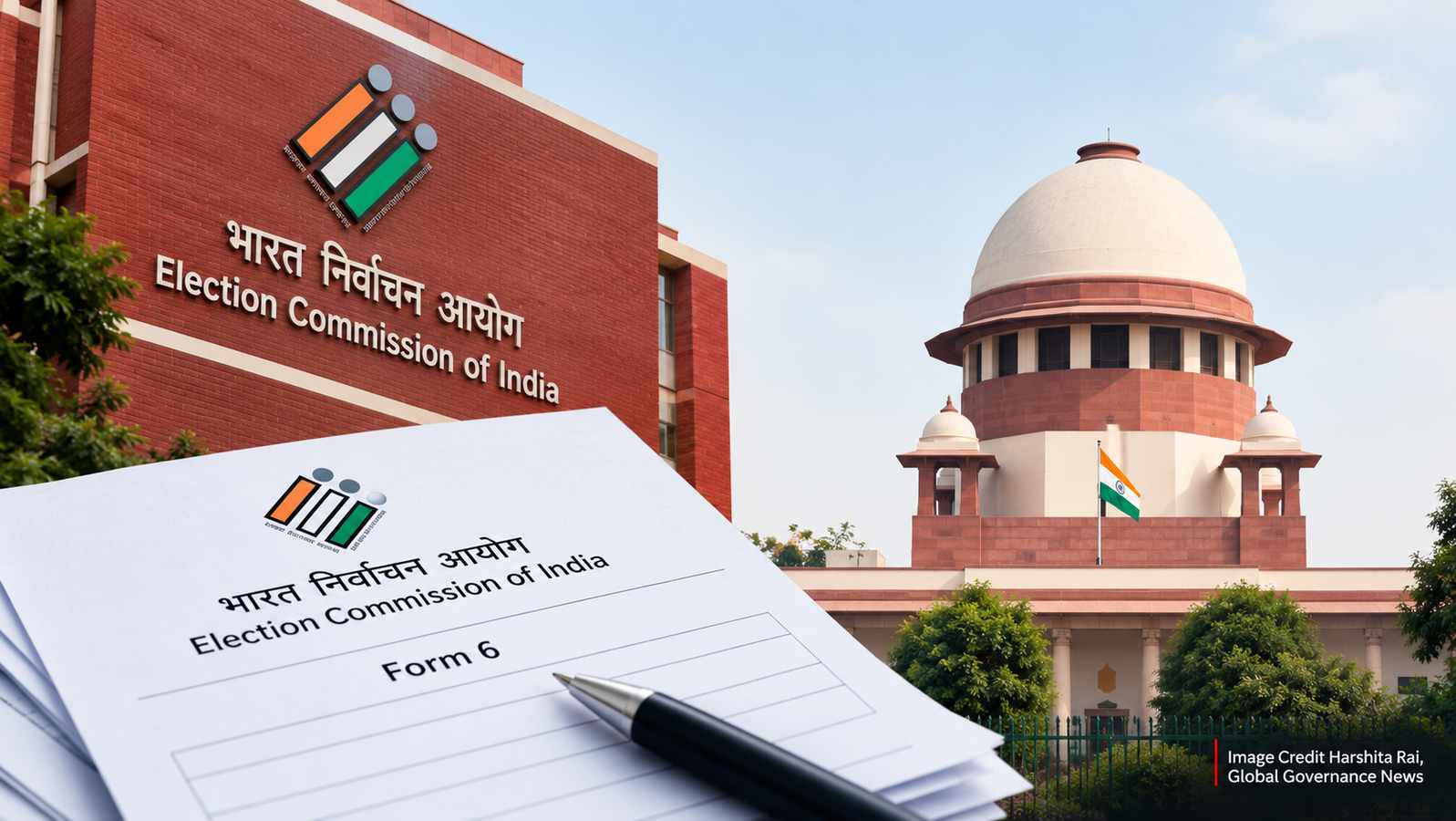
- ECI files a 15-point counter-affidavit defending the SIR process.
- Commission says all three SIR orders were approved unanimously.
- Poll panel denies amending Form 6, calling the additional declaration a separate document.
- Supreme Court schedules the next hearing for November 17.
GG News Bureau
New Delhi, 2nd Nov: The SIR controversy has intensified in the Supreme Court, with the Election Commission of India (ECI) filing a detailed 15-point counter-affidavit rejecting allegations of unilateral decision-making, procedural irregularities and changes to voter registration forms.
The Commission maintained that all major decisions concerning the Special Intensive Revision (SIR) of electoral rolls were taken unanimously by its three members — Chief Election Commissioner Gyanesh Kumar and Election Commissioners Sukhbir Singh Sandhu and Vivek Joshi.
The affidavit, filed in response to petitions challenging the functioning of the poll panel and the CEC’s decision-making powers, defended the legality of the SIR exercise and described the allegations against the Commission as misconceived.
ECI says SIR decisions were unanimous
The Commission told the court that its three orders relating to the SIR exercise, issued on June 24, 2025, October 27, 2025, and May 14, 2026, were approved unanimously.
It argued that suggestions, queries or objections raised by individual commissioners during the processing of files do not, by themselves, constitute formal decisions of the Commission.
According to the affidavit, files generally move from one Election Commissioner to the other before reaching the CEC. Decisions are recorded in the relevant files and carry the approval of the Commission members. In urgent cases, electronic approvals may be obtained and formally recorded later.
The ECI also rejected the challenge to the functioning and powers of CEC Gyanesh Kumar, arguing that the petitions seeking to restrain him or question his authority were not maintainable under the law.
Form 6 controversy
On allegations that Form 6, used by eligible citizens to apply for inclusion in electoral rolls, had been modified, the ECI maintained that the statutory form itself had not been amended.
The Commission said only the additional declaration attached to Form 6 had been modified for the SIR exercise to introduce a mapping mechanism. This allows applicants to link their details with earlier electoral rolls through information about themselves or their relatives.
The ECI acknowledged that the way the declaration was displayed on its online platform could have created the impression that Form 6 had been amended. It said the online application process was being separated into the statutory form and the additional declaration, in line with the physical application procedure.
The Commission also said Booth Level Officers (BLOs) were visiting the homes of voters whose details could not be mapped to collect documents. Hearings, it maintained, would be required only in exceptional cases and should preferably be conducted online.
Internal correspondence and court proceedings
Addressing questions over internal communications involving Election Commissioners Sandhu and Joshi, the ECI said the correspondence with the Cabinet Secretary concerned administrative work allocation and an officer on deputation, rather than disagreements over SIR policy decisions.
The Commission also said it had neither released nor authorised the release of internal notes or confidential files to the media.
The Supreme Court has allowed the petitioners time to respond to the affidavit and scheduled the next hearing for November 17. During the latest proceedings, the bench indicated that it would examine the issues raised, including the questions surrounding the Commission’s decision-making process.
The legal challenge has brought the ECI’s internal functioning, the process of electoral-roll revision and the treatment of voter registration applications under judicial scrutiny. The Commission’s claims in its affidavit will be considered alongside the petitioners’ submissions during the proceedings.
