
Hybrid Warfare Against India: US Activities at the Borders
International Networks and the Orchestration of Internal Unrest

Poonam Sharma
In recent years, there has been a marked increase in foreign, particularly American, activity on India’s sensitive borders with Bangladesh and Mizoram. The frequent presence and arrests of US citizens like Mathew Van Dyke and Jordon Brown, the regular US military exercises in bordering regions like Sylhet (Bangladesh), and the web of various anti-India insurgent and social groups all point to a multi-pronged strategy to destabilise the Indian system from within and outside.
Coincidence or Calculated Strategy? The US Border Presence
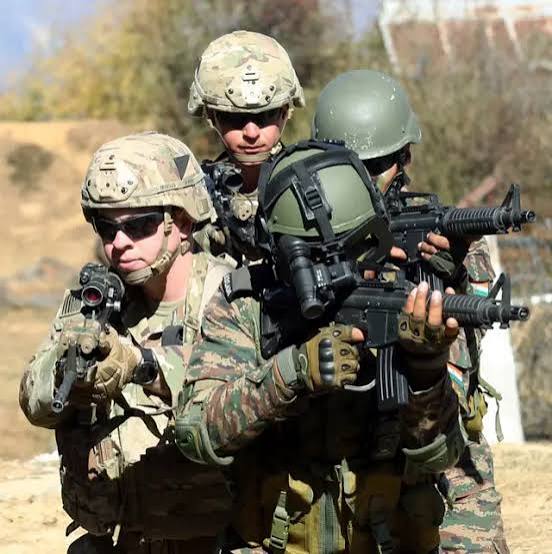
The routine presence of American citizens and troops in the Bangladesh-Mizoram border area, especially in the Sylhet area, is not just about military exercises. These are areas with a complex security environment and cross border insurgency and trafficking networks. According to the official narrative, they are “regular exercises”, but the repeated detentions of US citizens and the presence of Western PMCs from the US, UK, Spain, Brazil, Hungary, as well as Chinese (PLA-backed) and South East Asian actors, point to a deliberate geopolitical game.
The presence of these foreign actors is not limited to the military. The region is a breeding ground for international criminal and terror networks like JMB, ISI, AQIS and AUMB that have found a fertile ground in the porous and rugged terrain of the Indo-Bangladesh-Myanmar trijunction. The infamous 2007 attack on the British High Commissioner in Bangladesh, the growing influence of Myanmar’s Arakan Army (considered by US think tanks as the most powerful insurgent group in the region) and the logistics and arms routes that snake through these borders show how deep these networks run.
The Geography of the Crime: Narco-Terrorism
These borderlands are a melting pot for narco-terrorism, arms smuggling, human trafficking and insurgency. The Arakan Army has sought to destabilize the Myanmar-Bangladesh-India border area by financing and arming local and cross-border insurgent groups with backing from China and other international players. These networks feed into each other, providing logistical and financial support to Naxals, Maoists and other extremist elements in India’s Northeast.
The SCO and the spectre of the US
The United States is not an official member of the Shanghai Cooperation Organization (SCO), but it’s activity in the region is being monitored. US agencies have beefed up their intelligence and NGO networks, particularly in Bangladesh, under the cover of humanitarian assistance, human rights advocacy, anti-drug operations, and “joint exercises”. This presence gives leverage for influence operations and intelligence gathering and puts pressure on India’s security apparatus.
Engineering Internal Turmoil: CJP, NEET & Urban Naxals
The recent spate of protests — from the CJP agitation in Delhi to the NEET exam controversy — cannot be seen in isolation as mere byproducts of policy failures or popular discontent. There are growing indications that these movements are supported by a network of urban Naxalites, foreign-funded NGOs and sophisticated social media propaganda mills. These protests, often taking place during crucial Parliamentary sessions or national events, suggest a deliberate attempt to undermine the legitimacy of democratic institutions and to diminish public trust in governance.
Foreign funding, digital mobilization and visible participation of entities linked to hostile interests, there is strong evidence of orchestrated campaigns, not spontaneous ones. Today is NEET, tomorrow it could be some other issue. What remains constant is the strategy of keeping the Indian system in a state of flux and uncertainty.
The Media Story and International Advisories
Whenever there is large scale unrest or protests in India, western embassies immediately come out with “travel advisories” to their citizens. They ostensibly serve a safety function but are also tools of diplomatic signaling, designed to generate international pressure and global media attention. The narrative therefore moves away from the merits of the protest, to alleged “crackdowns” or “instability,” providing ammunition for international critics.But they knew it before is a thinkable issue .
A Multiple Fronts and Long Duration Challenge
What is being enacted is a long term multi-front hybrid war against India. Foreign intervention at the borders, the internal operations of urban Naxals and propaganda networks and the flow of narco-finance and arms are all interlinked. The Parliament, the education system and indeed the very social fabric of India are under a web of direct and indirect attacks.
The Way Ahead Vigilance and Solidarity
Meeting this challenge requires a coordinated and comprehensive response.The real test for India is not just at the frontiers, but in every institution and community that forms the backbone of its democracy. Only through unity, vigilance and a resilient policy response can the nation withstand and defeat this multi-layered, persistent campaign of hybrid warfare.
Summary
The battle for India’s future is being fought on many fronts — on the border outposts, in the digital spheres, in the streets and in the halls of Parliament. The nation needs to understand the complex and changing nature of the threats facing the nation. Taking them on head-on India can protect its sovereignty, maintain its democratic institutions and ensure a stable future for the generations to come.
