
India Adds 51st Doppler Weather Radar in Sambalpur
New radar to strengthen weather monitoring and early warnings across western Odisha and adjoining regions

- India’s Doppler Weather Radar network has expanded from 14 in 2014 to 51 in 2026.
- Around 40 additional radars are planned under Mission Mausam.
- The Sambalpur radar will support weather monitoring across western Odisha and neighbouring regions.
- IMD provides weather and early-warning support to 13 neighbouring countries.
GG News Bureau
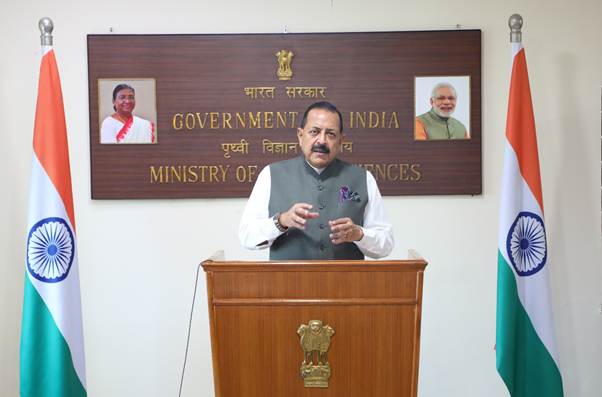
Sambalpur, 18th Sept: Union Minister of State (Independent Charge) for Earth Sciences Dr Jitendra Singh on Thursday virtually inaugurated India’s 51st state-of-the-art Doppler Weather Radar at Sambalpur, Odisha, in the presence of Chief Minister Mohan Charan Majhi. The new facility is aimed at strengthening weather monitoring, forecasting and early-warning capabilities across western Odisha and adjoining areas.
With the commissioning of the Sambalpur radar, Odisha now has three Doppler Weather Radars, following installations at Gopalpur and Paradip. The new facility will provide meteorological inputs for western Odisha as well as parts of southern Jharkhand, northern Chhattisgarh, North Andhra Pradesh and West Bengal.
Dr Jitendra Singh said India’s Doppler Weather Radar network has grown from 14 radars in 2014 to 51, with around 40 more planned under Mission Mausam. The proposed expansion would take the national network to about 81 radars.
The Minister said the expansion is intended to strengthen the country’s capacity to monitor and respond to extreme weather events, including thunderstorms, lightning and heavy rainfall. The Sambalpur installation is expected to help address an observational gap in the region and provide additional data for more timely weather alerts.
Dr Singh said weather preparedness also requires observations beyond radar infrastructure. The government is expanding ground-based systems, including Automatic Weather Stations and rain gauges, across Odisha, including district- and school-level locations. Radio sonde stations and microwave radiometers are also being deployed to build a multi-layered observation network.
According to the Ministry of Earth Sciences, the broader objective is to enable more localised forecasting and translate improved weather information into timely action. Such forecasting has applications in agriculture, disaster management, power and energy systems and other weather-sensitive sectors.
Dr Jitendra Singh also said additional Doppler Weather Radars are planned for Balasore, Puri and Bhubaneswar, while automated weather monitoring is being expanded across regional centres and adjoining areas.
Highlighting India’s regional meteorological role, the Minister said the India Meteorological Department (IMD) is providing weather, cyclone, flash-flood forecasting and early-warning support to 13 neighbouring countries under the “Neighbour First” approach.
Secretary, Ministry of Earth Sciences, Dr T. Srinivasa Kumar Tummala, appreciated the Odisha government’s support in facilitating land acquisition and construction for the radar. He said enhanced observational data would support agriculture, disaster management and power and energy management in the state.
The programme was attended by Rajya Sabha Member Manmohan Samal, MLA Jayanarayan Mishra, Odisha Minister Suresh Pujari, IMD Director General Dr Mrutyunjay Mohapatra and senior officials from the Centre and Odisha government.
The Sambalpur radar is part of the continuing expansion of India’s weather observation infrastructure under Mission Mausam, aimed at improving forecasting and preparedness against extreme weather events.
