
India Rejects Pak-China Boundary Joint Commission as ‘Without Legal Basis’
MEA says India does not recognise the 1963 China-Pakistan boundary agreement and opposes arrangements involving Indian territories.

By Anjali Sharma
WASHINGTON – India on Wednesday rejected the so-called Pakistan-China Boundary Joint Commission, questioned its legal basis in the absence of any boundary between the two countries.
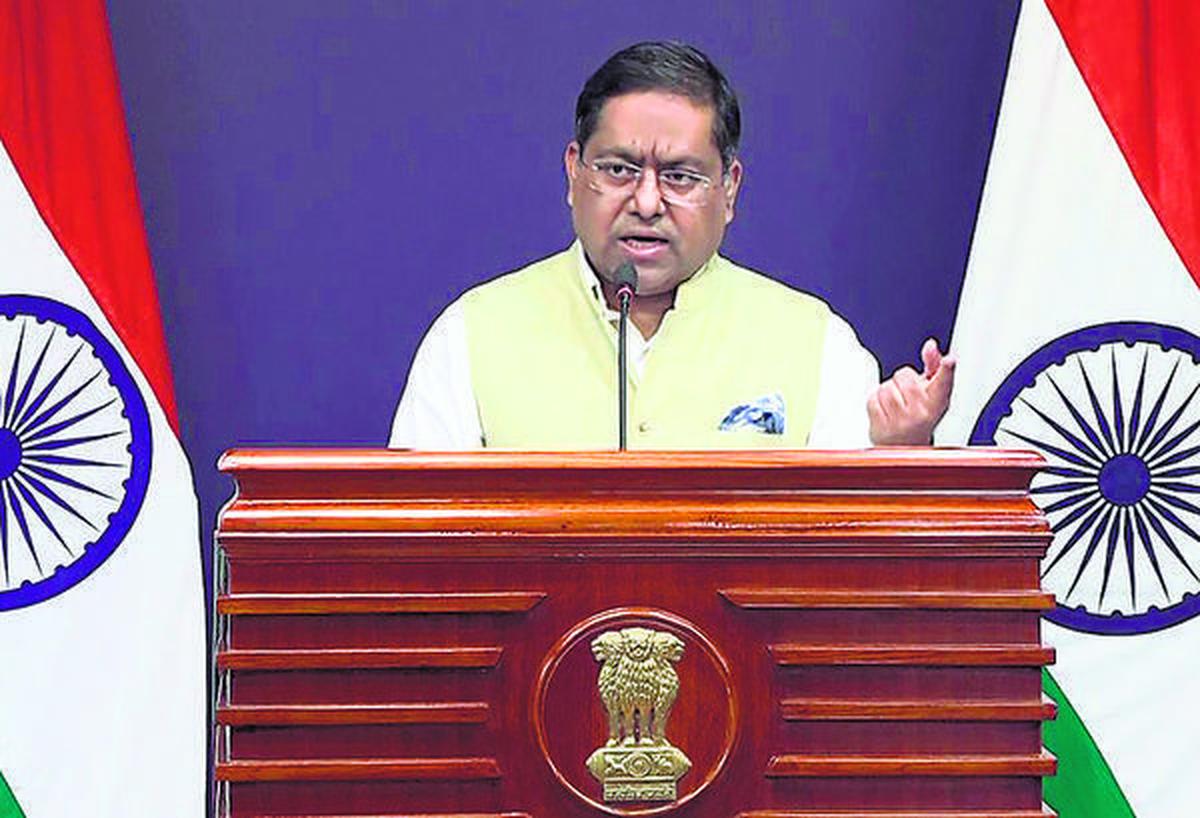
MEA spokesperson Randhir Jaiswal said “There is no boundary between Pakistan and China. We reject the so-called Joint Commission, which is without any legal basis.”
Jaiswal said, “Our position on this matter is clear and consistent. There is no boundary between Pakistan and China. We reject the so-called Joint Commission, which is without any legal basis.”
He said that the entire Union Territories of Jammu and Kashmir and Ladakh are an integral and inalienable part of India.
“Pakistan has no locus standi to enter into arrangements concerning Indian territory under its illegal and forcible occupation,” he said.
Jaiswal stated that India has never recognised the so-called ‘China-Pakistan Boundary Agreement’ of 1963 and has consistently maintained that it is illegal and invalid.
He said New Delhi resolutely opposed and rejected any attempts to “alter the status of these occupied territories or legitimise illegal occupation, impinging on India’s sovereignty and territorial integrity.”
He reiterated that any so-called boundary cooperation between China and Pakistan concerning Indian territories would be completely unacceptable and would have no bearing whatsoever on India’s sovereignty over these territories.
Jaiswal demanded that Pakistan immediately vacate areas under its illegal and forcible occupation.
According to media reports the Indian response came hours after Pakistan’s Ministry of Foreign Affairs termed the “operationalisation” of the Pakistan-China Boundary Joint Commission as a “significant milestone” for Pakistan-China relations.
MEA spokesman Jaiswal said that the two sides set the stage for enhanced cooperation in border management, joint border surveys, trade flows and people-to-people connectivity.
