
India-UK CETA Comes Into Force
Over $140 million worth of exports flagged off as landmark trade pact opens zero-duty access for nearly 99% of Indian exports

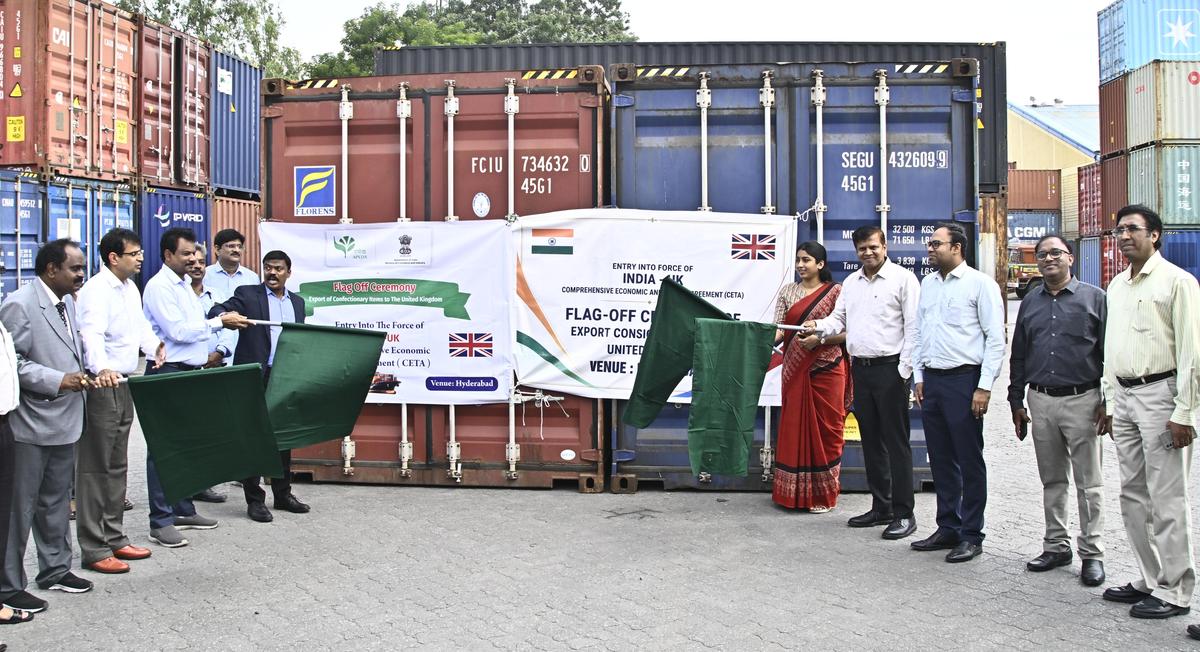
- India-UK CETA and Social Security Agreement officially come into force.
- Over 50 export consignments worth $140 million dispatched on Day One.
- Nearly 99% of Indian exports to receive zero-duty access to the UK.
- Agreement expected to boost trade, services, MSMEs and employment.
GG News Bureau
New Delhi, 15th July: The India-United Kingdom Comprehensive Economic and Trade Agreement (CETA) and the Agreement on Social Security officially came into force on Wednesday, marking a major milestone in bilateral economic relations and opening zero-duty market access for nearly 99 per cent of India’s exports to the UK.
To mark the implementation of the agreement, more than 50 export consignments valued at over USD 140 million were flagged off from over 20 ports, airports, Inland Container Depots (ICDs), Special Economic Zones (SEZs) and manufacturing facilities across the country under the new preferential tariff regime.
Speaking on the occasion, Union Commerce and Industry Minister Piyush Goyal described the agreement as a defining milestone in India-UK relations. He said the pact would create significant opportunities for sectors including textiles, leather, gems and jewellery, engineering goods, marine products, chemicals and processed foods while also benefiting MSMEs, farmers and manufacturers. The agreement is also expected to strengthen India’s services sector by creating new opportunities in IT, professional, financial, education and business services.
The accompanying Agreement on Social Security, also known as the Double Contribution Convention (DCC), exempts Indian professionals on temporary assignments in the United Kingdom from making double social security contributions for up to five years, enhancing the competitiveness of Indian talent overseas.
Commerce Secretary Rajesh Agrawal said the agreement is one of India’s most significant trade achievements and follows more than 800 technical negotiation sessions across 14 formal rounds. He noted that the pact covers both goods and services and is expected to generate employment, livelihoods and new economic opportunities for businesses in both countries.
British High Commissioner Lindy Cameron termed the agreement a historic milestone, stating that bilateral trade currently stands at nearly £48 billion annually and is expected to increase by over £25 billion each year in the long term under the new framework. She said the agreement would simplify trade, encourage investment and strengthen cooperation in sectors ranging from manufacturing and digital trade to financial services and innovation.
The first Certificates of Origin under the agreement were issued digitally through the eCoO 2.0 platform on a self-certification basis, reducing compliance costs, particularly for MSMEs. Industry representatives welcomed the implementation, saying duty-free access and simplified certification procedures would significantly improve the competitiveness of Indian products in the UK market and support the vision of Viksit Bharat.
