
Rajnath Singh Inaugurates India’s First Dept of Military Medicine
New department at Command Hospital, Lucknow to strengthen battlefield healthcare, research and combat readiness

GG News Bureau
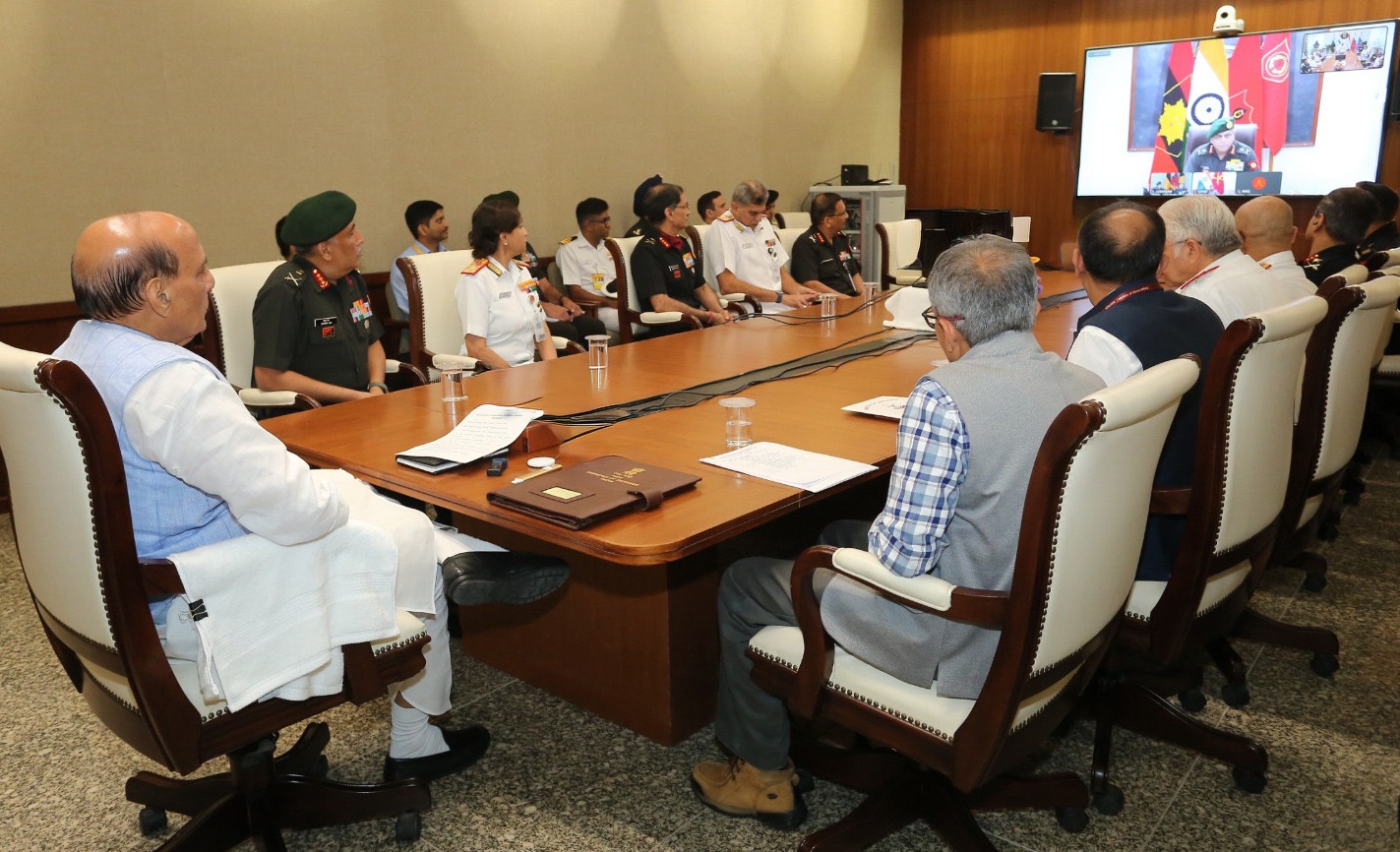
New Delhi, 29th July: Defence Minister Rajnath Singh on Wednesday virtually inaugurated the country’s first Department of Military Medicine at the Command Hospital (Central Command) in Lucknow, describing it as a major step towards strengthening India’s defence preparedness through advanced military healthcare, research and technology-driven innovation.
Established under the Directorate General of Medical Services (Army), the department is the first dedicated academic and operational centre in India focused exclusively on military medicine. It aims to enhance combat medical readiness, develop indigenous doctrines, advance research and build specialised expertise for future battlefields and humanitarian operations.
Addressing the inaugural event virtually, Rajnath Singh said a nation’s sovereignty and progress ultimately rest on the strength and morale of its armed forces, expressing confidence that the new department would reinforce soldiers’ confidence by ensuring advanced medical support during operations.
“The Department of Military Medicine will serve as a research and development hub and a Centre of Excellence, equipping the nation to deal with emerging threats arising from rapid technological advancements,” he said.
The department will focus on key areas including military trauma and damage control, combat psychiatry, environmental and operational medicine, military medical logistics, Chemical, Biological, Radiological, Nuclear and Explosive (CBRNe) medical response, emergency medicine, critical care, disaster medicine, humanitarian assistance and disaster relief (HADR), and research and data analytics.
It will also promote innovation in technology-enabled battlefield medicine, simulation-based training, telemedicine, prolonged field care and medical decision support.
The Defence Minister said the department would be developed in phases, beginning with academic programmes before expanding into Centres of Excellence for HADR and CBRNe medicine, with the long-term goal of becoming a globally recognised institution for military medicine.
Highlighting the evolving nature of warfare, Rajnath Singh said India’s armed forces operate in some of the world’s harshest terrains and climates, requiring specialised medical protocols tailored to diverse operational environments.
He also stressed that threats from weapons of mass destruction remain relevant, making military medicine an essential component of national security preparedness.
Referring to India’s role in United Nations peacekeeping missions and international humanitarian operations, the Defence Minister said the department would strengthen expertise in disaster response, field hospital deployment, epidemic control and mass casualty management.
The department has also been conceived as the principal academic and research hub for the Armed Forces Medical Services (AFMS) and will offer structured education, postgraduate programmes and indigenous research in fields such as combat medicine, combat surgery and trauma care.
Calling preventive healthcare the “first line of defence,” Rajnath Singh advocated greater use of artificial intelligence, wearable devices, predictive analytics and advanced diagnostics for real-time health monitoring of soldiers and early identification of health risks to improve combat readiness.
Describing the initiative as a transformative step in India’s military healthcare ecosystem, the Defence Minister expressed hope that the institution would evolve into the world’s leading Battlefield Medicine Research Centre.
The event was attended by Chief of the Army Staff General Dhiraj Seth, Defence Secretary Rajesh Kumar Singh, senior military commanders and officials from the Armed Forces Medical Services.
The Defence Ministry said the initiative aligns with the government’s vision of strengthening indigenous capabilities and complements the proposed Global Military Medicine Centre under the Raksha Strategy Vision 2026–30, further modernising India’s military healthcare system for future defence and national security challenges.
