
SC Seeks Centre’s Reply on Media Challenge to DPDP Act
Legacy media publishers warn that data protection provisions could hinder investigative journalism, expose confidential sources and lead to pre-censorship.

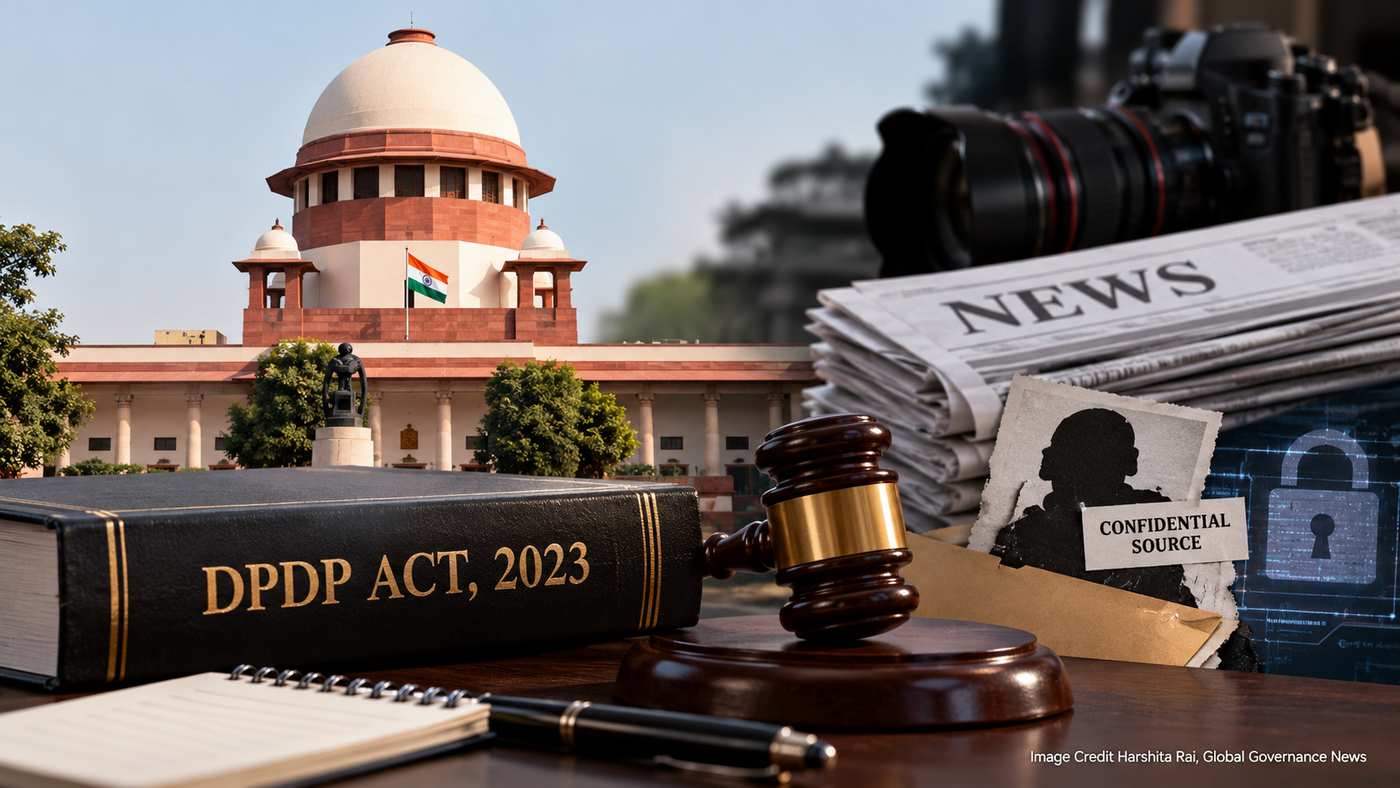
- The Supreme Court has sought the Centre’s response to a challenge against provisions of the DPDP Act, 2023.
- Media organisations warn that consent requirements could obstruct investigative journalism.
- Publishers say data retention and deletion obligations could compromise confidential sources and news reporting.
- The Court stressed the need to balance media freedom with citizens’ privacy rights.
GG News Bureau
New Delhi, 27th Oct: The Supreme Court has issued notice to the Centre on a plea filed by a group of Indian legacy media organisations challenging provisions of the Digital Personal Data Protection (DPDP) Act, 2023. The publishers have argued that applying the law to news organisations could hamper investigative journalism, compromise confidential sources and threaten the functioning of newsrooms.
The petitioners have raised concerns over provisions that they say could require journalists to obtain consent from individuals they are investigating. They have also questioned obligations concerning the retention and deletion of personal data, arguing that these requirements could interfere with news gathering and reporting.
During the hearing, counsel representing the media organisations submitted that journalists could be left dependent on the consent of the very individuals they seek to investigate. Such a requirement, they argued, could effectively shut down newsrooms and undermine the media’s ability to hold powerful individuals accountable.
Court Calls for Balance Between Media Rights and Privacy
A bench led by Chief Justice of India Surya Kant observed that the petitioning media organisations were “domain experts” who could help the Union government identify potential misuse of the law while protecting the rights of innocent citizens.
The Court emphasised the need to strike a balance between the rights of the media and the protection of individual privacy.
Counsel for the publishers argued that the legislation was not intended to regulate journalists and warned that applying its provisions to news organisations could create what they described as a “pre-censorship regime”.
The challenge raises questions about how data protection requirements should apply to journalistic activities, particularly investigations involving sensitive personal information and confidential sources.
The Centre’s response is now awaited as the legal challenge proceeds.
