
Xi-Modi Meeting: China Says India Should Be Partner, Not Rival
Beijing highlights strategic consensus, border peace and deeper cooperation following Xi Jinping’s BRICS visit to India

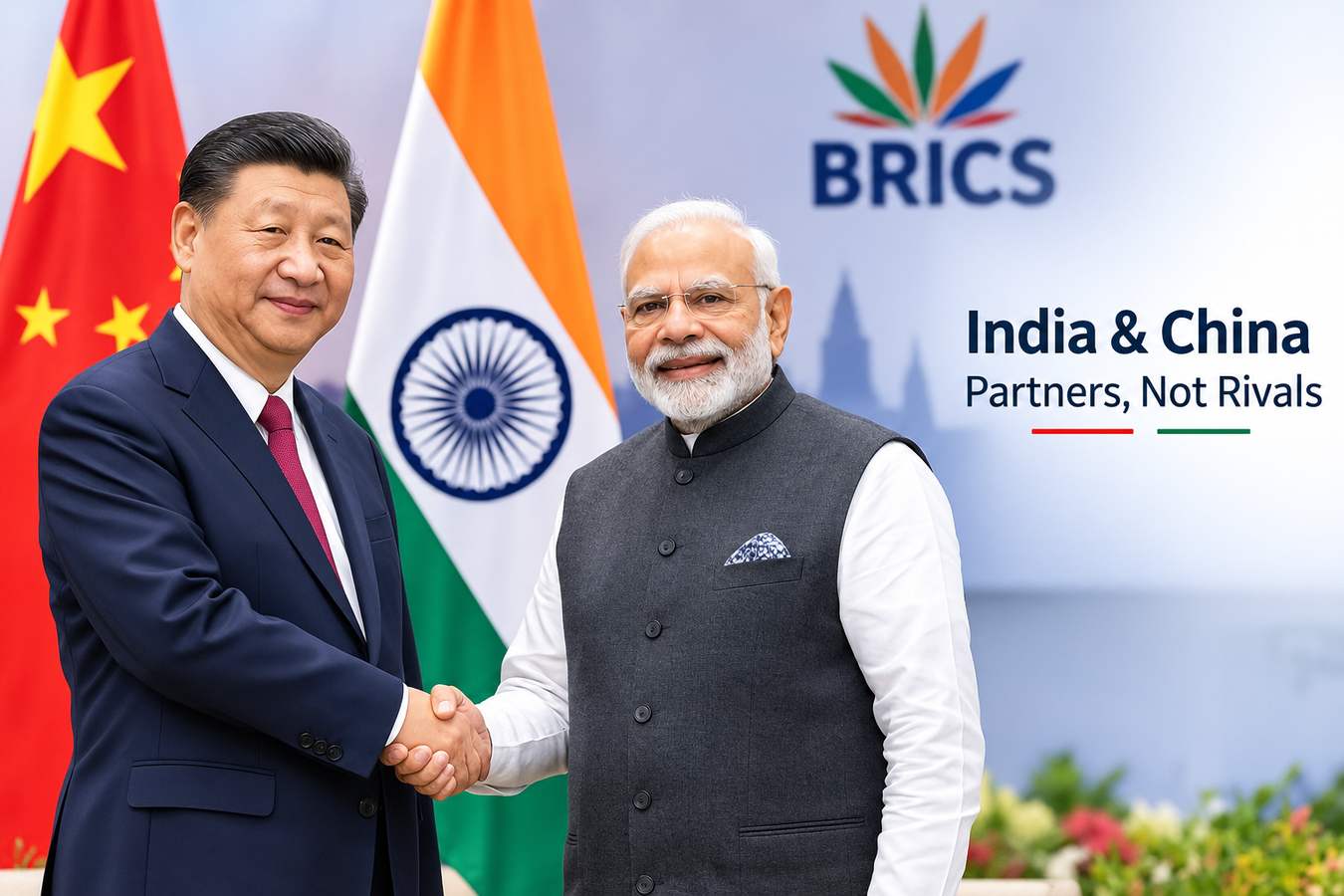
- China described “partnership, not rivalry” as the key consensus reached by Xi Jinping and Narendra Modi.
- Both sides agreed to maintain peace and tranquillity along the border.
- India and China will support each other’s BRICS chairmanships and deepen multilateral coordination.
- The two leaders also backed stronger people-to-people ties and direct air connectivity.
GG News Bureau
New Delhi, 15th Sept: China has described “partnership, not rivalry” as the most important consensus reached between President Xi Jinping and Prime Minister Narendra Modi during their meeting on the sidelines of the 18th BRICS Summit in New Delhi.
Chinese Foreign Minister Wang Yi, while summing up Xi’s two-day visit to India on September 12-13, said the two leaders held a candid and in-depth exchange on strategic, long-term and directional issues concerning China-India relations.
According to Wang, Xi said China and India can draw on each other’s strengths, support one another and pursue common development. The two leaders agreed to jointly maintain peace and tranquillity in border areas and support each other during their respective BRICS chairmanships.
A Chinese Foreign Ministry readout said China-India relations have gradually moved away from a low point under the strategic guidance of the two leaders. It said bilateral trade has reached record levels, while people-to-people exchanges have also expanded.
Wang said the two countries agreed to further build political mutual trust, appropriately manage differences and maintain peace and stability along the border. He described the development of China and India as a shared opportunity and said improved bilateral relations have significance for the Global South and the wider world.
During the meeting, Xi called for China and India to use political wisdom based on mutual respect and understanding to overcome disruptions. He advocated parallel progress on bilateral relations and border issues, with the two tracks reinforcing each other.
Wang said Modi responded positively and reaffirmed that India approaches its relationship with China from a strategic and long-term perspective. According to the Chinese foreign minister, Modi said India is prepared to be a partner rather than an adversary to China and views each other’s development as an opportunity rather than a challenge.
The two leaders agreed to prioritise development, deepen friendly and mutually beneficial ties and expand cooperation in areas including cultural exchanges, people-to-people contacts and direct air connectivity.
They also agreed to support each other’s BRICS chairmanships and strengthen coordination through multilateral platforms, including the United Nations, Shanghai Cooperation Organisation and G20.
Chinese Foreign Ministry spokesperson Guo Jiakun said China would work with India to implement the understandings reached by the two leaders, expand cooperation, deepen people-to-people exchanges and strengthen coordination on multilateral platforms.
He said China would support India’s development and revitalisation while working with India to contribute to peace and prosperity in the region and beyond.
