

Poonam Sharma
Tensions Mount Around “Project Freedom”
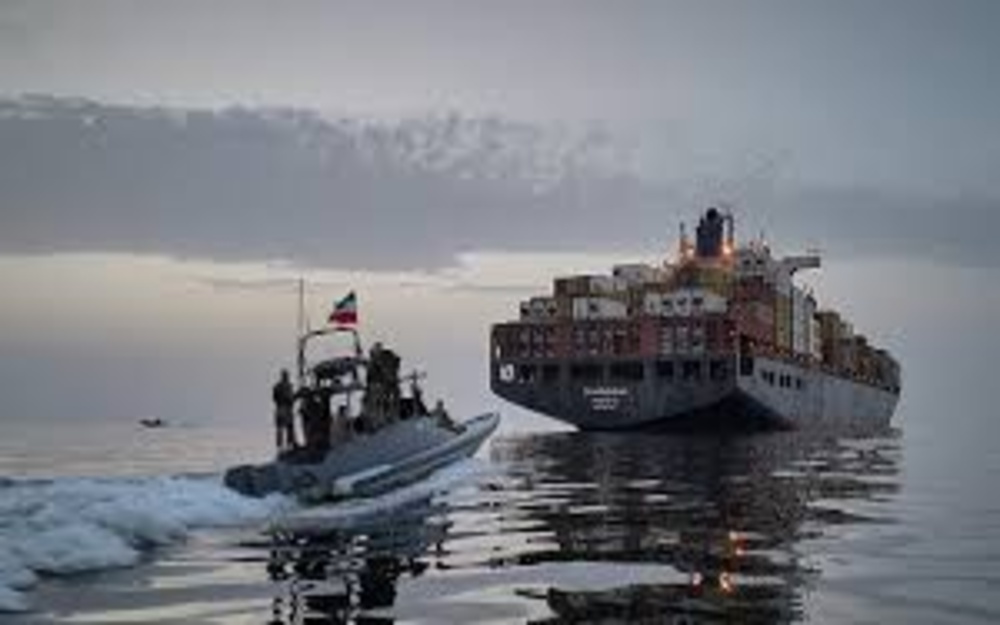
It was in the early hours of May 4, 2026, that the world’s eyes turned once again to the narrow and turbulent waters of the Strait of Hormuz. The strategic chokepoint, through which almost a fifth of global oil passes, has once again become the epicentre of a showdown, with Iran warning not just the United States, but all foreign navies against interfering in what it calls its territorial stronghold.
President Trump’s announcement of “Project Freedom,” a naval mission to guide stranded ships out of the strait, has added a combustible element to a region already inflamed by months of war and shifting alliances. As US-led ships prepare to sail, Iran has responded swiftly and firmly.
Iran Draws Its Line: Threats and Redefinitions
Senior Iranian commander Major-General Ali Abdollahi was blunt. “Supporters of the evil America should be careful and do not do anything that will lead to irreparable regret,” he warned, giving a stark picture for any nation considering joining the US mission. Iran’s state media painted America’s presence as an existential threat not only to Iran but to the stability of global commerce.
Tehran’s message is unequivocal: any intervention, no matter how well-intentioned, will be viewed as an act of aggression. Iran says US, Israel already destabilizing region, citing attack on Feb. 28 that escalated hostilities Iran has said the United States and Israel are already destabilizing the region, citing an attack on Feb. 28 that led to an escalation in hostilities. The language is heavy, not only with military bravado but with an acute awareness of the world’s dependence on these waterways.
IRGC’s Maritime Protocol: “Safe and Sound”—for Some Iran’s Islamic Revolutionary Guard Corps (IRGC), the entity tasked with maritime security (and, in many eyes, insecurity), has doubled down on its rules. “Vessels that coordinate with the IRGC will be safe and sound,” said IRGC spokesman Sardar Mohebbi. Others, he warned, will be “stopped dead in their tracks.”
And this isn’t just hot air. The IRGC has unveiled a map of its claimed sphere of influence extending from Qeshm Island in the west to Mount Mobarak in the east and has effectively laid claim to the most important transit route for global oil exports. The subtext: cooperate or get caught in the crossfire.
For shipping companies and insurers it is a chilling message. Do you follow Iran’s protocols and risk pissing the US and its allies off? Or you run with coalition escorts and risk Iranian retaliation? This is not some hypothetical stakes issue; ships have been seized and attacked in recent years.
The OPEC Rift: UAE walks out, Iran plays its cards
If military brinkmanship were not enough, the region is feeling economic tremors. The UAE’s surprise departure from both OPEC and OPEC+ has introduced new uncertainty. In a rare diplomatic nuance, Iran called the move “inappropriate” but pledged to uphold its own commitments, drawing a subtle distinction between itself and what it described as Abu Dhabi’s “negative or vengeful reaction.”
The OPEC rift, in the context of war, is revealing of how deeply the conflict is remaking alliances and priorities. The UAE has often had common interests with the US and Israel, but it now has both more freedom and more vulnerability. Iran, for its part, presents itself as the responsible actor in the group – however selectively that responsibility might be.
Implications for the Region: The Hormuz Strait
But the headlines are about the Strait, and the conflict is spreading. The bombardment of Lebanon and a tightening grip in Gaza add to the volatility in Israel. Every flashpoint, whether on land or at sea, increases the risk of a miscalculation that could escalate into a much wider war — one that could engulf not just the Middle East, but also global markets and supply chains.
It’s a scenario that keeps diplomats, analysts and ordinary citizens awake at night. But the Hormuz standoff is not just about geopolitics. It is about the daily realities that reach far beyond the Gulf — energy prices, insurance costs, the safety of crews at sea.
The Human Toll, With Results Uncertain
Beneath the rhetoric and military maneuvers of people, there is uncertainty. Seafarers on tankers, families living in cities like Basra or Bandar Abbas, traders glued to oil price tickers, they are all caught up in the gravitational pull of a crisis that is familiar and terrifyingly new.
The next hours and days will test the resolve – and restraint – of every player in the region. Now, the world waits, watches and hopes that the Strait of Hormuz remains a passageway and not a flashpoint.
