
Jitendra Singh Launches CEL’s 200 MW Solar Line
Minister says clean energy will drive India’s net-zero and Viksit Bharat goals

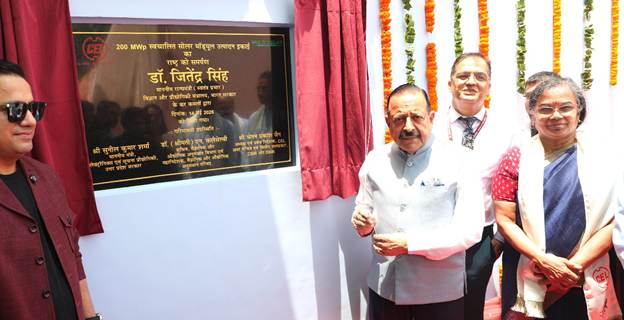
- Jitendra Singh dedicates CEL’s 200 MW solar manufacturing line
- Minister highlights India’s net-zero target for 2070
- CEL expanding into defence electronics and renewable technologies
- Indigenous clean energy manufacturing gets major boost
GG News Bureau
New Delhi, 14th May: Union Minister Jitendra Singh on Thursday dedicated the 200 MW Solar Module Manufacturing Line of Central Electronics Limited to the nation and said renewable energy will play a major role in achieving India’s net-zero emissions target by 2070.
Addressing the gathering during the inauguration ceremony, the minister said Prime Minister Narendra Modi has set a national goal of achieving net-zero emissions by 2070 and India is rapidly expanding capabilities in solar, wind, nuclear and ocean-based energy systems.
Singh described the operationalisation of the 200 MW manufacturing line as a major milestone for India’s clean energy ecosystem and said it reflected growing confidence in indigenous manufacturing and renewable energy expansion.
He said the dedication of the new facility marked another important step towards the vision of Viksit Bharat 2047 and highlighted India’s ability to convert scientific innovation into national development.
The minister recalled that India’s first solar cell was manufactured by CEL in 1977 and the country’s first solar power plant was established by the organisation in 1979. He said the company’s pioneering contributions are now receiving renewed national recognition.
Singh also highlighted CEL’s transformation from an organisation once considered for disinvestment into a profit-making Mini Ratna enterprise, crediting policy support, operational discipline and the efforts of scientists and engineers.
According to the minister, the new manufacturing facility was established in less than a year after the Request for Proposal was floated in April 2025.
He said CEL is now expanding into advanced sectors including vertical axis wind turbines, hybrid renewable systems, data centres, defence electronics, electronic warfare and small weapon systems, reflecting India’s growing strategic and technological confidence.
The event also witnessed technology collaboration initiatives between CSIR laboratories and CEL, including indigenous systems such as the Automated Weather Observing System and the Drishti Transmissometer System.
Singh said indigenous technologies strengthen national confidence, manufacturing capabilities and strategic self-reliance.
