
Supreme Court Adopts Hybrid Hearing Model
Top court shifts miscellaneous and partial working day hearings to virtual mode

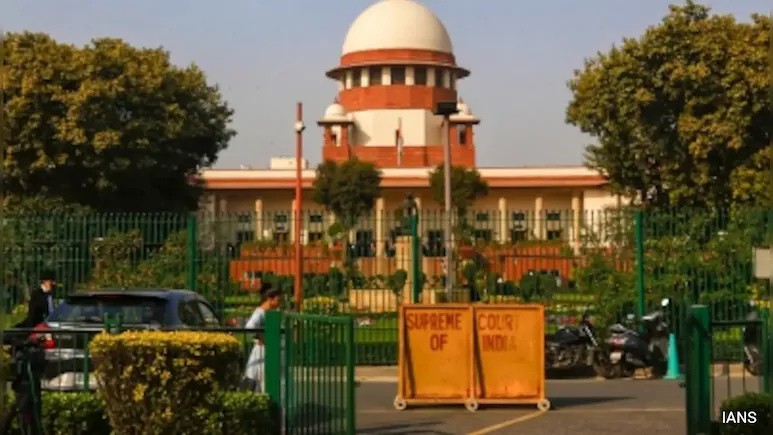
- Supreme Court to hear key matters via video conferencing
- Hybrid work model introduced for Registry staff
- Judges agree to encourage car-pooling for fuel conservation
- Work-from-home allowed for up to 50% staff in Registry sections
GG News Bureau
New Delhi, 15th May: The Supreme Court of India has adopted a hybrid work model and decided to conduct hearings through video conferencing for all matters listed on miscellaneous days and partial working days.
According to a circular issued by the office of the Secretary General on Friday, all matters listed on Mondays, Fridays and other designated miscellaneous days will now be heard virtually until further orders.
Cases listed during partial working days of the court will also be conducted through video conferencing only.
The decision follows a recent Office Memorandum issued by the Centre’s Department of Personnel and Training on May 12 aimed at promoting fuel conservation and efficient functioning of offices.
The Supreme Court Registry has been directed to ensure timely sharing of video conferencing links and provide technical support to avoid disruptions during virtual hearings.
In a move aimed at fuel conservation, judges of the apex court have also unanimously agreed to encourage car-pooling arrangements among themselves.
The circular further allows up to 50 per cent of the staff in each branch or section of the Registry to work from home for a maximum of two days every week.
Registrars have been asked to prepare weekly rosters to ensure that court functioning remains unaffected despite the hybrid arrangement.
Officials working from home have been directed to remain available on phone and report to office whenever required.
The circular also clarified that concerned Registrars can modify or restrict work-from-home arrangements if they find that the functioning of any branch or section is being affected.
Copies of the circular have been shared with the office of the Chief Justice of India, judges of the Supreme Court, the Supreme Court Bar Association and the Supreme Court Advocates-on-Record Association.
