
Delhi Seeks More Water as Yamuna Levels Dip
CM Rekha Gupta reviews crisis, Haryana assures 1,000 cusecs supply through Munak Canal

- Rekha Gupta held talks with Haryana CM Nayab Singh Saini on water supply
- Haryana assured at least 1,000 cusecs through the Munak Canal
- Falling Yamuna levels have cut Delhi’s water production by up to 100 MGD
- Over 980 tankers making 6,000 daily trips across the capital
GG News Bureau
New Delhi, 30th May: Delhi Chief Minister Rekha Gupta on Saturday reviewed the capital’s water situation and held discussions with Haryana Chief Minister Nayab Singh Saini amid mounting supply challenges caused by falling Yamuna water levels and peak summer demand.
The latest intervention comes days after Haryana released additional water to Delhi. According to the Delhi government, Haryana has now assured a minimum supply of 1,000 cusecs through the Munak Canal to help ease the shortage.
During the review meeting, Gupta assessed raw water availability, production levels at treatment plants, tanker deployment, emergency arrangements and measures being taken to minimise disruption across the city.
Officials also reviewed water leakages, complaint redressal mechanisms and contingency plans to tackle the ongoing crisis.
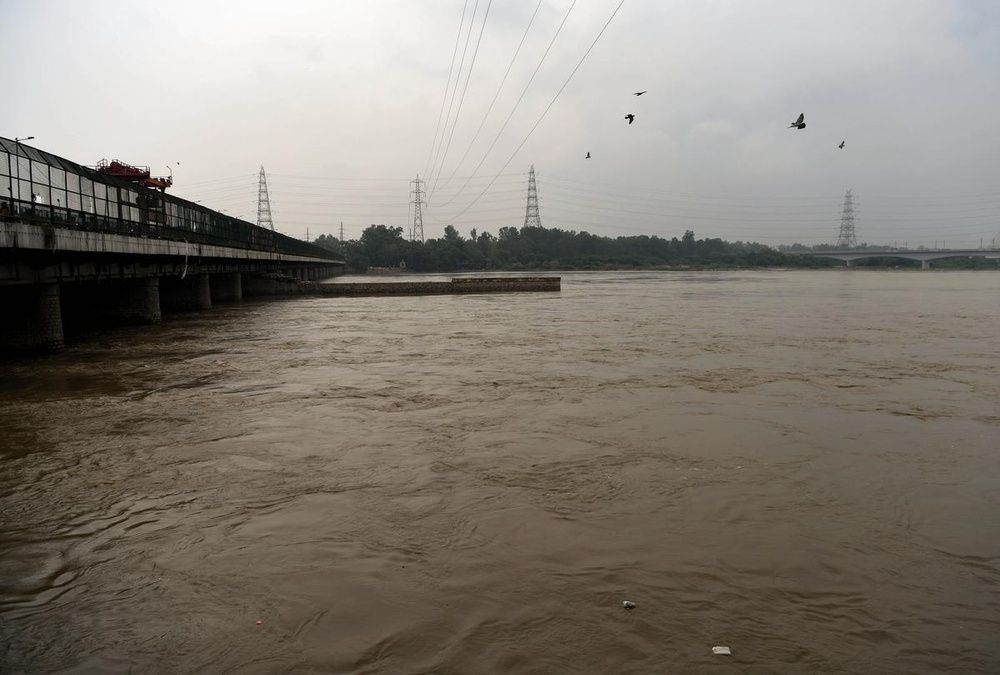
The shortage has been triggered by a sharp fall in the water level at the Wazirabad Barrage, which has dropped from its normal pond level of 674.5 feet to nearly 668 feet. Officials said the decline has reduced Delhi’s water production by around 80-100 million gallons per day (MGD).
Delhi currently requires nearly 1,250 MGD of water during the peak summer season.
Delhi Water Minister Parvesh Verma said the situation has been worsened by a prolonged dry spell in the upper reaches of the Yamuna basin.
Despite the shortfall, the Delhi Jal Board has managed to maintain daily water production of around 900 MGD through emergency pumping arrangements and diversion of additional raw water supplies.
Authorities said additional raw water is being diverted from the Carrier Line Canal through the Twin Mains system to the Wazirabad intake. Emergency pumping from the dry Yamuna riverbed is contributing nearly 40 MGD, while around 130 MGD is being routed through canal systems to sustain operations at the Wazirabad and Chandrawal water treatment plants.
To address shortages in affected areas, more than 980 Delhi Jal Board tankers are currently making over 6,000 trips daily across the capital. Smaller tankers have also been deployed in densely populated colonies and narrow lanes.
Officials informed the meeting that 11,055 complaints related to water supply were received over the past week, with more than 8,500 already resolved. The government directed departments to speed up resolution of pending complaints and take immediate action against water leakages.
The review also focused on long-term water security measures, including a feasibility study by the Indian Institute of Technology Roorkee on bringing water from Haryana through pipelines, desilting work near Wazirabad, construction of new treatment plants and installation of additional borewells in the Yamuna Khadar region.
Officials said newly installed borewells have increased water production capacity by 10.5 MGD per day.
The government is also expanding rainwater harvesting infrastructure. Plans include developing systems in 75 CM Shri schools, constructing 500 new rainwater harvesting structures and reviving 1,000 existing facilities. Authorities are additionally exploring a phased dual-water supply system using treated wastewater for non-potable purposes.
The Chief Minister directed officials to monitor the situation daily, maintain close coordination with concerned agencies and ensure adequate tanker availability in affected areas to minimise inconvenience to residents.
