
India, Maldives Conclude First Round of FTA Talks
Negotiations make significant progress as both nations aim to deepen trade and investment ties

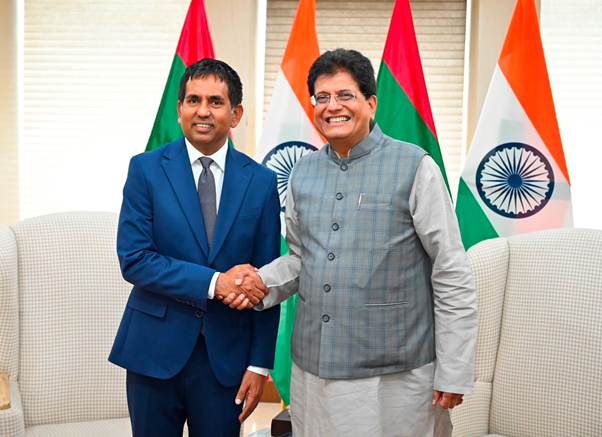
- India and Maldives successfully conclude first round of FTA negotiations.
- Eight technical sessions cover key policy areas.
- Both sides reaffirm commitment to early conclusion of FTA and BIT.
- Bilateral trade grows 13.54% to USD 771.76 million in 2025-26.
GG News Bureau
New Delhi, 14th July: India and the Maldives have successfully concluded the first round of negotiations for the proposed India–Maldives Free Trade Agreement (FTA), marking a significant step towards strengthening bilateral trade and investment ties.
According to the Ministry of Commerce and Industry, the negotiations were held in virtual mode from June 29 to July 7, 2026. The Indian delegation was led by Ujjwal Kumar Ghosh, Joint Secretary in the Department of Commerce, while the Maldivian side was headed by Chief Negotiator Yusuf Riza.
During the first round, officials from both countries held text-based discussions across eight technical sessions covering key policy areas. The Ministry said both sides made substantive progress and achieved broad convergence on several issues.
On July 8, Union Commerce and Industry Minister Piyush Goyal met Maldives’ Minister of Economic Development, Transport and Trade Mohamed Saeed to review the progress of the negotiations and other bilateral economic initiatives.
As India and the Maldives commemorate 60 years of diplomatic relations, both ministers reaffirmed their commitment to expedite the conclusion of the proposed Free Trade Agreement (FTA) and the Bilateral Investment Treaty (BIT). They also agreed to strengthen cooperation in tourism, startups, digital payments, MSMEs and trade.
India remains the second-largest trading partner of the Maldives. Bilateral trade between the two countries increased to USD 771.76 million in 2025-26, up from USD 679.70 million in 2024-25, registering a growth of 13.54 per cent.
The proposed FTA is expected to improve market access, facilitate investment, promote economic cooperation and support sustainable growth in both countries. The two sides are working towards a balanced and comprehensive agreement based on the principles of fairness and reciprocity.
