
SC Restricts Upload of Court Proceedings on Social Media
Supreme Court mandates prior approval before sharing courtroom audio-video recordings; clarifies media reporting remains unaffected

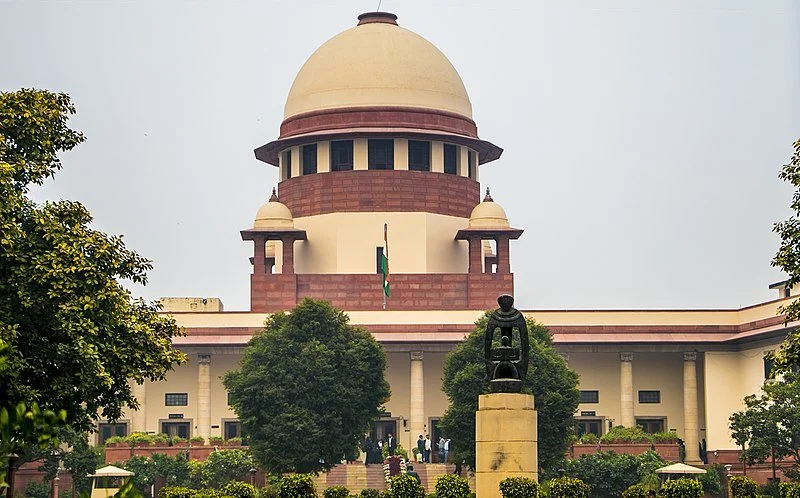
- Supreme Court bars unauthorised sharing of court proceeding recordings on social media.
- Prior permission from the concerned court made mandatory for uploads.
- Notices issued to Meta, X and other digital platforms.
- Court clarifies order is not a restriction on news reporting or free speech.
GG News Bureau
New Delhi, 24th July: The Supreme Court on Friday prohibited the unauthorised extraction, modification, dissemination, posting, reposting, uploading or monetisation of audio and video recordings of court proceedings on social media and other digital platforms without prior approval from the concerned court.
A Bench comprising Chief Justice of India Surya Kant, Justice Joymalya Bagchi and Justice V. Mohana passed the interim order while hearing a public interest litigation seeking regulation of livestreaming and circulation of courtroom proceedings.
The Court directed that any audio or video recording of judicial proceedings can be shared only with the prior permission of the Registrar General of the concerned High Court or the Secretary General of the Supreme Court.
Describing the unchecked circulation of courtroom clips on social media as a “demon out of the bag”, Justice Bagchi observed that courts cannot become “24×7 entertainment channels” and stressed the need to regulate access to livestreams and virtual hearings.
The Bench clarified that the order does not prohibit news reporting of court proceedings and should not be treated as a gag on freedom of speech. Justice V. Mohana also reiterated that the directions are limited to unauthorised circulation of audio-video recordings.
The petition argued that selective and out-of-context sharing of courtroom exchanges on social media was undermining the dignity of courts and eroding public confidence in the justice delivery system.
The Supreme Court also issued notices to Meta, X and other social media intermediaries over the circulation of courtroom videos on their platforms.
Supporting the need for regulation, Solicitor General Tushar Mehta warned that artificial intelligence could be misused to alter judges’ or lawyers’ statements before circulating them online.
Chief Justice Surya Kant also expressed concern over inaccurate reporting of judicial proceedings, stating that remarks attributed to him had been misrepresented in the media. He dismissed reports claiming that he had refused an urgent hearing on a plea challenging the July 20 police action against protesting students, clarifying that no petition had been filed before the Court and only a representation had been received.
Senior Advocate Vikas Singh, appearing for the petitioner, supported livestreaming but argued that selective circulation of courtroom videos had trivialised judicial proceedings and increased the risk of misuse.
