
Jitendra Singh Moves Tougher Anti-Paper Leak Bill in Rajya Sabha
Amendment Bill proposes stricter penalties, fast-track courts and time-bound investigations to curb examination malpractices

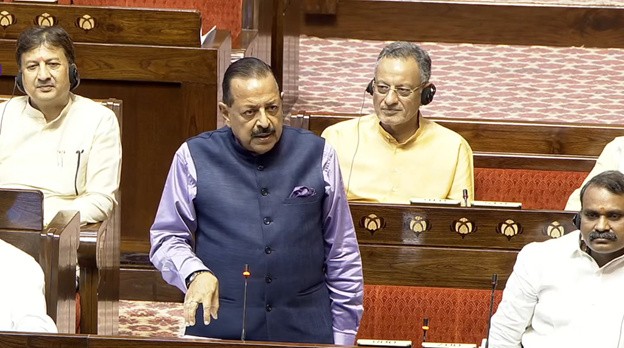
- Jitendra Singh tables Public Examinations Amendment Bill, 2026 in Rajya Sabha.
- Bill enhances jail terms and fines for paper leaks and organised examination crimes.
- Proposes fast-track courts, time-bound investigations and special prosecutors.
- Minister says reforms aim to protect students and restore faith in public examinations.
GG News Bureau
New Delhi, 30th July: Union Minister Dr. Jitendra Singh on Thursday moved the Public Examinations (Prevention of Unfair Means) Amendment Bill, 2026 in the Rajya Sabha, saying the proposed legislation would further strengthen the legal framework to curb examination malpractices and safeguard the interests of students and job aspirants.
Initiating the discussion on the Bill, Singh said the amendment builds upon the Public Examinations (Prevention of Unfair Means) Act, 2024, creating India’s first comprehensive legislative framework to combat paper leaks and other unfair practices in public examinations.
He said the amendments reflect the government’s policy of zero tolerance towards examination-related crimes while ensuring merit, transparency, consistency and credibility in the recruitment and admission process.
The Minister said the government had incorporated feedback and recent experiences to make the law more stringent and effective, adding that incidents of paper leaks across different states and examination agencies highlighted the need for a robust national legal framework.
The Bill proposes to enhance punishment for those involved in unfair means from three to five years’ imprisonment to five to ten years, while increasing the maximum fine from ₹10 lakh to ₹50 lakh.
For service providers found guilty, the maximum fine is proposed to be raised from ₹1 crore to ₹5 crore, while the period of debarment from conducting public examinations would increase from four years to eight years. The punishment for directors and senior management of such entities has also been proposed to be enhanced to five to ten years’ imprisonment, along with fines of up to ₹5 crore.
The proposed legislation also increases punishment for organised examination-related crimes from five to ten years’ imprisonment to seven to ten years, while raising the maximum fine from ₹1 crore to ₹10 crore.
To ensure speedy justice, the Bill provides for the establishment of Special Fast Track Courts, completion of investigations within two months, and conclusion of trials within three months of filing the charge sheet. It also provides for the appointment of Special Public Prosecutors and enables investigation by a Special Task Force or a central agency wherever required.
Dr. Jitendra Singh informed the House that six Special Fast Track Courts are already operational across the country and more are planned to ensure expeditious disposal of cases.
The Minister also said the government has implemented 35 of the 46 recommendations made by a high-level expert committee constituted to strengthen the public examination ecosystem.
Seeking the support of the House, Singh said the proposed amendments would reinforce public confidence in the integrity and fairness of the country’s public examination system while protecting the aspirations of millions of students and job seekers.
