

By Anjali Sharma
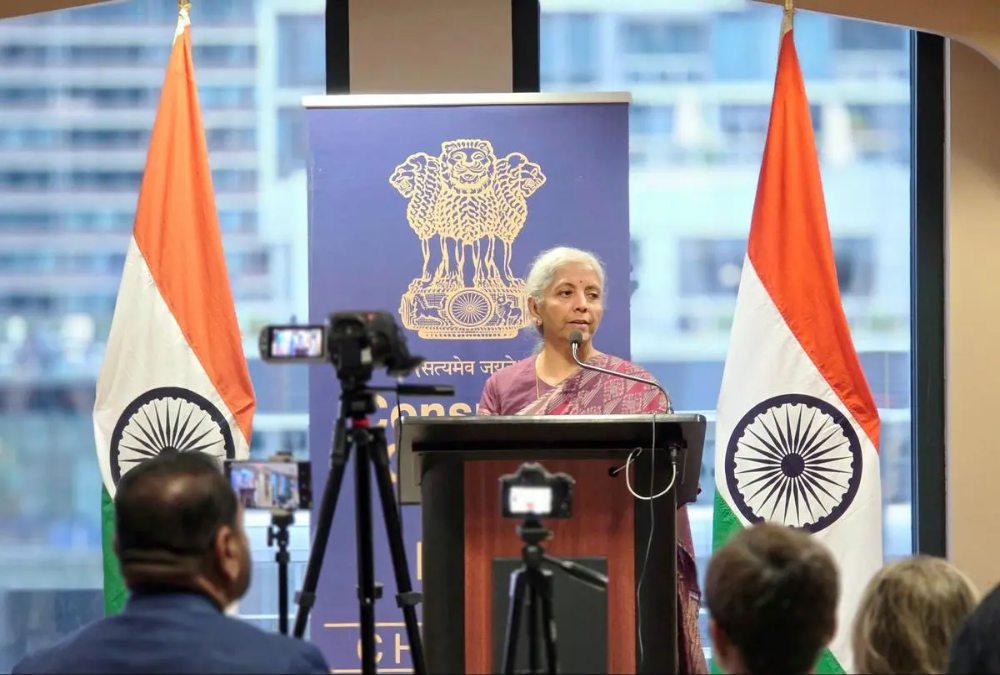
CHICAGO/NEW YORK – Union Finance Minister Nirmala Sitharaman on Sunday said that India has achieved the fiscal consolidation target set for 2025-26, reiterated that the government remains committed to maintain fiscal discipline to support infrastructure spending and welfare programmes.
She addressed the Indian diaspora in Chicago, Sitharaman said, “The government had reached the final milestone in its planned fiscal deficit reduction trajectory. India’s fiscal deficit for the year ended March 31, 2026, stood at 4.4% of GDP, or around Rs 15.19 lakh crore, equivalent to 97.5% of the revised estimate presented in the Union Budget.”
Sitharaman also outlined the government’s medium-term debt strategy, said “India is targeting a debt-to-GDP ratio of 50% by 2030.”
Union finance mnister defended India’s fiscal position by pointing to significantly higher debt levels in several advanced economies and said fiscal prudence would remain a priority.
Sitharaman said the government has managed to maintain fiscal discipline without compromising spending on social welfare or public infrastructure. She also credited the government’s fiscal management for helping the economy navigate a series of external shocks since the Covid-19 pandemic.
“India’s domestic economy has continued to expand at around 7% or higher despite challenges ranging from the Russia-Ukraine conflict and global tariff disputes to disruptions around the Strait of Hormuz,” she added.
Sitharaman highlighted the government’s management of fertiliser supplies, saying India avoided a shortage by planning procurement requirements well in advance and sourcing supplies through multiple channels.
She said international urea prices had risen sharply following the pandemic, increasing from around ₹300 per bag to nearly Rs 3,000. The government absorbed much of the increase through subsidies, with support of around Rs 2,700 per bag, she said.
Sitharaman added that the government had also stepped in to support shipping and imports after international insurers became reluctant to provide coverage for vessels travelling through high-risk transit routes. Budgetary assistance was used to offset higher insurance premiums for shipping companies, helping maintain the flow of imports.
On India’s trade strategy, Sitharaman said the country would continue pursuing bilateral trade and investment agreements as multilateral negotiations face increasing challenges.
She cited ongoing engagement with major partners and blocs, including the European Union, Australia, the UAE and EFTA countries, saying bilateral agreements are becoming increasingly important for expanding India’s trade and investment opportunities
“Trade agreements are continuing. On a bilateral basis, we are moving with trade treaties,” Sitharaman said, while noting that progress through multilateral trade frameworks has slowed.
She is on a 9 day official visit to Canada and the United States, scheduled from August 25 to September 2.
She will participate in G20 finance-track meetings in Asheville, North Carolina, alongside bilateral economic discussions in Canada, media reported.
