

By Anjali Sharma
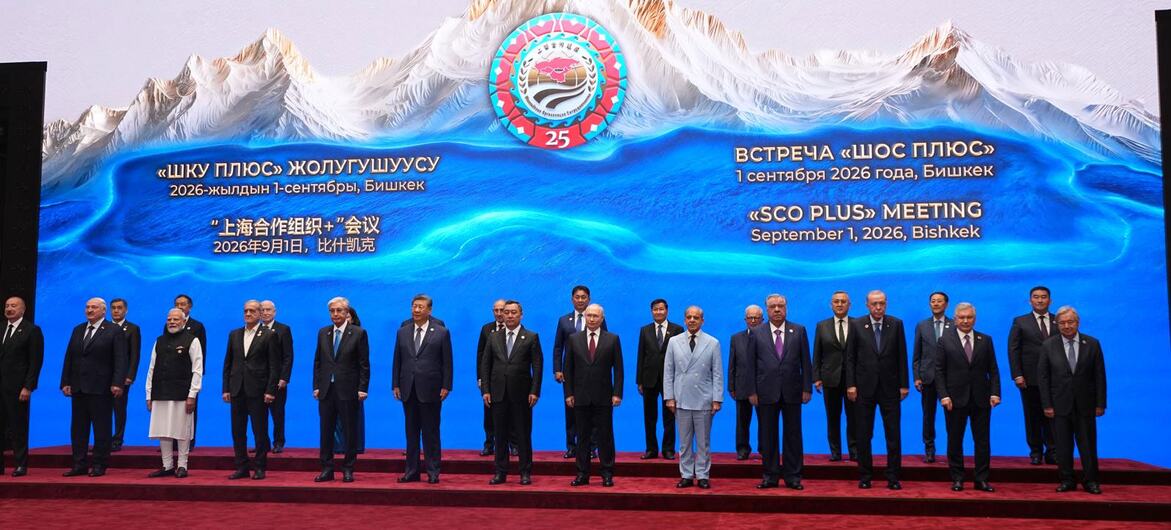
UNITED NATIONS – UN head António Guterres on Tuesday urged world leaders of the Shanghai Cooperation Organization to help reshape global governance for a changing world, argued that a more multi polar international order can strengthen multilateralism, advance fairness and better serve developing countries.
He was addressing the SCO summit in Bishkek, Kyrgyzstan, Guterres said shifting global power dynamics present an opportunity to build more representative international institutions and a United Nations that works “at the service of all without double standards in line with the Charter.”
The Shanghai Cooperation Organization is a Eurasian political, economic and security grouping founded in 2001 that today brings together 10 member States, including China, India, Pakistan, Russia and several Central Asian countries.
It is one of the world’s largest regional organizations by population and geographic scope.
Guterres said “Our world is increasingly multipolar,” “That is a good thing and must be strengthened.”
He described multi polarity as “a condition for justice in global governance and international relations” and “the best support for effective multilateralism.”
Guterres noted that while global power relations have evolved significantly, many international institutions continue to reflect the geopolitical realities of 1945.
“We must reform our multilateral institutions, including the United Nations and the Bretton Woods system, to reflect today’s realities, and increase the representation and influence of developing countries to build a just world order,” he said.
He also praised the longstanding partnership between the UN and the SCO, describing the organization as “an important pillar of multilateralism.”
SG outlined four areas where he believes cooperation between the UN and SCO can be strengthened.
Mr. Guterres voiced concern over continuing instability in the Middle East, warning that ceasefires and agreements are repeatedly being violated.
“I appeal for maximum restraint and for agreements and international law to be respected,” he said.
He stressed the need for “a peaceful, just and durable settlement” that would restore regional stability while safeguarding international navigational rights and freedoms, including around the Straits of Hormuz and Bab al-Mandab.
On Gaza, he said the ceasefire “must be respected” and called for the full implementation of the Comprehensive Plan to End the Gaza Conflict.
He also demanded the removal of obstacles hindering humanitarian assistance and renewed his call for an end to settler attacks and settlement expansion in the occupied West Bank.
“There will only be peace with a two-State solution,” he said, envisioning Israel and Palestine as “two independent, sovereign, democratic states” living side by side in peace and security, with Jerusalem/Al Quds serving as the capital of both.
On Ukraine, Mr. Guterres said that after more than four years of war, “it is high time for a full and immediate ceasefire.”
He added that such a step would open the way to negotiations towards “a just, lasting and comprehensive peace in line with international law.”
Guterres called for reforms to the international financial system, arguing that developing countries continue to be burdened by unsustainable debt.
“We must reform the global financial architecture to introduce justice and equity and seriously address the debt that is strangling so many developing countries,” he said.
He also urged multilateral development banks to become “bigger, better and bolder” in supporting countries’ development efforts.
Guterres warned that the world is on track to exceed the 1.5°C temperature limit.
He called for rapid emissions cuts and a faster transition to renewable energy.
“Climate action requires climate justice,” he said.
He underscored the need for substantially greater financial support for developing countries.
Guterres also highlighted the importance of managing critical minerals responsibly and ensuring producing countries receive greater benefits from their natural resources.
“No more plundering,” he said.
Guterres said artificial intelligence must work for all countries, not just a few.
He stressed that it will require effective guardrails and more inclusive governance mechanisms.
Mr. Guterres also met Iranian President Masoud Pezeshkian on the margins of the summit.
According to a UN spokesperson Stephane Dujarric in New York, Mr. Guterres expressed concern over the devastating humanitarian and economic consequences of the conflict in Iran, across the region and beyond during the meeting.
He stressed the urgent need to resolve the crisis through dialogue and negotiations, with full respect for international law, including international navigational rights and freedoms in and around the Strait of Hormuz.
Guterres also reaffirmed the United Nations commitment to support diplomatic efforts to achieve a comprehensive and durable solution.
