

Kumar Rakesh | New Delhi
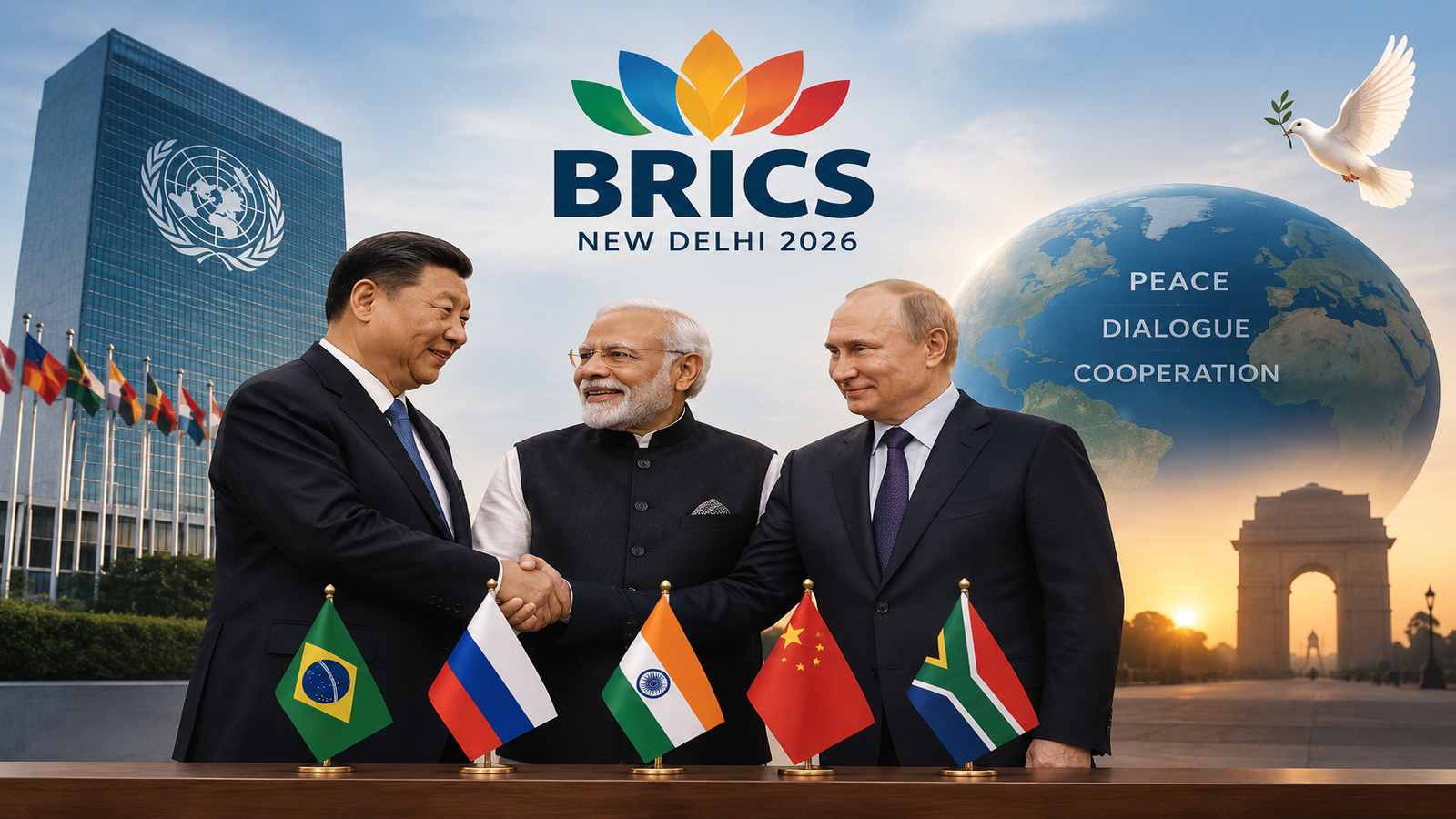
The New Delhi Declaration adopted at the 18th BRICS Summit has placed global governance reform and peaceful resolution of conflicts at the centre of India’s diplomatic agenda, with the grouping backing a stronger role for developing countries in international institutions.
A major outcome for India is the reiteration of support for reform of the United Nations and the UN Security Council. China and Russia, both permanent members of the Security Council, have backed the aspirations of India and Brazil to play a greater role in the UN, including the Security Council.
The development gives fresh diplomatic weight to India’s long-standing demand for a more representative global governance structure. The declaration calls for the UN system, including the Security Council, to better reflect contemporary global realities and provide greater representation to developing countries.
At the BRICS Business Forum, Russian President Vladimir Putin also underlined the changing balance of global economic power. He said BRICS countries accounted for more than 40 per cent of global GDP over the past five years, compared with about 29 per cent for the G7, questioning the continuing dominance of traditional Western-led groupings.
The summit also brought peace and diplomacy sharply into focus. Prime Minister Narendra Modi, during his meeting with Putin, reiterated that dialogue and diplomacy remain the way forward in resolving conflicts and said India was ready to assist in peace efforts.
The wider diplomatic environment has brought India into discussions surrounding the Russia-Ukraine conflict as well as tensions involving Iran and the United States. India maintains channels with all sides, giving New Delhi a potentially important role in facilitating dialogue at a time of deep geopolitical divisions. Russia has also indicated that it would welcome Indian efforts aimed at resolving the Ukraine conflict through peaceful means.
An important emerging dimension is cultural and people-to-people diplomacy. Beyond strategic and economic engagement, India is increasingly using civilisational links, cultural exchanges and people-to-people contacts as instruments to build trust and create space for dialogue during periods of conflict.
For India, the BRICS outcome therefore extends beyond institutional reform. With its relations with Russia and China, engagement with Iran, dialogue with the United States and growing international credibility, New Delhi is positioned to pursue a broader peace-building and mediation-oriented diplomatic role.
The New Delhi Declaration, coupled with India’s bilateral engagements during the summit, has strengthened the message that global conflicts cannot be resolved through confrontation alone and that dialogue, diplomacy and inclusive multilateralism must remain central to the emerging international order.
