

By Anjali Sharma
WASHINGTON – According to news reports on Tuesday the controversy has emerged surrounding the presidential election in Brazil which raised broader questions about how technology companies moderate political speech, distribute campaign content and protect electoral integrity.
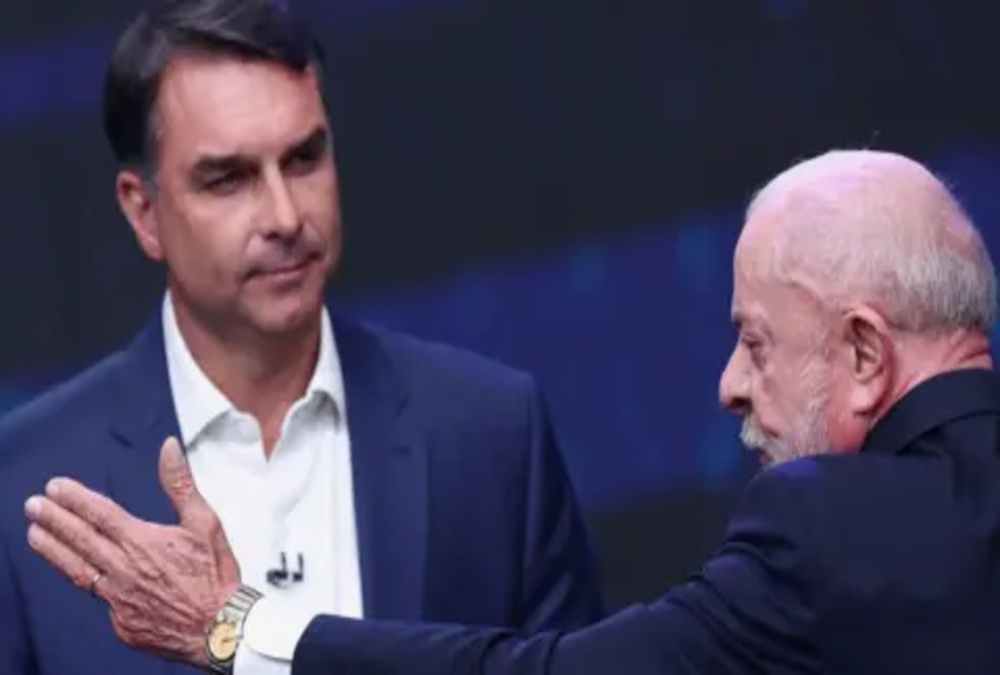
Brazil has held an unprecedented presidential election that resulted in Luiz Inácio Lula da Silva defeated his far-right opponent, Flávio Bolsonaro, and claimed a historic fourth term in power.
The multiple questions about the role of social media platforms played in the electoral process remain unresolved.
Meta, the parent company of Facebook, Instagram and WhatsApp, has undoubtedly emerged as the new ‘villain’ in the bitterly contested presidential polls, as the tech giant faces allegations of unequal treatment of political candidates, while a WhatsApp mobilization network supporting the President drew scrutiny over its scale, coordination and role in online campaigning.
Lula’s campaign sought the disqualification of Flávio Bolsonaro in the lead-up to the final round of the presidential election over alleged interference by Meta.
US company was accused of restricting the reach of content associated with Lula’s campaign, while allowed political content support his opponent to circulate under different conditions, media reports stated.
The dispute reached Brazil’s Superior Electoral Court which on October 22 had directed the company as well as Elon Musk-owned social media platform X to provide technical explanations concerning the use of artificial intelligence, the distribution of political content, electoral advertising and the removal of posts.
The TSE asked Meta and X to provide, within 24 hours, technical explanations of their use of AI, distribution of political content, publication of electoral ads as well as the removal of posts ahead of the presidential runoff on October 25.
The decision was taken by the court’s inspector general Ricardo Villas Boas Cueva, who set a daily fine of 500,000 reais (about $100,000) for each company in case of unjustified noncompliance, Xinhua reported.
Un called out the company, while US lawmakers demanded answers.
Meta denied all the charges and claimed that it “does not take sides in this or any election.”
The tech giant stated that the claims regarding it favoring or interfering on behalf of any candidate or political group were “false and unfounded.”
“Our systems do not rank or distribute content based on political ideology, and our policies and enforcements apply equally to everyone,” it added.
The company stated that several incidents cited in the controversy resulted from technical failures or the enforcement of electoral rules rather than political discrimination.
It acknowledged that Lula’s campaign advertising account was mistakenly disabled for slightly more than an hour on September 23.
The company attributed the error to an anti-fraud review involving an advertisement that was flagged as potentially impersonating a government social programme.
“On September 23, President Lula’s campaign ad account was mistakenly disabled for a little over an hour after an ad was classified as potentially impersonating a government social program during a broader anti-fraud review.
The official campaign’s Facebook Page and Instagram account were never blocked,” Meta stated.
It mentioned the global technical incident on October 7 that affected the counting of video views.
According to Meta, the problem affected creators in more than 100 countries, and content continued to be distributed despite inaccurate or frozen view counts.
It claimed that the incident was not specific to Lula’s campaign.
The tech company acknowledged a gap in its AI safeguards that allowed certain prompts referring to candidates through first names and electoral numbers to generate campaign-related images.
It noted that the issue affected references to both candidates and was corrected on the same day it was identified.
Meta argued, “Claims of bias do not hold up when the actions are examined individually. Compliance with valid court orders accounted for roughly 70% of the actions involving all of President Lula’s social accounts on our platforms registered with Brazil’s Electoral Justice. And many of the other measures such as enforcing AI-generated content during legally mandated silent periods and excluding candidate accounts from recommendations – reflect legal requirements, not ideological penalties.”
The tech giant has maintained that it applies the same policies to all candidates and political viewpoints and has denied manipulating the distribution of content to influence the election, media reported.
