
Bhupender Yadav Calls for Global Conservation Action
Environment Minister highlights India’s conservation gains and urges stronger community participation in wildlife protection

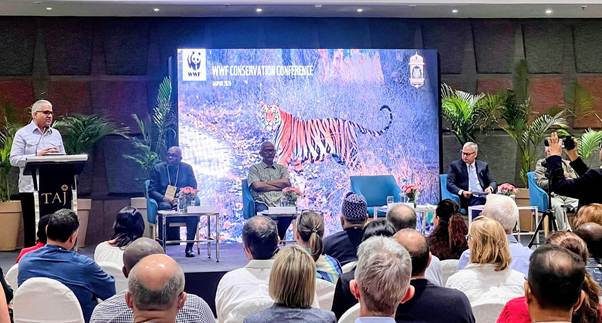
- WWF Global Conservation Conference opens in Jaipur with representatives from over 100 countries.
- India’s protected areas have increased to more than 1,000, Yadav said.
- Tiger reserves rose from 47 to 58, while elephant reserves increased from 30 to 33.
- Yadav stressed conservation of grasslands, wetlands and wildlife corridors with community participation.
GG News Bureau
Jaipur, 21st Sept: Union Environment, Forest and Climate Change Minister Bhupender Yadav on Monday inaugurated the WWF Global Conservation Conference in Jaipur, calling for global action on conservation and coexistence with local communities playing a key role.
Addressing representatives from more than 100 countries, Yadav urged conservationists to learn from successful initiatives, strengthen cooperation and translate conservation efforts into action.
Highlighting India’s conservation record, Yadav said the number of protected areas has increased from around 750 to more than 1,000 over the past decade. Tiger reserves have risen from 47 to 58 and elephant reserves from 30 to 33. The number of Ramsar sites has also increased from 24 to 101, he said.
The minister highlighted India’s cheetah reintroduction programme and conservation initiatives for tigers, elephants, rhinos and Asiatic lions.
Yadav said India’s commitment to species conservation is rooted in its constitutional framework and cultural traditions. He also noted India’s participation in international agreements including CITES, CMS, CBD and the Ramsar Convention.
He underlined the importance of scientific research and monitoring, including nationwide population assessments of tigers, elephants, dolphins, lions and snow leopards, for habitat improvement, wildlife corridors and landscape-level conservation.
The minister also highlighted conservation breeding of the Great Indian Bustard in Rajasthan and community-led protection of sacred groves known as Orans.
Calling for broader ecosystem protection, Yadav stressed the importance of conserving grasslands alongside forests and wetlands. He also referred to ongoing programmes for the one-horned rhinoceros and wild water buffalo.
He concluded by urging conservationists to build on proven approaches, strengthen cooperation and turn conservation knowledge into practical action.
