
No Punishment for Conscientious Objectors to Vande Mataram: SC Tells Centre
Court says 1986 judgment protecting those who respectfully declined to sing the national anthem should guide the amended law

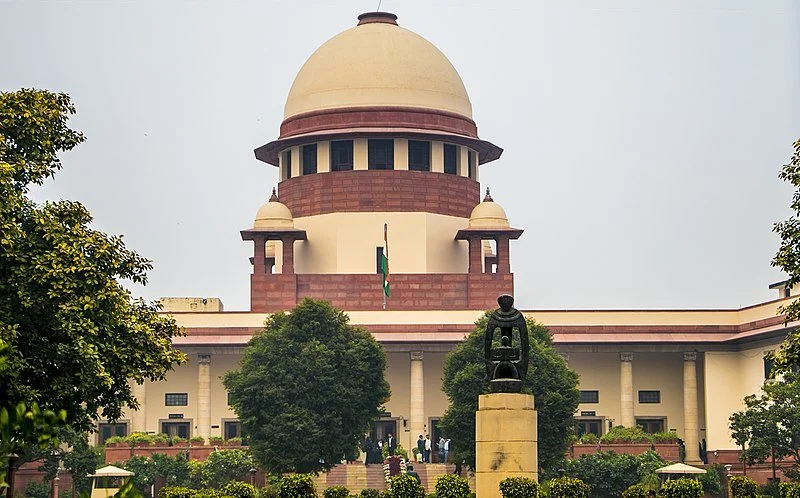
GG News Bureau
New Delhi, 23rd Sept: The Supreme Court on Tuesday told the Centre that a person who refuses to sing Vande Mataram on grounds of conscience or religious belief should not face penal consequences, while hearing a petition challenging the legal requirement to sing all six stanzas of the national song.
A bench headed by Chief Justice of India Surya Kant and comprising Justices Joymalya Bagchi and V Mohana referred to the Supreme Court’s 1986 judgment in Bijoe Emmanuel vs State of Kerala, which protected schoolchildren who respectfully declined to sing the national anthem on grounds of conscience.
The court sought the Centre’s response to a petition filed by Carnatic vocalist T M Krishna challenging the 2026 amendment to the Prevention of Insults to National Honour Act, 1971, as well as Ministry of Home Affairs directions relating to the singing of Vande Mataram.
Justice Bagchi said the court was not examining what should constitute the national song or how many stanzas it should contain. He indicated that the issue before the court was whether a “conscientious objector”, particularly one declining to sing on religious grounds, could be subjected to criminal penalties.
The amended Section 3 of the 1971 Act provides for imprisonment of up to three years, a fine, or both for intentionally preventing the singing of the national anthem or national song, or causing disturbance to an assembly engaged in such singing.
Senior advocate S Muralidhar, appearing for Krishna, argued that the amendment and government directions raise questions relating to freedom of conscience, religious freedom, freedom of speech and expression, equality and secularism. He also questioned the absence of a statutory definition specifying which version or stanzas constitute the national song.
Solicitor General Tushar Mehta urged the court not to issue notice, arguing that doing so could sensationalise the matter. During the hearing, an exchange also took place between Mehta and Muralidhar over remarks concerning the law-making process. The bench said it was not taking note of the comments.
The Supreme Court’s proceedings come amid a broader debate over the government directions requiring the rendition of the complete six-stanza version of Vande Mataram. The court indicated that determining the national song’s content was a matter for the democratic process, while the protection of individual constitutional rights would remain subject to judicial scrutiny.
