
Washington Singles Out Indian Tech Giants and US Companies with Indian Origin CEOs for Green Card Squeeze as New Pressure Tactics as Trade Talks Fail

Alok Lahad
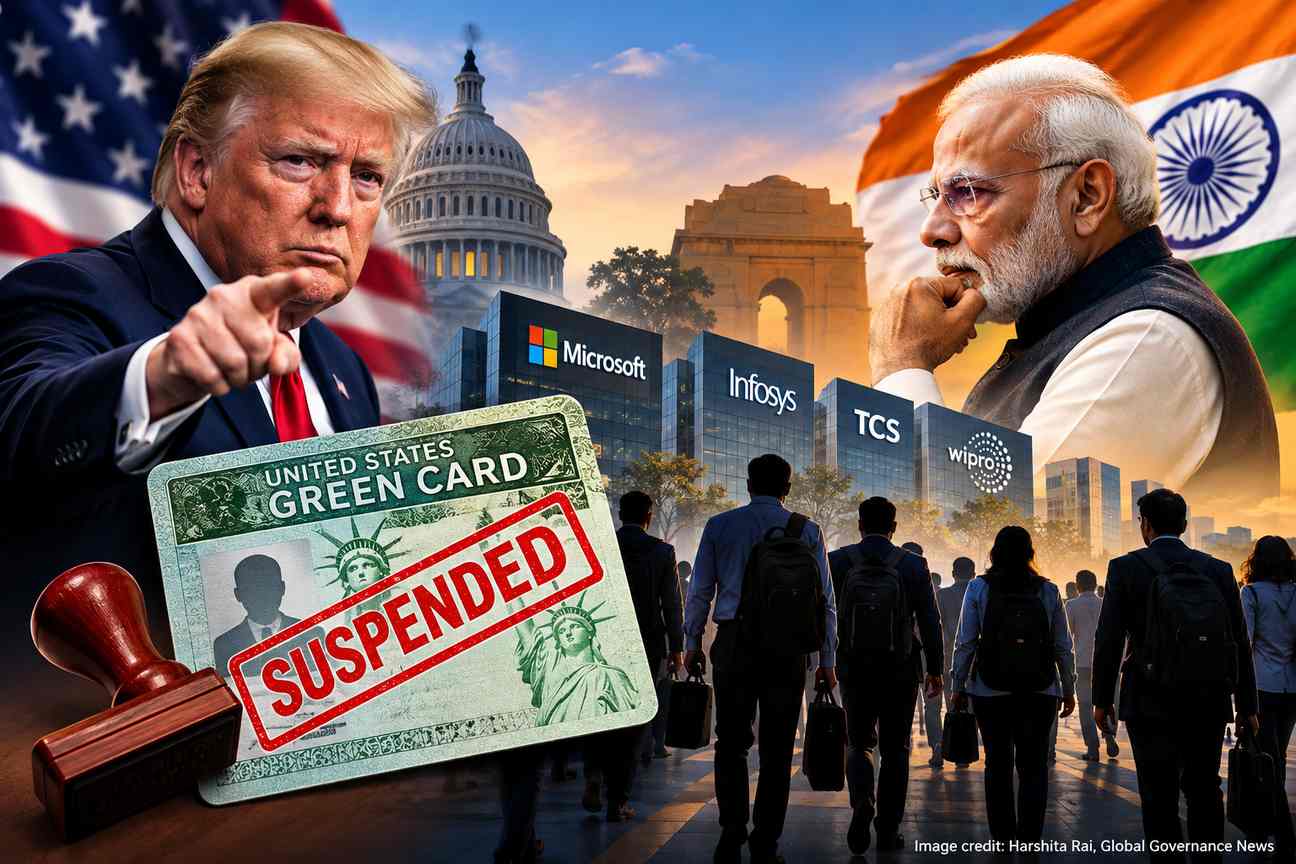
In the high-stakes game of Indo-US relations, the latest move from Washington feels less like routine immigration enforcement and more like a calculated signal. On 8 October 2026, the Trump administration suspended eight major technology and IT firms—including Microsoft, Adobe, Cognizant, Infosys, Tata Consultancy Services, Wipro, HCL and Capgemini—from the Permanent Labor Certification (PERM) programme that is the gateway to employment-based green cards for H-1B workers. The official rationale is alleged fraud, wage undercutting and displacement of American workers. Vice President JD Vance singled out Microsoft for laying off thousands of Americans while continuing to file large numbers of H-1B and PERM applications. Labour Secretary Keith Sonderling cited the collective volume of foreign-worker requests by these companies since 2009.
From New Delhi the picture looks different. Finance Minister Nirmala Sitharaman has publicly stated that India-US trade talks have reached a “plateau,” with little further room for concessions on either side. The United States has pressed India on domestic regulatory changes, reduced purchases of Russian oil, and restrictions on trade with Iran—issues New Delhi regards as sovereign policy choices. India has already concluded or advanced trade arrangements with most major G7 partners: the European Union, the United Kingdom, Canada, Australia and others. It has shown willingness to negotiate with Washington, yet the American side appears to want not merely a balanced commercial deal but broader alignment on foreign-policy and regulatory matters that India is unwilling to concede.
The characterisation of India as a “tariff king” and the repeated emphasis on the bilateral goods trade surplus sit uneasily with the full economic relationship. American technology and social-media platforms earn substantial revenues from the Indian market. Recent Indian moves to bring these companies more fully into the tax net have been noted in Washington. When the trade talks stalled, the rapid targeting of firms that are either Indian-owned or led by Indian-origin executives—Microsoft’s Satya Nadella, Adobe’s leadership transition involving Shantanu Narayen and Anil Chakravarthy, Cognizant’s Ravi Kumar S, and the major Indian IT services houses—struck many observers in India as more than coincidence. Capgemini, a French company with an Egyptian-origin French CEO, is the sole clear non-Indian-linked name on the list and is widely viewed here as the exception that softens the appearance of selectivity.
The timing is equally conspicuous. Mid-term elections are only weeks away. Immigration enforcement, particularly skilled-worker programmes that disproportionately involve Indian nationals, remains a potent issue for parts of the Republican base. A high-profile action that generates headlines about “protecting American jobs” can serve as last-minute mobilisation material even if the underlying legal cases will almost certainly be challenged in court. Whatever the eventual judicial outcome, the political utility of the announcement is immediate.
None of this means the administration’s stated concerns about H-1B and PERM practices are invented. Large volumes of filings, patterns of layoffs alongside continued sponsorship, and long-standing criticisms of the outsourcing model are matters of public record. Indian IT firms themselves have already been reducing H-1B dependence for several years through greater local hiring in the United States and expanded offshore delivery. Microsoft and Adobe maintain that the majority of their recent H-1B filings involve extensions or transfers of people already in the country rather than brand-new arrivals. The dispute is therefore less about whether any problems exist and more about the selectivity, the sudden escalation, and the apparent linkage to broader bilateral friction.
India’s response so far has been measured. That is characteristic of the current government’s preference for quiet diplomacy over public confrontation. Yet the episode raises longer-term questions about the resilience of the strategic partnership. The United States remains India’s largest export market for goods and services and a critical partner in technology, defence and critical minerals. At the same time, New Delhi has diversified its economic relationships precisely so that it is not overly dependent on any single partner’s political cycles. The rapid conclusion of trade frameworks with Europe, Britain, Canada and Australia demonstrates that capacity.
What, then, should the Indian government do? First, it should continue to treat the PERM suspensions as a legal and commercial matter rather than an existential crisis. The affected companies—both Indian and American—will almost certainly litigate. Indian missions and industry bodies can support those efforts with data and amicus participation where appropriate, while making clear that India’s interest lies in predictable, non-discriminatory rules rather than special pleading.
Second, New Delhi should accelerate the diversification already under way. Strengthening the trade and investment frameworks already signed with other advanced economies, deepening technology partnerships with Europe, Japan, South Korea and Australia, and expanding the production-linked incentive and semiconductor ecosystems will reduce the leverage any single partner can exercise. The same logic applies to energy: continued diversification of oil sources and accelerated domestic renewable capacity remain sound policy regardless of Washington’s preferences.
Third, India should keep the door open to a genuine trade agreement with the United States, but on reciprocal terms. Concessions on market access, intellectual property or data flows must be matched by credible American commitments on services, skilled mobility and the treatment of Indian companies. Linking commercial negotiations to unrelated foreign-policy demands—Russian oil, Iran, or domestic regulatory changes—is a formula for prolonged deadlock. India’s experience with other G7 partners shows that balanced deals are possible when both sides prioritise economic substance over political conditionality.
Fourth, the government should speak more clearly, if still calmly, about the value Indian talent and Indian companies bring to the American economy. The same Indian-origin executives now under scrutiny have built some of the most valuable technology firms in the world. The H-1B programme, for all its flaws, has been a channel for that talent. Framing the debate solely as American jobs versus foreign workers ignores the complementary role skilled immigration has played in U.S. innovation. Indian official communications can underline that point without descending into recrimination.
Prime Minister Narendra Modi’s preferred style has been strategic silence on bilateral irritants while advancing India’s interests through quiet negotiation and parallel partnerships. That approach has served India well in many episodes. In the present case it may again prove the most effective short-term posture: avoid elevating a reversible administrative action into a full-blown political crisis, support the companies through legal channels, and continue expanding economic options elsewhere. Over the longer term, however, the episode is a reminder that partnerships of consequence require predictable rules and mutual respect for sovereign policy space. India has demonstrated it can conclude trade agreements with most of the advanced world. The question now is whether Washington is prepared to meet India on the same pragmatic ground, or whether periodic pressure tactics will remain the preferred instrument. The answer will shape the next decade of the relationship more than any single green-card suspension.
