

By Anjali Sharma
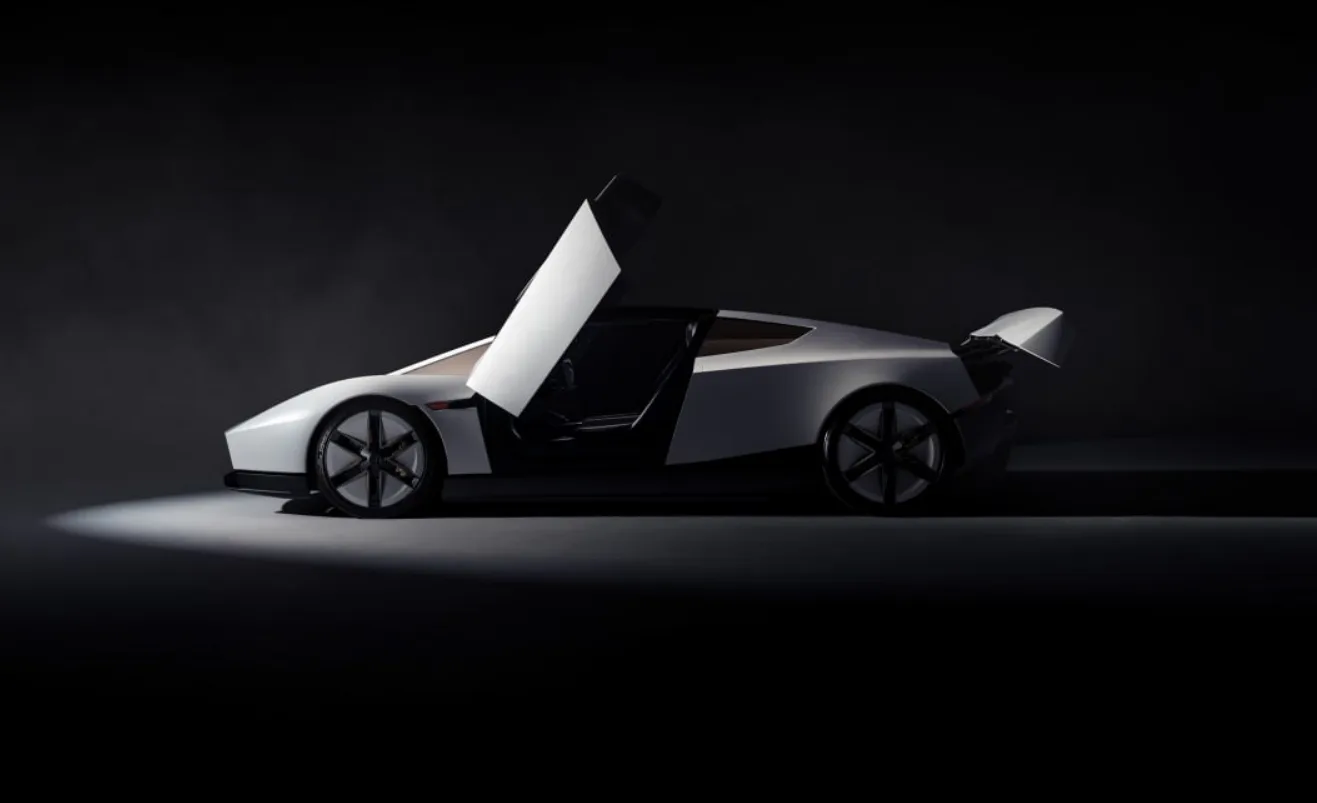
WASHINGTON – Tesla on Friday has unveiled a new version of its long-awaited Roadster electric sports car, with a prototype that briefly flew through the air, performed mid-air flips and demonstrated acceleration from zero to 60 miles per hour (96.6 kmph) in a claimed 0.81 seconds.
The long-delayed electric sports car uses compressed-air propulsion and an underbody suction system. Tesla is targeting production in 2028, with three configurations planned, the company said.
The dramatic showcase, led by Tesla Chief Executive Officer Elon Musk at a SpaceX facility in Texas on offered a glimpse of rocket-inspired technology that could push electric vehicles beyond conventional road performance.
The demonstration also revived attention around a project first announced in 2017, which has missed several production deadlines. Musk now expects manufacturing to begin in 2028.
During the demonstration, the Roadster climbed a steep, curved structure before travelling upside down and launching into the air.
The vehicle performed an aerial manoeuvre and landed on its wheels, assisted by a propulsion system developed using technology associated with Musk’s aerospace company, SpaceX.
A separate demonstration showed the sports car lifting off and travelling over a row of Tesla vehicles.
The prototype combines two systems to achieve these manoeuvres.
An underbody fan creates suction that helps the vehicle maintain its grip on a surface, while high-pressure compressed-air thrusters provide additional propulsion and control its movement in the air.
Tesla’s vice-president of vehicle engineering, Lars Moravy, said the suction system could generate enough force to allow the car to travel upside down.
Musk described the Roadster’s aerial capabilities as the result of propulsion technology that allows it to manoeuvre beyond ordinary road conditions.
“It can do rolls, it can do crazy gymnastics,” Musk said during the presentation.
He remarked, “Well, it worked.”
Beyond its airborne performance, the Roadster also demonstrated extraordinary acceleration.
Tesla showcased a run from zero to 60 mph in a claimed 0.81 seconds, assisted by thrusters mounted on the vehicle.
The figure remains a company-reported demonstration result and has not been independently validated through standard production-vehicle testing.
Musk also claimed the new Roadster could exceed 230 mph, equivalent to approximately 370 kmph.
According to Tesla, the vehicle will offer a driving range exceeding 300 miles, or about 483kms.
The electric carmaker has introduced three configurations for the next-generation Roadster: Performance, Thrust and Rocket.
The performance version focuses on conventional high-performance driving, the more advanced configurations incorporate additional propulsion technology.
The Rocket variant is listed as available by invitation only.
Despite the striking demonstration, questions remain over the practicality and regulatory approval of the vehicle’s more unusual capabilities.
The prototype’s ability to briefly become airborne does not mean it can operate as a conventional flying car capable of sustained flight or routine aerial transportation.
Musk has acknowledged that the Roadster’s extreme performance features are not necessarily designed around conventional vehicle safety priorities.
Tesla has to establish whether the full range of airborne capabilities demonstrated at the event will be available to customers in production models.
The company has not announced a final selling price.
The Roadster was originally presented in 2017 as a successor to Tesla’s first production vehicle, but its development has faced repeated delays.
The latest demonstration marks a significant technical showcase for Tesla, although the challenge of turning its airborne prototype into a commercially available sports car remains with production targeted for 2028, it added.
