
Rajnath Singh Calls for Unified Action Against Terrorism at SCO Meet
Defence Minister urges SCO members to dismantle the entire terrorism ecosystem, respect national sovereignty in connectivity projects and expand economic opportunities for youth and businesses.

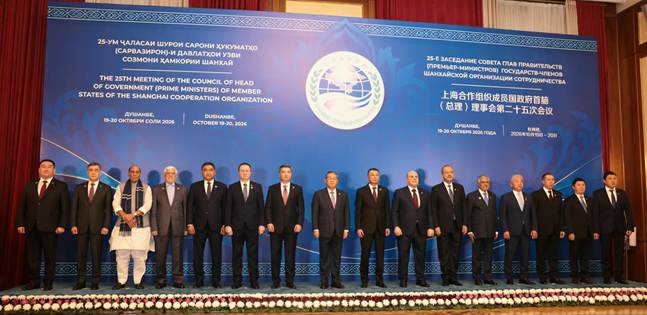
- Rajnath Singh urges unified action against terrorism
- Calls for zero tolerance and no double standards
- Connectivity must respect sovereignty and territorial integrity
- SCO urged to expand opportunities for youth and businesses
GG News Bureau
Dushanbe, 20th Oct: Defence Minister Rajnath Singh on Tuesday called on Shanghai Cooperation Organisation (SCO) member states to take unified action to dismantle the entire ecosystem of terrorism, warning that the menace remains one of the gravest threats to peace and development. He was addressing the 25th Meeting of the SCO Council of Heads of Government in Dushanbe, Tajikistan.
Singh said terrorism costs innocent lives, disrupts investment and commerce, fuels radicalisation and deprives young people of opportunities. He stressed that terrorism cannot be justified and called for an end to double standards, urging countries to deny terrorists and their supporters access to funding, assistance and safe havens.
“There can be no justification for terrorism, no double standards in addressing it, and no place for those who finance, support, or provide safe havens to terrorists,” Singh said.
Calls for Practical Economic Cooperation
Recalling the deliberations at the SCO Summit in Bishkek in August–September 2026, Singh referred to Prime Minister Narendra Modi’s call for concrete action on security, connectivity and opportunities.
He said the SCO must remain committed to sovereign equality, consensus and mutual respect. Singh also cautioned that establishing more institutions would not automatically produce better results, stressing that new mechanisms should address clearly identified needs, avoid duplication and deliver practical benefits to member states.
Amid geopolitical tensions, trade disruptions, supply-chain challenges and concerns over energy and food security, he called for stronger supply chains, greater trade and investment and the wider use of technology for development.
Singh reaffirmed India’s support for adopting an Action Plan for the Multilateral Trade and Economic Cooperation Programme for 2026–2030, emphasising that the benefits of economic cooperation must reach all sections of society.
Connectivity Must Respect Sovereignty
The Defence Minister welcomed the decisions taken at the Bishkek summit to establish the Universal Centre in Tashkent and the Anti-Drug Centre in Dushanbe as permanent SCO bodies. He said their effectiveness would depend on efficient coordination and timely implementation.
Highlighting connectivity as a driver of shared prosperity, Singh pointed to the International North-South Transport Corridor and Chabahar Port as initiatives that can help connect Central Asia with wider markets.
He stressed that connectivity projects must be based on consultation and respect for the sovereignty and territorial integrity of every country. Projects that disregard these principles, he said, would not be sustainable.
Singh also called for improving regional trade through simplified customs procedures, digital documentation, better logistics and interoperable digital solutions to reduce business costs.
He highlighted a symposium on financing infrastructure projects in Central Asia held in Mumbai earlier this month and acknowledged the participation of Central Asian countries and SCO partners. He also welcomed the organisation of the first SCO Asian Economic Dialogue.
Youth, Farmers and Small Businesses at the Centre
Singh said the SCO’s success should be assessed by the practical opportunities it creates for people, particularly young people, entrepreneurs, farmers and small businesses.
“Our success should be measured by the opportunities we create for youth, new markets we open for our entrepreneurs, technologies we make available to our farmers and small-scale business owners, and the connections we foster among societies,” he said.
Highlighting India’s development experience, Singh pointed to Digital Public Infrastructure as a means of improving public service delivery and financial inclusion. He also referred to India’s start-up ecosystem and its emphasis on women-led development.
He said India’s international initiatives, including the International Solar Alliance and the Coalition for Disaster Resilient Infrastructure, support clean energy and climate-resilient development. Mission LiFE promotes sustainable lifestyles and responsible consumption, while the Global Biofuel Alliance advances cleaner energy solutions.
India Invites SCO Members to Civilisational Dialogue
Singh urged the SCO to build on its 25-year foundation and develop a forward-looking roadmap centred on consensus-driven cooperation and measurable outcomes. He reaffirmed India’s commitment to working with all member states and invited them to participate in the first SCO Civilisational Dialogue Forum, which India is scheduled to host later this year.
The meeting reviewed progress in multilateral economic and trade cooperation and discussed ways to strengthen engagement in transport, finance, the digital economy and social development.
The heads of delegation adopted the Joint Communiqué of the 25th SCO Council of Heads of Government Meeting. The outcomes included the SCO budget for 2027, relevant financial and administrative decisions, and the PMTEC Action Plan for 2026–2030.
The SCO Council of Heads of Government is a key mechanism for promoting economic and other practical cooperation among member states. India has been a full member of the organisation since 2017.
