
Nuclear Energy Will Power India’s AI Future: Dr Jitendra Singh
India targets 100 GW of nuclear power capacity by 2047, with nuclear energy expected to support clean electricity needs and the growing demand from AI and data centres.

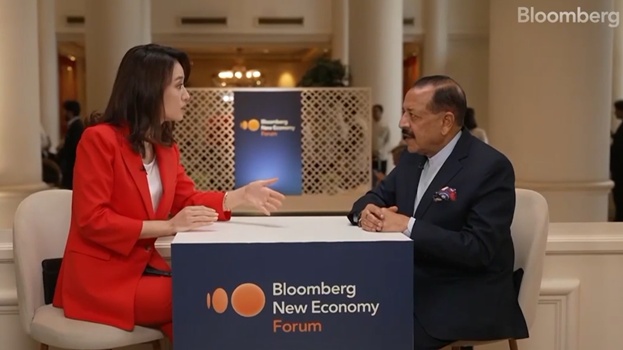
- India targets 100 GW nuclear capacity by 2047
- Nuclear energy to support AI and data centres
- Minister stresses responsible, human-led AI use
- Government expands private participation in strategic sectors
GG News Bureau
New Delhi, 20th Oct: Union Minister Dr. Jitendra Singh has reaffirmed that India’s nuclear programme is dedicated to peaceful purposes, saying nuclear energy will play an increasingly important role in the country’s energy security and technology-driven growth.
Speaking on the sidelines of the Bloomberg Economy Forum 2026, the Minister said India’s nuclear journey continues to follow the vision of Dr. Homi Bhabha, the architect of the country’s nuclear programme. He stressed that peaceful applications of nuclear technology remain central to India’s approach to scientific advancement and national development.
Dr. Singh said India’s nuclear energy ambitions are closely linked to its long-term development goals, including a target of 100 gigawatts (GW) of nuclear power capacity by 2047 and Net Zero emissions by 2070.
Nuclear Power to Support AI and Data Centres
Highlighting the growing electricity requirements of an increasingly digital economy, the Minister said nuclear energy could help meet the demand for reliable, uninterrupted power as Artificial Intelligence (AI) and data centres expand.
He explained that nuclear power would complement other energy sources by providing dependable electricity to support emerging technologies and the country’s broader development needs.
As India advances towards its energy and climate goals, nuclear energy is expected to contribute to a more reliable and cleaner power mix.
Responsible Use of Artificial Intelligence
Dr. Singh described AI as a tool with applications across multiple sectors, including space, life sciences and scientific research. He emphasised that its benefits depend on how effectively people use it and exercise judgement in its application.
“One has to be intelligent enough to use Artificial Intelligence,” the Minister said.
He noted that while AI offers opportunities across sectors, preventing its misuse remains a key challenge. Dr. Singh stressed the importance of individual integrity and national responsibility in ensuring that the technology is used appropriately.
He also referred to the regulatory measures and efforts undertaken under Prime Minister Narendra Modi’s leadership to encourage responsible use of AI.
Private Sector Participation in Strategic Areas
The Minister highlighted the government’s decision to open critical and sensitive sectors to non-government players, creating broader opportunities for private companies to contribute to innovation and technological development.
He said greater private sector participation could help strengthen industry involvement in areas that were traditionally more restricted, supporting innovation and national development.
Dr. Singh’s remarks underscored the link between reliable energy infrastructure, emerging technologies and India’s long-term economic ambitions. As the country works towards its 2047 development goals and 2070 Net Zero target, nuclear energy and responsible AI adoption are expected to remain important parts of its development strategy.
