
“Cultural diplomacy is one of India’s greatest strengths.”- Ambassador Amarendra Khatua IFS(Retd.)
Exclusive Interview with Diplomat and Ambassador shri Amarendra Khatua IFS(Retd.)

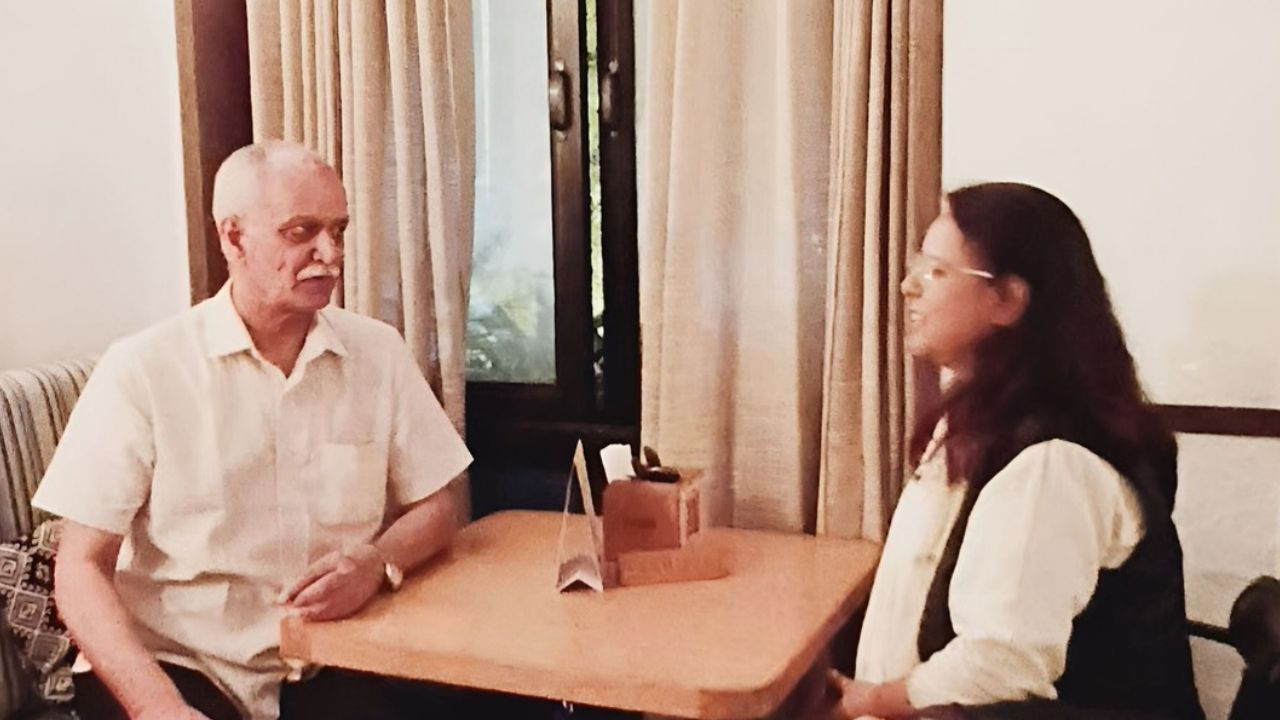
In an exclusive interview with Poonam Sharma, Managing Editor of Global Governance News and Samagra Bharat News Media Group, Ambassador Amarendra Khatua IFS(Retd.), a distinguished diplomat from the 1981 batch of the Indian Foreign Service, shares his perspectives on India’s evolving foreign policy, economic diplomacy and strategic partnerships.
A former Secretary in the Ministry of External Affairs, Khatua served as India’s Ambassador to Argentina, with concurrent accreditation to Uruguay and Paraguay. He also served as Ambassador to Côte d’Ivoire, concurrently accredited to Guinea and Liberia, and as High Commissioner to Sierra Leone. Throughout his diplomatic career across the continents , he has helped advance India’s diplomatic, economic and cultural interests across Latin America, Africa, Europe and Asia.
Drawing on this extensive experience, he discusses the growing significance of Latin America and Africa in India’s global engagement, emerging opportunities for trade and investment, and the role of cultural diplomacy in strengthening international ties. His insights offer a thoughtful perspective on India’s expanding global influence and its path towards becoming a developed nation by 2047.
Q 1. You served as India’s Ambassador to Argentina, with concurrent responsibility for Uruguay and Paraguay. What were your most significant experiences there, and why should India focus more strongly on Latin America?
“I have worked across all continents, and I believe Latin America is extremely important for India because there is genuine affection, respect and goodwill towards India throughout the region. In many ways, Latin America already represents a natural constituency of friendship for India. The challenge is that we have not adequately translated this goodwill into substantive cooperation in trade, industry, science and technology.
During my tenure in Argentina, Uruguay and Paraguay, I tried to address some of these gaps.In Argentina, I initiated a Regional Action Plan and facilitated visits by several provincial governors to India. The Governor of Mendoza, for example, visited Gujarat when Narendra Modi was Chief Minister. Such regional engagement is important because it creates long-term political and economic relationships beyond national capitals.
Another important achievement concerned pharmaceuticals. Indian generic medicines had faced significant restrictions in Argentina for decades. Through sustained diplomatic efforts and with the support of the Argentine President, these restrictions were lifted, opening new opportunities for Indian pharmaceutical companies. Indian pharmaceutical exports to Argentina subsequently expanded significantly, approaching approximately $100 million.
Latin America is also extremely important for India’s long-term food security. We frequently discuss pulses, rice, edible oils and even third-country exports to Africa. In many of these sectors, Latin American countries are major global producers. Long-term partnerships with them can strengthen India’s food and supply security.
The region also offers tremendous opportunities in biotechnology, information technology, trade and industrial investment. Although India has established a presence in the region’s IT sector, there is considerable scope for expansion. Indian IT services exports to Brazil and Argentina are approaching $100 million, reflecting the potential of these markets.
Beyond technology and trade, there are significant opportunities for two-way investment. Traditionally, Latin American countries have looked primarily towards Europe and the United States for economic partnerships. However, there is genuine goodwill and respect for India across the region.
What is needed now is a clearer understanding of India’s business environment, investment opportunities and operational mechanisms. Once Latin American businesses become familiar with how to establish and operate enterprises in India, I believe they will be willing to invest and collaborate with us.
The goodwill already exists. What India needs is a structured mechanism to convert it into lasting economic, scientific and technological cooperation.”
Q 2. Having served in Africa, what opportunities do you see for expanding India’s influence and partnerships across the continent?
“India already has considerable influence in Africa, although it cannot yet be compared with China’s influence. Our partnership with African countries is well established, but the challenge is to make it more constructive and substantial. India provides substantial technical and development cooperation, amounting to close to a billion dollars annually. We support power projects, water-resource development, agricultural programmes, forest preservation and several other initiatives. However, two aspects deserve particular attention.
First, many African countries genuinely appreciate India’s development cooperation. India should therefore work towards ensuring that friendly African nations understand and support its position on important issues involving Pakistan and terrorism.
Second, when India speaks about its aspiration for permanent membership of the United Nations Security Council, the time has come for the leadership of friendly African countries to offer clear commitments, preferably publicly and in writing.
Education is another major area of cooperation. Large numbers of African students have studied in India, many through scholarships funded by the Indian government. Some subsequently become ministers, senior officials or influential professionals. Yet India lacks a systematic mechanism to remain connected with them and develop this network as a long-term constituency of goodwill.
Similarly, we have not fully utilised the strength of the Indian diaspora in Africa. The opportunities are enormous, but India must proceed patiently. Many African countries continue to face challenges involving poverty, famine, food insecurity, political instability and migration.
India already enjoys historical relationships, established communities and considerable goodwill across Africa. These connections must be carefully nurtured.
There is also growing awareness in Africa of the risks associated with excessive dependence on a single external power. Many countries cannot do without China, but they increasingly recognise the limitations of overdependence.
India therefore has an opportunity to build strong, constructive and trusted partnerships.
Q 3. Which country or diplomatic assignment influenced your outlook the most, and why?
“Pakistan significantly influenced my thinking. I was posted in Karachi, and India subsequently closed its consulate there. It has not reopened since.
My experience convinced me that any country aspiring to become a developed and influential global power must first be strong and respected within its own region. Whether we are discussing Pakistan, Bangladesh, Nepal or Bhutan, India must remain a friendly, constructive and influential power in South Asia.
That does not mean ignoring security threats. Where force is necessary, it must be used. Where active counterterrorism measures are required, they should be undertaken.At the same time, India must continue to nurture the possibility of normal relations, trade, people-to-people contact and a more integrated South Asia.
Interestingly, when Indians and Pakistanis meet outside the subcontinent, they often become very good friends. That tells us something important about the potential of people-to-people relationships.”
Q 4. What has diplomacy taught you personally?
“Diplomacy has taught me two important lessons.
First, one must understand how other countries and societies perceive India and then determine how those perceptions can be translated into stronger relationships. Second, one must understand what India can realistically accomplish in those countries and how the Indian diaspora living there can be engaged more effectively. These two lessons have remained central to my understanding of diplomacy throughout my career.”
Q 5. What was the most difficult negotiation or challenging moment of your diplomatic career?
“One major challenge was opening the Argentine market to Indian generic medicines. Because of regulatory restrictions and the influence of multinational pharmaceutical companies, Indian generic medicines had faced serious barriers in Argentina for nearly 30 to 40 years. I worked extensively on this issue, and eventually, with the support of the Argentine President, the restrictions were lifted. This opened an important market for Indian pharmaceutical companies, and exports subsequently increased significantly.
Another challenging experience was my role as India’s Special Envoy in Sudan and South Sudan.I travelled there in connection with the peace process, working in an extremely complicated environment. Sudan, at that stage, was reluctant to engage with the United States or the European Union.
Under those circumstances, India had a special role to play. We participated in negotiations and efforts connected with peace in Sudan and South Sudan.
The agreement that emerged from the process was achieved under extremely difficult circumstances. These experiences taught me that diplomacy often requires patience, trust and the ability to operate in situations where other international actors may lack access or credibility.”
Q 6. During your posting in Spain, what efforts were made to introduce Indian products into European markets, and what were the main challenges?
“Spain has a strong Indian community, particularly in Las Palmas in the Canary Islands, where there is a significant Sindhi business community.However, when I was posted there, trade was not as central to Indian foreign policy as it is today. Developmental issues occupied a more prominent place among India’s priorities. The situation has now changed. India must increasingly use its diplomatic network to project itself as a major trading power and an important participant in global supply chains. During those years, India imported substantial quantities of steel products, machinery and equipment from Spain. Today, India’s exports to Spain have expanded considerably. The challenge now is to make these relationships long-term rather than merely transactional.
Diplomacy cannot remain limited to political relations. Trade, investment, technology, supply-chain partnerships and commercial diplomacy must become integral parts of India’s engagement with European countries, including Spain.”
Q 7. You worked during the period surrounding the collapse of the Soviet Union and the rebuilding of relations with Russia. What were the biggest challenges, and what lessons remain relevant today?
“One challenge has been the mindset of some Indian businesses operating in Russia.There has often been a tendency to focus on short-term profits rather than developing a long-term regional strategy. A trader may take a consignment, earn a 20 per cent profit and stop there. That does not create a sustainable relationship. Another important reality is that Russia is no longer economically centred solely on Moscow. Its regions conduct significant business. Indian companies must therefore engage not only with Moscow but also with governors, regional governments and regional industries. India needs structured Regional Action Plans. I followed a similar approach in Argentina, where I initiated a regional strategy and facilitated visits by several Argentine governors to India. The Governor of Mendoza, for example, visited Gujarat when Narendra Modi was Chief Minister. Such initiatives may not produce immediate results, but they pay dividends over time.
The same principle applies to Russia. We must identify opportunities in different regions and build direct relationships with them. China has been doing this effectively. Another lesson is the need for strict monitoring mechanisms for the work of embassies, particularly in commercial, scientific and technological cooperation. Political work naturally follows a clear mandate. However, trade, science and technology cooperation must also be systematically monitored and reviewed. Diaspora engagement is equally important.”
Q 8. In June 2026, you participated in a Latin American and Caribbean Cooperation Forum. What was your role?
“My role was primarily related to trade and economic cooperation. Although I come from the diplomatic service and the Ministry of External Affairs, I have also worked extensively with the Ministry of Commerce, three state governments, the Ministry of Finance and the Planning Commission. At the Latin American and Caribbean Cooperation Forum in June 2026, my role was essentially to bring three or four important areas to the attention of policymakers.
First, this is the right time for India to utilise the enormous opportunities available in Latin America and the Caribbean in a constructive manner.
Second, education, culture and people-to-people contact offer tremendous potential. Through educational and cultural engagement, India can build long-term influence and goodwill.
Third, project-based cooperation is extremely important. My broader point was that different sections of society have different responsibilities.
If you are a journalist, you must bring these opportunities into newspapers, television and public discussion because business leaders and policymakers also follow the media. If you are a policymaker, you must ask why certain opportunities remain unutilised.
If you are a political decision-maker, whether currently or formerly in office, you must identify what India should do and ensure that progress is regularly reviewed. If you are a bureaucrat, your responsibility is to implement these opportunities.The media, policymakers, political leadership and bureaucracy must work together if India wants to build deeper relationships with Latin America and the Caribbean.”
Q 9. You have worked on industrial investment and acquisitions involving Mexico, Kazakhstan and Liberia. What opportunities and challenges do these countries present for Indian businesses?
“The challenge is similar in many of these countries.Take Mexico, for example. It is an important part of Latin America, but because of geographical distance, India often tends to overlook it despite its enormous economic potential.
Kazakhstan is another example. India already has engagement there, including in oil and energy, but much more can be accomplished.
When discussing India’s global economic presence, we must think about connectivity, new supply routes, industrial cooperation and long-term economic partnerships. These are strategically important. For example, Mittal had major investment interests in Kazakhstan, particularly in the Karaganda region, and I was partly involved in facilitating that process.
Indian businesses need to view countries such as Mexico, Kazakhstan and Liberia not merely as distant markets but as potential strategic partners in energy, minerals, industry and supply chains”.
Q 10. What is your present role in the Association of Indian Diplomats, and how can veteran diplomats continue contributing to India’s foreign policy?
“Yes, absolutely. Experienced diplomats certainly have an important role to play, but the nature of that role should evolve. Retired diplomats often deliver speeches, appear on television or write in newspapers. These activities have their own value. Alongside them, however, the time has come for diplomats to take on more structured advisory responsibilities. They can advise chambers of commerce, business houses, trade organisations and institutions working in economic cooperation or people-to-people engagement.
For example, major business houses such as the Ambani group have advisory teams. To my knowledge, Nita Ambani herself leads various important advisory initiatives. Experienced diplomats can make a meaningful and effective contribution to such teams through their expertise, experience and guidance.
If an organisation works internationally in culture, social outreach or people-to-people relations, an experienced diplomat can help it identify which areas to focus on, which countries to prioritise and how to develop lasting relationships.
Senior diplomats bring decades of experience in understanding countries, institutions, political systems and cultures. This experience should be put to use in practical advisory roles, alongside their contributions through commentary and speeches.”
Q 11. As a former Director General of the Indian Council for Cultural Relations (ICCR), what more can India do to promote Bharat’s rich heritage and culture globally?
“Many things are already progressing well, but more can be done to bring young people from different countries to India.We should encourage more international students and young people to visit India to study Indian dance, music and culture. Cultural diplomacy is one of India’s greatest strengths.
When young people experience Indian civilization directly, they develop a deeper and more lasting understanding of the country. Such cultural engagement can create goodwill that extends far beyond conventional diplomacy.
Q 12. What major changes have you observed in India’s foreign policy under Prime Minister Narendra Modi’s government?
“India is now reaching out to many more countries than before. There has been a significant increase in high-level diplomatic visits, and India’s engagement has become geographically broader. Our messaging has also become clearer.However, visits alone are not enough. The important question is how to convert these engagements into concrete outcomes. Every major diplomatic visit should be accompanied by clear objectives, direct messages, follow-up mechanisms and regular reviews. Embassies should have institutionalised systems to monitor what was agreed upon, what progress has been achieved and where obstacles remain. The key challenge now is to convert political outreach into measurable and sustained results.”
Q 13. How do you balance your life as a diplomat and a poet?
“I have always kept the two separate.During my diplomatic postings, including in Latin America and elsewhere, I rarely spoke about my literary work.
Even when I was associated with literary organisations, I did not use my literary identity professionally. I write in four languages and have written nearly 50 books. Many of my colleagues in the Foreign Service discovered only much later that I was also a poet and writer, and they were often surprised.
For me, diplomacy and literature have always remained two separate parts of my life.”
Q 14. What would you say about young people today, particularly amid concerns about external funding and the possible manipulation of youth movements?
“When we discuss political decision-making, there will always be different viewpoints.If young people are dissatisfied or disconnected, we must first understand why. That is the central issue.
Youth movements often emerge, attract enormous attention and then disappear. Media coverage, propaganda and political discussion can sometimes make such movements appear much larger than they actually are. India has an enormous young population, including a very large aspirational middle class. Their expectations are high. The real challenge is how to guide them, provide opportunities and connect their aspirations with national development.
If young people are properly engaged and provided with meaningful opportunities, many concerns about manipulation or destabilisation can be reduced.
India’s developmental challenges therefore remain central to the question of youth politics.”
Q 15. As India looks towards Viksit Bharat 2047, what is the single biggest challenge the country must overcome to become a truly influential global power?
“The biggest challenge is to bring India’s economically vulnerable population into the middle class and integrate them into the country’s economic and decision-making mainstream. India has a population of approximately 1.45 billion. A substantial section already belongs to the middle class, while another very large section remains poor or economically vulnerable. If India can lift roughly 450 million economically disadvantaged people into stable middle-class conditions, it will fundamentally transform the country.
That, in my view, is the single biggest challenge before India on its journey towards becoming a developed and truly influential global power by 2047.”
