

By Anjali Sharma
UNITED NATIONS – India on Thursday has accused the UN special rapporteur Ben Saul of serious factual omissions in a counter-terrorism report concerning fugitive gangster Dawood Ibrahim, questioned the credibility and accountability of UN experts who publish reports without adequate scrutiny.
The dispute centered on a July 2026 document that examined the treatment of organized crime as terrorism.
India cited the Security Council’s 2003 sanctions listing to challenge omissions in the report.
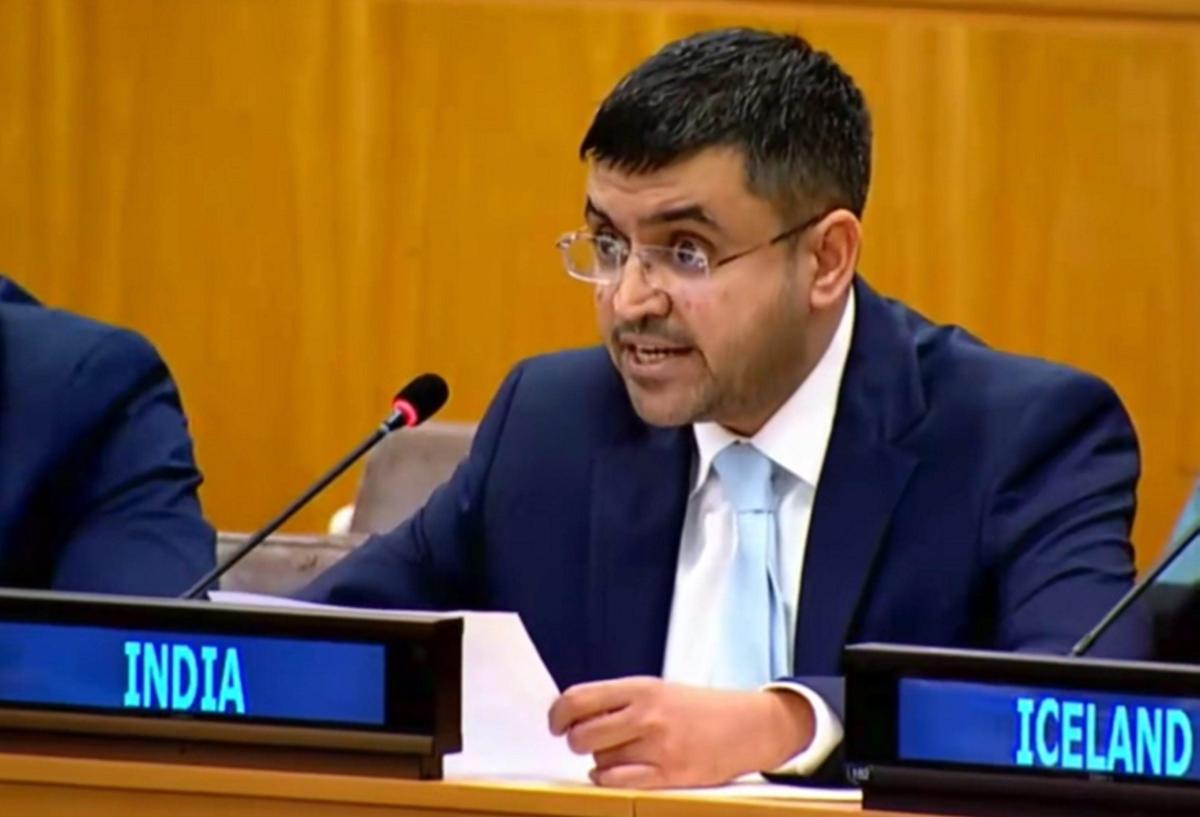
Indian delegate Raghoo Puri, first secretary at India’s Permanent Mission to the UN, challenged a report by Ben Saul, the UN Special Rapporteur on the promotion and protection of human rights and fundamental freedoms while countering terrorism, at a meeting in New York.
The dispute centres on the description of D-Company, the criminal network headed by Ibrahim, as an “India-based” organization.
India argued that the report failed to adequately reflect Ibrahim’s status as a fugitive wanted in connection with the 1993 Mumbai serial bombings.
“We express serious concern at the unacceptable situation of the SR releasing reports with factual inaccuracies, while not being held accountable for them,” Puri said.
He warned that such reports present member states with a fait accompli at a time when the UN faces questions over its legitimacy.
Puri drew attention to the UN Security Council’s sanctions record, which lists Ibrahim for his association with al-Qaeda and Osama bin Laden.
Ibrahim was added to the sanctions list on November 3, 2003.
The Security Council’s records also identify addresses in Karachi, Pakistan, and refer to an international arrest warrant issued by India.
UN’s narrative summary of his listing identifies Ibrahim as wanted in connection with the March 12, 1993, Bombay Stock Exchange bombings, which killed more than 250 people and injured over 1,000.
Puri maintained that the special rapporteur should have taken these details into account when referring to Ibrahim and D-Company.
“Not mentioning this fact is regrettable, and such incompetence on the part of special mandate holders does this organization tremendous harm,” he said.
He stressed that Ibrahim had fled India before the Security Council placed him on its sanctions list.
“To date, he remains a wanted criminal in my country and, as per the UN’s listing entry, resides in the same country where Osama bin Laden was found and neutralized,” Puri said.
Bin Laden was killed by United States forces in Abbottabad, Pakistan, in May 2011.
Puri criticism extended beyond the reference to Ibrahim.
He questioned the absence of accountability when UN-appointed experts release reports that member states consider factually inaccurate.
The report, published in July 2026, examines the distinction between organized crime and terrorism, including the human rights implications of treating criminal organizations as terrorist groups.
India argued that a human rights perspective must not obscure the activities of individuals and networks linked to terrorism.
“Human rights framework cannot be the refuge of the perpetrators of terror and those who propagate radicalisation and extremism. Terrorism can never be justified,” Puri said.
He also called for high standards of impartiality and probity in the work of special rapporteurs.
India’s intervention also addressed comments made by Pakistan’s delegation about Jammu and Kashmir and Ladakh.
Puri rejected the allegations as politically motivated and accused Pakistan’s military establishment of driving the narrative against India.
“I would like to reiterate for the record that Jammu and Kashmir and Ladakh are an inalienable part of India, and have been so, and will always remain,” he said.
The exchange came amid renewed criticism by India of the use of human rights mechanisms for what it considers selective scrutiny and political pressure.
The immediate controversy concerns the accuracy of a UN expert’s description of a sanctioned fugitive and India’s demand for greater accountability over statements published under UN mandates.
