
450 Get Anti-Rabies Shots After Consuming Cow’s Milk in UP
Health officials organise a vaccination camp in Gorakhpur after a cow suspected of a possible dog bite dies following unusual symptoms.

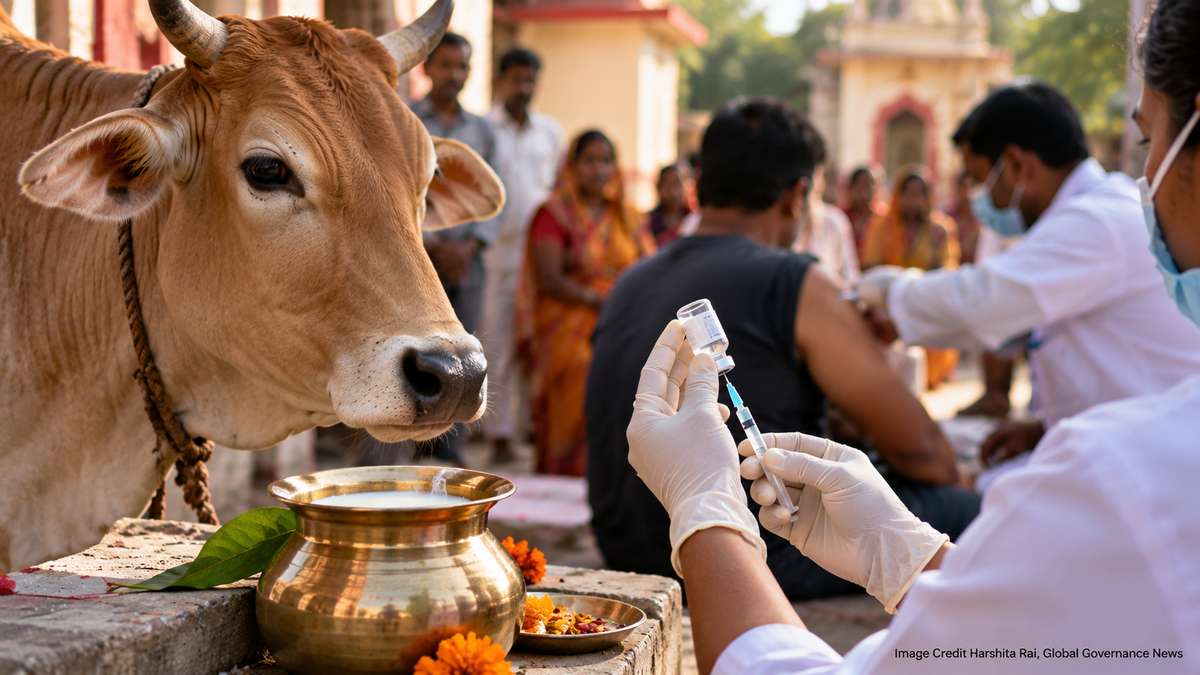
- Around 450 people receive anti-rabies vaccines
- Cow dies after displaying unusual symptoms
- Health department organises village vaccination camp
- Experts advise medical assessment for possible exposure
GG News Bureau
Gorakhpur, 23rd Oct: Around 450 people in Uttar Pradesh’s Gorakhpur district received anti-rabies vaccines after consuming charanamrit prepared using a cow’s milk during Durga Puja, following concerns that the animal may have been bitten by a stray dog, officials said.
The health department organised a vaccination camp in Dadi Khas village, under Gola block, on Wednesday. Around 50 people had received vaccines at a community health centre on Tuesday, while another 400 were vaccinated during the village camp.
The cow’s milk had also been supplied to two shops and several households, raising concerns among residents of Dadi Khas and neighbouring Govindpur village.
The cow’s owner, Navami Yadav, said the animal had appeared unwell for one or two days before its condition worsened on Tuesday. After consulting private veterinarians and a doctor at the local veterinary hospital, he was told that a dog bite was a possibility. According to Yadav, the cow subsequently began behaving abnormally and barking before dying on Tuesday evening.
Following the incident, devotees who had consumed the charanamrit during Durga Puja sought medical assistance as a precaution. A health department team led by pharmacist Siddharth Singh reached the village on Wednesday and administered vaccines to residents.
Community health centre in-charge Amarendra Thakur advised people concerned about possible exposure to consult medical professionals and follow the recommended vaccination schedule. He said arrangements would be made to ensure timely vaccine availability and urged residents to boil milk thoroughly before consumption rather than drink it raw.
Veterinarian Siddiqui, posted in Dadi, said the cow’s symptoms raised suspicion of rabies but could not confirm the disease on their own. A proper veterinary assessment and appropriate testing would be needed to establish the cause.
Health experts distinguish between suspected exposure and confirmed infection. Drinking milk alone is not an established route of rabies transmission. However, anyone concerned about possible contact with saliva or other potentially infectious material should promptly seek medical assessment to determine whether post-exposure treatment is required.
