
India accuses Pakistan on Kashmir, military, minority rights at UN

By Anjali Sharma
UNITED NATIONS – India on Friday has accused Pakistan of taking its cues from the military instead of addressing the needs of its citizens, as New Delhi renewed its demand that Islamabad withdraw from territories under its occupation in Jammu and Kashmir.
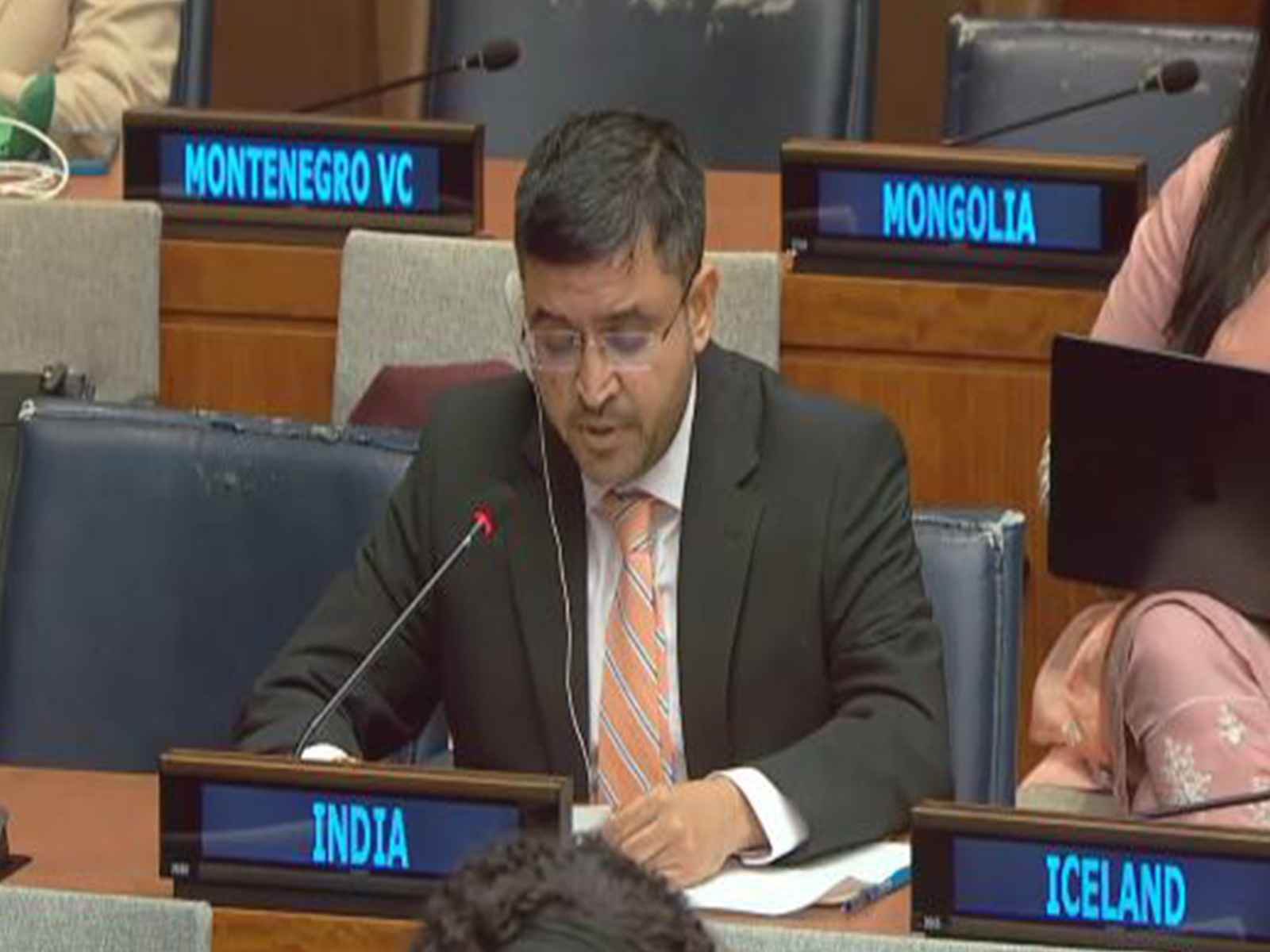
First secretary of India to the UN Raghoo Puri cited India’s constitutional safeguards for religious and linguistic minorities during a Third Committee dialogue days after another Indian diplomat challenged Pakistan over funeral rights.
The sharp response came during a UNGA Third Committee dialogue on minority issues, where Indian diplomat Raghoo Puri challenged Pakistan’s remarks and accused it of using the forum to advance its political narrative.
“Pakistan predictably misused the forum for propaganda. Jammu & Kashmir is an integral and inalienable part of India. Pakistan must vacate the territory under its illegal occupation,” Puri said.
Puri also urged Pakistani representatives to examine conditions within their own country and put public welfare ahead of instructions from the military.
The exchange took place during discussions with the UN special rapporteur on minority issues, a forum intended to examine the protection and rights of minority communities.
Puri argued that the responsibility to safeguard minorities rests primarily with individual countries and must be understood within the principle of sovereign equality.
He cited India’s constitutional protections for religious and linguistic minorities and said diversity remained central to the country’s social and institutional framework.
Puri pointed out to the role of minority communities in India’s development, including their participation in senior government positions and major national institutions.
The latest remarks followed another exchange at the UN when Indian diplomat Bhavika Mangalanandan challenged Pakistan’s criticism of India’s record on religious freedom and minority rights.
Mangalanandan invoked the 1999 Kargil conflict and accused Pakistan of refusing to accept the bodies of its own soldiers killed in combat, as she spoke at a dialogue on funeral rights in exceptional circumstances.
She said Indian troops had buried several Pakistani soldiers with military honours and in accordance with Islamic rites.
Mangalanandan also questioned the approach of a UN report on funeral rights, argued that its treatment of discrimination during the COVID-19 pandemic placed disproportionate emphasis on developing countries while overlooking comparable experiences in developed nations.
She challenged the report’s discussion of funeral rights for terrorists, argued that the rights of victims of terrorism deserved equal consideration.
